


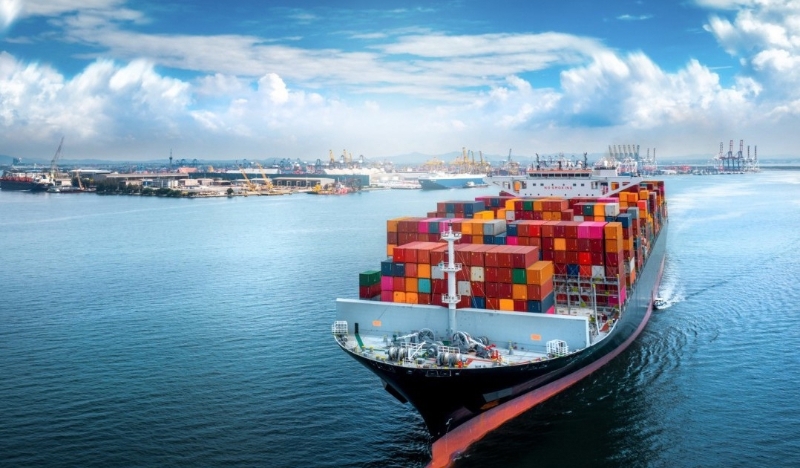
Vietnam’s trade picture has recorded remarkable expansion in scale over the past 30 years, with annual import-export turnover rising from a modest $500 million in 1995 to in excess of $930 billion in 2025, for a 180-fold increase. Exports were the main growth engine, with turnover surpassing $470 billion last year, up 16 per cent against 2024.
While cementing its position as a global “bright spot,” Vietnam’s export sector is now facing a new and far more stringent set of rules centered on sustainable development. To preserve its role as a key growth driver, a decisive shift from extensive growth to intensive growth, focusing on value added and technological content, has become an urgent requirement in this new phase.
Growth without depth
Vietnam officially joined the world’s Top 20 economies by trade volume in 2023, with average annual export growth exceeding 10 per cent. Notably, a continual trade surplus since 2016 has served as a solid pillar, helping to strengthen national foreign exchange reserves and maintain macro-economic stability.
Despite these achievements, Mr. Nguyen Anh Son, Director General of the Agency of Foreign Trade at the Ministry of Industry and Trade, cautioned that Vietnam cannot rest on its laurels. “To realize the goal of double-digit economic growth in 2026, import-export growth must outpace overall economic growth, which calls for stronger internal capacity than ever before,” he said.
Behind the “glow” of hundreds of billions of dollars in export revenue lie persistent concerns over sustainability. In reality, Vietnam’s exports still face a number of structural vulnerabilities. Heavy reliance on FDI enterprises remains problematic, while domestic companies have yet to participate deeply in higher value added segments of global value chains. Many industries continue to depend heavily on imported raw materials and components, leaving production and exports highly exposed to external shocks and supply chain disruptions.
Representatives from key industry associations in textiles and garments, footwear, and wooden products have all voiced concern about the “trap” of broad-based growth without sufficient depth.
Ms. Phan Thi Thanh Xuan, Vice Chairwoman and General Secretary of the Vietnam Leather, Footwear and Handbag Association (LEFASO), said candidly that although the sector may reach $28-29 billion in export turnover annually its underlying structure remains heavily processing-oriented. Similarly, Mr. Ngo Sy Hoai, Vice President and Secretary General of the Vietnam Timber and Forest Products Association (VIFOREST), warned of increasingly squeezed profit margins. “We cannot keep charging forward purely in terms of scale,” he explained. “Chasing headline growth figures without depth will ultimately leave businesses struggling.”
The intrinsic capabilities of domestic enterprises still exhibit significant gaps. Weaknesses persist across design, international marketing, and brand building. In many sectors, excessive dependence on imported inputs continues to make production vulnerable to external shocks and supply chain breaks.
Green rules
The world is entering a new era of trade, in which environmental, social, and governance (ESG) standards are no longer optional incentives but mandatory requirements. Concepts such as supply chain “greening,” emission reductions, and traceability are becoming new technical barriers, forcing businesses to adapt immediately or risk being excluded from the market.
Ms. Nguyen Thi Thu Trang, a legal and international economic integration expert, former Director of the WTO and Integration Center at the Vietnam Chamber of Commerce and Industry (VCCI), offered a vivid analogy: before thinking about “eating well and dressing well” by meeting voluntary premium standards, businesses must first “eat their fill and stay warm” by complying with mandatory requirements just to clear customs. The EU, for example, has rolled out the Green Deal, with concrete regulations including the Carbon Border Adjustment Mechanism (CBAM), the EU Deforestation Regulation (EUDR), and the Corporate Sustainability Due Diligence Directive (CSDDD).
The challenges posed by this “green wave” are substantial, requiring fundamental changes to production processes rather than simple end-product quality control. Businesses face financial pressure from environmental taxes and fees, as well as heavy investment costs to ensure supply chain transparency. For example, the coffee sector must trace products back to individual farms, while the livestock industry must comply with EU animal welfare standards - concepts that remain relatively new in Vietnam.
Viewed from a more positive angle, however, meeting the EU’s stringent standards can serve as a “passport” for Vietnamese goods to access virtually all other global markets. Green transformation should not be seen merely as a cost, but as a worthwhile long-term investment that helps optimize processes and improve business efficiency over time.
Growth shift
To escape competition based solely on low prices and raw volumes, building a national brand anchored in credibility and quality is a matter of survival. “The spice industry does not aim to compete on price, but to become a globally trusted destination for quality,” Ms. Hoang Thi Lien, Chairwoman of the Vietnam Pepper and Spice Association (VPSA), emphasized.
Under the Commodity Import-Export Strategy to 2030 approved by Prime Ministerial Decision No. 493/QD-TTg in 2022, the Ministry of Agriculture and Environment has set a target of $100 billion in agriculture, forestry, and fisheries export turnover by 2030. To achieve this goal, experts argue that a fundamental shift in production mindset is required, with greater emphasis on quality rather than quantity.
“Instead of focusing solely on processing, industries need to move towards higher value added models such as FOB (free on board), ODM (original design manufacturing), and OBM (original brand manufacturing),” Ms. Xuan stressed. “Increasing technological content, localization rates, and economic self-reliance is key to reducing dependence on traditional cost advantages that are no longer absolute.”
Mr. Tran Thanh Hai, Deputy Director General of the Agency of Foreign Trade, also underscored the need to shift decisively from extensive growth towards deeper, more efficient, and more sustainable growth - closely tied to higher value added, greater technological content, and higher localization rates amid global volatility and changing trends. Specifically, Vietnam needs to focus on solutions that create new growth drivers, develop core foundational industries with lasting value, and strengthen agricultural products. Securing raw material supplies through enhanced scientific research and technological mastery is essential to increasing domestic value added.
Importantly, the journey towards sustainable exports cannot succeed without the enabling and supportive role of the government. Industry associations have put forward a range of practical recommendations to ease business constraints, including amending the Law on Export and Import Duties to ensure fair treatment between processing enterprises and export manufacturers, and resolving longstanding value added tax (VAT) refund bottlenecks to unlock business cash flows.
At the same time, establishing a regular dialogue mechanism to address gaps between policy design and customs implementation is critical. Regulatory authorities need to accelerate electronic customs clearance, create “green lanes” for raw materials, and roll out targeted support packages for digital transformation and product design. In particular, helping small and medium-sized enterprises access green finance is a crucial link in enabling investment in sustainable raw material zones.
For trade offices and industry associations, the business community is calling for continual updates on policy changes in international markets. Associations must serve as “green hubs,” not only providing information but also offering concrete technical guidance to lead their members along the path towards sustainable exports.




 Google translate