


The Business Confidence Index (BCI) of the European Chamber of Commerce in Vietnam (EuroCham) for Q1 2026 stands at 72.7, down 7.3 points from its recent peak of 80.0 in Q4 2025, reflecting a more cautious outlook amid rising geopolitical tensions, according to the EuroCham’s BCI report, Q1 2026 edition, that was released on April 15.
Yet, the index remains well above levels recorded over the past four years, reinforcing a consistent message emerging from the data: while global turbulence is influencing short-term sentiment, Vietnam’s long-term appeal remains firmly intact, the report noted, adding that a remarkable 93% of European business leaders say they would recommend Vietnam as an investment destination, among the strongest endorsements in the history of the survey.
Conducted by DXL Research and Consulting, the latest BCI report delves deeper into the anatomy of investor resilience. It maps how different supply chain configurations shape risk exposure and outlines the critical regulatory reforms that investors expect from Vietnam’s newly elected Government to sustain long-term momentum.
“What we are witnessing in Q1 is not a retreat, but a necessary recalibration,” commented EuroCham Chairman Bruno Jaspaert. “The global economy today resembles a shipping route passing through rough waters, particularly tensions in the Middle East that are driving energy price volatility and supply chain adjustments. In times like these, companies look for safe harbours where they can dock with confidence. The BCI data shows that while the geopolitical weather outside may be stormy, Vietnam’s economic foundations remain resilient. “
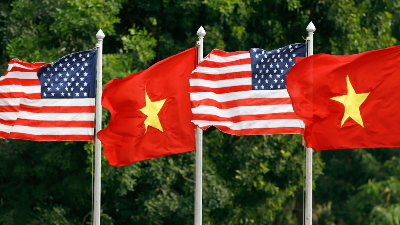
The shadow of global trade tensions looms large over the 2026 planning cycle. One year after the United States’ sweeping trade policy announcements on its so-called “Liberation Day” on 2 April 2025, businesses are still adjusting to a more fragmented and unpredictable global trading environment, according to the report.
At the time, EuroCham conducted a rapid survey to capture the immediate reaction of European companies operating in Vietnam. The results showed that more than 70% of respondents expected “High” or “Very High” volatility, prompting many firms to revise revenue projections downward and adopt more cautious operating strategies. Most companies anticipated financial losses linked to tariffs, typically estimating a 20% reduction in their bottom line.
The latest BCI report for Q1 2026 provides a reflection on how businesses have actually performed since then. The findings point to a far more resilient outcome than many initially feared. Despite persistent geopolitical uncertainty, 77% of European businesses operating in Vietnam managed to maintain or increase their revenue in 2025, with 40% reporting revenue growth. While 23% experienced declines, most were moderate, suggesting that global tensions have tempered expansion rather than derailing it altogether.
The data ultimately reinforces Vietnam’s role as a stabilising node within global supply chains: a market where long-term fundamentals continue to outweigh short-term geopolitical turbulence.
Today, however, the nature of risk is evolving. Businesses are no longer focused solely on trade disruptions but increasingly on the secondary economic effects of global instability, mainly tied with the prolonged conflict in the Middle East. Energy and fuel price volatility has emerged as the most widely cited concern, affecting 75% of surveyed businesses, followed by rising operating costs (61%) and the risk of a slowdown in global demand (55%). Altogether, 90% of respondents identify cost pressures and geopolitical conflicts as the defining risks for the year ahead.
This shift highlights a broader dynamic shaping the business outlook for 2026. The challenge facing investors in Vietnam is no longer about whether opportunities exist, but rather how efficiently companies can capture them in an environment characterised by higher costs, supply chain adjustments, and greater operational complexity.

 Google translate