


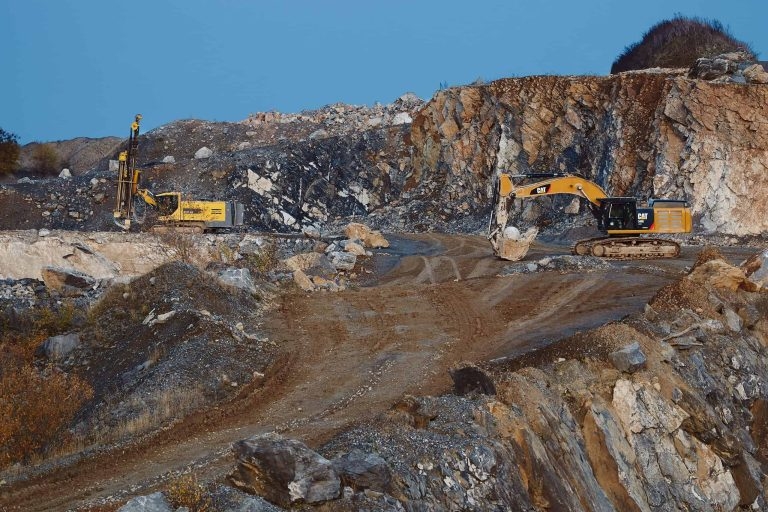
The Ministry of Agriculture and Environment has issued Document No. 21/VBHN-BNNMT, regarding a draft decree detailing the implementation of certain provisions of the Law on Geology and Minerals, including the management of rare earth.
Accordingly, investigation, exploration, extraction, processing, and utilization of rare earths must comply with the national strategy on rare earths.
According to the draft decree, the Ministry of Agriculture and Environment is responsible for organizing geological surveys, assessing potential of, and exploring rare earths.
Licenses for rare earth mineral exploration and the transfer of exploration rights can only be issued under a written approval from the Prime Minister and in compliance with the regulations.
Regarding the extraction and processing of rare earths, the draft decree stipulated that licenses for the extraction of rare earth minerals and the transfer of extraction rights are only granted under written approval from the Prime Minister and in compliance with the regulations.
The processing direction involves using advanced technology and modern equipment, ensuring environmental protection; the extraction of rare earth minerals must be linked to processing projects that produce at least total oxides, hydroxides, or rare earth salts with a TREO content of 90% or more, encouraging the production of separate rare earth elements (REO), using advanced technology and modern equipment, and maximizing the recovery of useful accompanying minerals.
The Ministry of Agriculture and Environment must report to the Prime Minister within five working days from receiving the application from the appraisal agency, regarding the approval or disapproval of the issuance of extraction licenses for rare earth minerals and the transfer of extraction rights. Within three working days from receiving the Prime Minister's written approval, the Minister of Agriculture and Environment will issue the extraction license and approve the transfer of extraction rights. If the Prime Minister does not approve, the Ministry must respond in written form, clearly stating the reasons.
Processing (selection, refining, separation) of rare earths is only allowed at facilities authorized to operate under the law, meeting technology standards, environmental safety, and radiation control. Organizations and individuals involved in the extraction and processing of rare earths are required to submit monthly reports on extraction volumes, processing volumes, refined products, and other necessary information to the Ministry of Agriculture and Environment and the Ministry of Industry and Trade.
Under the draft decree, areas reserved for rare earth minerals are determined based on geological survey results, mineral planning, and meeting sustainable economic-social development goals and national defense and security requirements. The Ministry of Agriculture and Environment is responsible for delineating, approving, and announcing the list and boundaries of areas reserved for rare earth minerals. Management and protection of these areas are conducted according to national mineral reserve regulations, ensuring no loss or damage to rare earth minerals.
Geological and mineral information on rare earths is centrally managed in a database operated by the Ministry of Agriculture and Environment. The collection, storage, exploitation, and provision of rare earth data must comply with state secrecy protection regulations. Overall management and control of rare earths are conducted through a national digital data system, ensuring continuous monitoring of extraction, processing, refining, separation, and import-export of rare earths, tracing the origin from mine to final product.
The Ministry of Agriculture and Environment coordinates with relevant ministries to organize international cooperation in research, development of geological survey technology, exploration, environmental restoration in mining activities, and mine closure for rare earth minerals. The Ministry of Industry and Trade, in collaboration with the Ministry of Foreign Affairs, the Ministry of Science and Technology, and the Ministry of Agriculture and Environment, organizes international cooperation in research, development of extraction and processing technology for rare earths, training high-quality human resources, and technology transfer.
Notably, international cooperation on rare earths is only conducted with partners, organizations, or countries approved by the Prime Minister, ensuring principles of equality, mutual benefit, and no impact on national security, defense, and interests. The decree clearly states that the government uniformly manages geological survey, exploration, extraction, processing, use, and storage of rare earths nationwide, ensuring resource security, national security, and national interests.
Management and control of rare earths are conducted through a national digital data system, ensuring continuous monitoring of extraction, processing, refining, separation, and import-export of rare earths, tracing the origin from mine to final product, and inter-agency reconciliation between resource management, industry, trade, and customs.
The Ministry of Agriculture and Environment is accountable to the government for state management of geological surveys, potential assessment, exploration, and extraction of rare earths; managing extraction volumes by mine and license, including rare earths recovered from accompanying minerals. Additionally, it is responsible for building, operating, and managing the national database on rare earths, including geological data, reserves, quality; extraction volumes by mine and standardized conversion units; mine, license, enterprise, and rare earth product batch identifiers.
The Ministry of Agriculture and Environment also issues technical standards, data standards, and methods for converting rare earth production; organizes reconciliation and verification of original data for inter-agency state management. The Ministry of Industry and Trade is responsible for coordinating industrial, market, and import-export policies for rare earths and rare earth products. It also manages and controls processing, circulation, and import-export volumes of rare earths based on data from the national rare earth database operated by the Ministry of Agriculture and Environment.
The Ministry of Industry and Trade organizes a system for tracing the origin of rare earth products along the value chain, ensuring each rare earth product on the market has legally traceable origin information; data interconnection with the Ministry of Agriculture and Environment and customs authorities; avoiding duplicate data systems.
Activities related to rare earths must ensure principles of resource protection, environmental protection, and sustainable development; extraction and processing must be linked to deep processing, increasing added value, and ensuring technological autonomy; unprocessed rare earth minerals that do not meet deep processing standards are not allowed to be exported, and only deep-processed products are exported according to the list approved by the Prime Minister.


 Google translate