


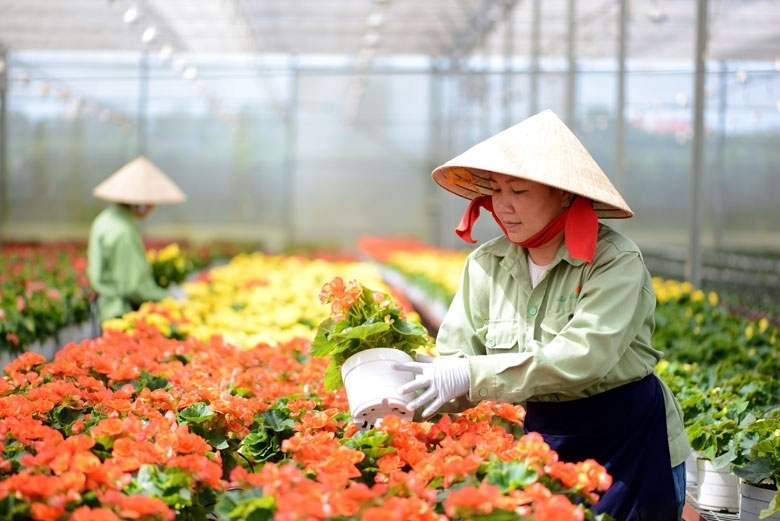
Deputy Prime Minister Le Thanh Long has signed Prime Ministerial Decision No. 328/QD-TTg, officially approving a national program titled "Innovating and Improving the Quality of Vocational Training for Rural Areas until 2030."
Under the program, the Government aims to provide vocational training, retraining, and skill enhancement for an average of 1.5 million rural workers per year through 2030. Of this total, non-agricultural training is expected to account for 70%, while agricultural and rural development training will make up the remaining 30%.
A key pillar of the program is its focus on marginalized groups, specifically prioritizing women, people with disabilities, and ethnic communities. The Government has set a target for over 85% of participants to secure employment following their training.
To achieve these ambitious goals, the program outlines several key missions and solutions. Central to this is raising public awareness of the vital role vocational training plays in enhancing the quality of rural human resources, creating jobs, increasing income, and ensuring sustainable poverty reduction.
With a vision for comprehensive innovation, the program does not only focus on training quality but also aims to facilitate a fundamental shift in labor and economic structures. This strategy is designed to bridge the gap in the ratio of trained laborers between rural and urban areas.
The program will be implemented nationwide, with specific priority given to: extremely disadvantaged communes in coastal areas and islands; communes, villages, and hamlets in ethnic and mountainous regions; and areas undergoing modern rural development.
A strategic focus will be placed on developing high-quality personnel for advanced and modern agricultural production. Furthermore, the program seeks to transition a segment of the rural workforce into industrial and service sectors to support the industrialization and modernization of the countryside and enhance international integration.
Ultimately, rural human resource development will be closely aligned with the construction of modern, culturally rich, and sustainable rural areas that can adapt to urbanization and climate change. By placing rural residents at the center of this initiative, the Government aims to create practical, effective, and sustainable career transitions that bring clear improvements to the livelihoods of the people.

 Google translate