


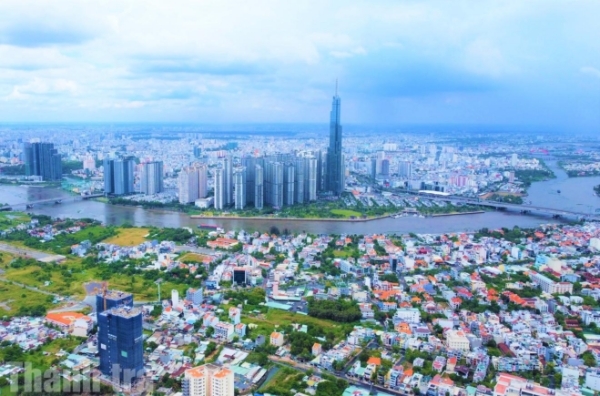
Moving away from a reliance on traditional industries, Ho Chi Minh City’s growth momentum for the 2026-2030 period will concentrate on "seven strategic spearheads," ranging from international finance and the digital economy to semiconductors, next-generation logistics, and high-quality healthcare.
Speaking at the recent online workshop "Identifying High-Growth Sectors and Opportunities for Businesses," Mr. Do Thien Anh Tuan from the Fulbright School of Public Policy and Management emphasized that following integration with neighboring regions, HCM City has evolved into a quintessential service economy. The service sector now accounts for a substantial 60-65% of the city's Gross Regional Domestic Product (GRDP).
Looking toward 2030, the expert identified five major international drivers that will propel the city's breakthrough: Digital Transformation (AI), global supply chain restructuring, green growth (ESG), an aging population, and the boom of the service sector.
Based on these drivers, he outlined seven potential industry groups where businesses can seize development opportunities:
Firs, finance – banking – fintech. Anchored by the recently inaugurated Vietnam's International Financial Center in Ho Chi Minh City (VIFC-HCMC), the city expects to attract leading global financial institutions.
Second, the digital economy. The city aims for this sector to contribute 40% of its GRDP by 2030. Momentum is expected from AI, data, the digitalization of government and business, and e-commerce. High-growth segments include Data Centers, Cloud Computing, and Cybersecurity. This transition requires massive investment in digital infrastructure and clean energy (for instance, a proposed Data Center project in Cu Chi would require approximately 2,500 MW of power).
Third, semiconductors and next-generation electronics. Mr. Tuan noted that Vietnam has designated semiconductors as a strategic industry, with HCM City at the forefront. The city aims to train 39,000 university-level personnel for this sector by 2030, focusing on Assembly, Testing, and Packaging (ATP), chip design, smart electronics, and the Internet of Things (IoT).
Fourth, high-tech manufacturing and biotechnology. This involves transitioning to high-tech industries with lower carbon emissions and attracting projects to the Saigon Hi-Tech Park (SHTP). Potential areas include automation, robotics, new materials, environmental technology, and the circular economy.
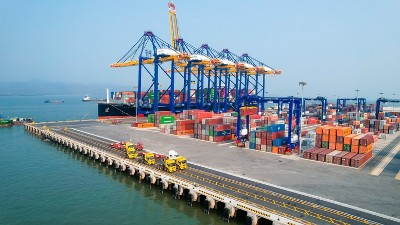
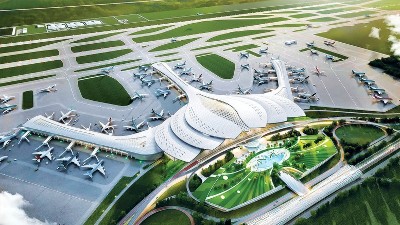
Fifth, logistics and seaports. The strategy includes developing the "super-port" complex of Cai Mep - Thi Vai in conjunction with the Can Gio port and the Cai Mep Ha Free Trade Zone (FTZ). This model necessitates seamless connectivity with industrial hubs, urban centers, and the Long Thanh International Airport.
Sixth, premium services, cultural industries, and digital content.
Seventh, urban tourism and high-quality healthcare.
 Google translate