


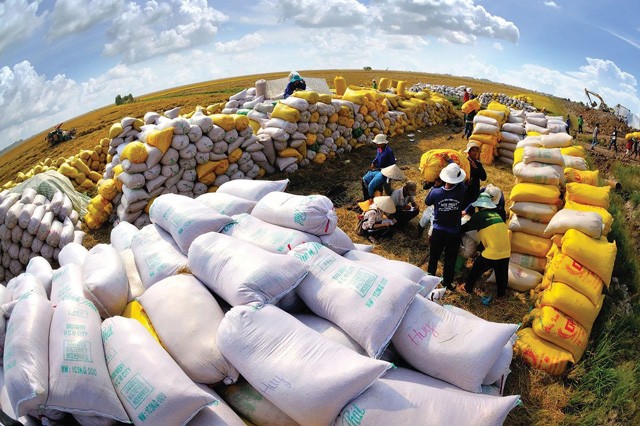
Figures from the Ministry of Agriculture and Environment (MAE) show that agriculture, forestry, and fisheries exports came in at an estimated $42.8 billion in the first seven months of 2026, a 7.5 per cent increase compared to the same period of 2025. Against an overall trade deficit of more than $20.52 billion in the period, Vietnam’s agriculture, forestry, and fisheries sector continued to serve as a key “pillar” in export performance, posting a surplus of $11.67 billion. The result not only demonstrates the sector’s resilience but also that it plays an important role in balancing the trade account and securing foreign exchange earnings for the country.
Several commodities post gains
Asia remained Vietnam’s largest export market for agriculture, forestry, and fisheries products in the first seven months, accounting for 45.2 per cent of total export value. The Americas followed with 21.4 per cent and Europe with 13.8 per cent, while Africa and Oceania accounted for just 2.3 per cent and 1.4 per cent, respectively.
By individual market, China remained Vietnam’s largest export destination, with a 21.9 per cent share, followed by the US with 19 per cent and Japan with 6.8 per cent. Exports to China rose 24.4 per cent and those to Japan 3.9 per cent, while exports to the US fell 1.6 per cent year-on-year.
Among Vietnam’s major agricultural exports, cashews and pepper posted positive growth. By contrast, several other commodities recorded declines in export value. Coffee exports reached 1.2 million tons worth $5.45 billion. Though volumes increased 10.8 per cent, export value fell 11.2 per cent. Rubber exports totaled 789,500 tons worth $1.55 billion, while tea exports reached 65,500 tons worth $119 million, with both commodities declining in both volume and value.
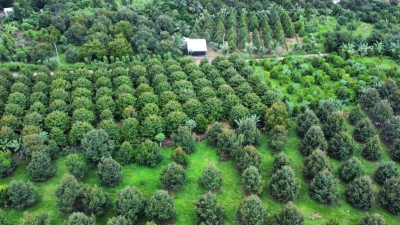
Notably, fruit and vegetable exports recorded the strongest growth among major agricultural commodities in the first seven months of the year, reaching $4.83 billion, up 24.9 per cent from the same period of 2025. In regard to durians specifically, Mr. Dang Phuc Nguyen, General Secretary of the Vietnam Fruit and Vegetable Association (VINAFRUIT), said exports reached $1.8 billion in the period, up about 30 per cent year-on-year. If market conditions remain favorable, full-year durian exports could surpass $4 billion.
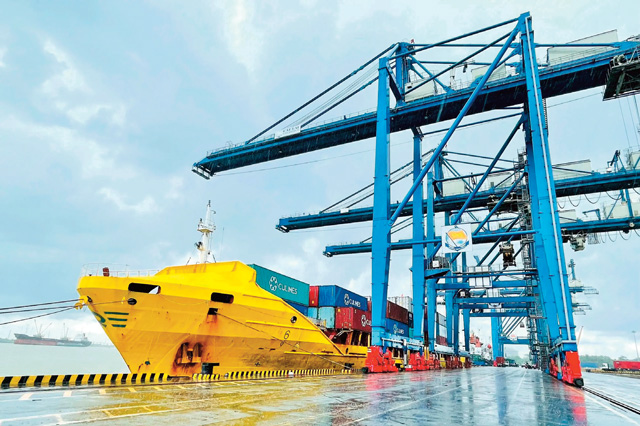
However, alongside market opportunities, fruit exporters have raised concerns in recent months over shortcomings in the issuance and management of growing area and packing facility codes. Lengthy administrative procedures, high testing costs, and the borrowing or leasing of codes have exposed businesses and growers to legal risks, with some even seeking to return codes that had already been issued.
To address these bottlenecks and accelerate agricultural exports, the government issued Resolution No. 36/2026/NQ-CP on July 31, 2026, shifting more decisively from pre-inspection toward self-declaration and post-inspection mechanisms while shortening processing times.
The new Resolution also streamlines administrative procedures. Organizations and individuals can submit applications directly to the Commune People’s Committee where the growing area or packing facility is located through the National Public Service Portal. All code data will be centrally managed by the MAE and connected to the traceability system.
Fisheries weather challenges
Vietnam’s fisheries exports continued to grow in the first seven months of 2026, reaching $6.85 billion, up 12.7 per cent from the same period of 2025. China, the US, and Japan remained the three largest markets, accounting for 24.2 per cent, 15.5 per cent, and 13.9 per cent of total exports, respectively. Exports to China surged 38.7 per cent and those to Japan 2.4 per cent, while exports to the US slipped 0.8 per cent.
By product, shrimp remained the leading seafood export, generating nearly $2.78 billion, up 12.6 per cent and accounting for about 41 per cent of total seafood export value. Pangasius (catfish) exports reached nearly $1.3 billion, up 8.8 per cent; crab exports approached $246 million, up 28.7 per cent; and shelled mollusks totaled $178 million, up 29.5 per cent. Tuna exports, meanwhile, stood at nearly $524 million, down 1.4 per cent year-on-year.
Explaining the decline in fisheries exports to the US, the Vietnam Association of Seafood Exporters and Producers (VASEP) said that under a decision announced by the Office of the United States Trade Representative (USTR) on July 23, 2026, Vietnamese seafood is subject to a 12.5 per cent Section 301 tariff; higher than the 10 per cent rate applied to several competing countries, including Ecuador, India, and Indonesia. This could increase downward price pressure on exporters, particularly shrimp businesses, which typically operate on thin margins.
Tuna is considered one of the product groups facing the greatest pressure in the US market, as it is affected both by the Section 301 tariff and requirements under the Marine Mammal Protection Act (MMPA). In the EU market, the sector also continues to face challenges from the “yellow card” for Illegal, Unreported, and Unregulated (IUU) fishing, the electronic CATCH traceability system, and rules of origin under the EU-Vietnam Free Trade Agreement (EVFTA).
VASEP said the target of exceeding $12 billion in seafood export value in 2026 remains achievable. However, amid increasingly stringent trade barriers, tariffs, and traceability requirements in major markets, the sector’s growth is expected to slow in the final months of the year compared with the pace recorded during the first seven months.

Despite the positive results achieved, agricultural exports still face a number of limitations. Growth among commodity groups has not been truly even or sustainable; some have increased in volume while their export value has declined. Links between raw material production areas, cooperatives, processing companies, and exporters remain weak in many areas. In addition, many commodity groups remain dependent on a small number of major markets, creating significant risks as countries increasingly impose technical barriers and trade-defense measures.
The agriculture, forestry, and fisheries sector is striving to post total export value of more than $74 billion in 2026. This means the sector must generate approximately $31.2 billion in value over the remaining five months of the year. To achieve this target, ministries and agencies need to continue working closely to remove bottlenecks related to markets, taxes, customs, credit, insurance, and logistics, while strengthening support for businesses in trade promotion, market access, and the timely resolution of emerging barriers.
For industry associations, it is necessary to strengthen market forecasting capabilities and regularly update information on supply and demand, prices, import policies, and risk factors. At the same time, associations should develop codes of conduct, quality commitments, and mechanisms to coordinate supply, avoiding situations in which domestic businesses independently cut prices and weaken the sector’s overall negotiating position.
Businesses, for their part, need to proactively strengthen long-term links with cooperatives and raw material production areas, step up investment in deep processing, build brands, strengthen risk-management capabilities, and diversify export markets and payment methods to improve competitiveness and achieve sustainable growth.
(Excerpt from remarks delivered at a July 30, 2026 conference on promoting agriculture, forestry, and fisheries exports in the second half of 2026)





 Google translate