


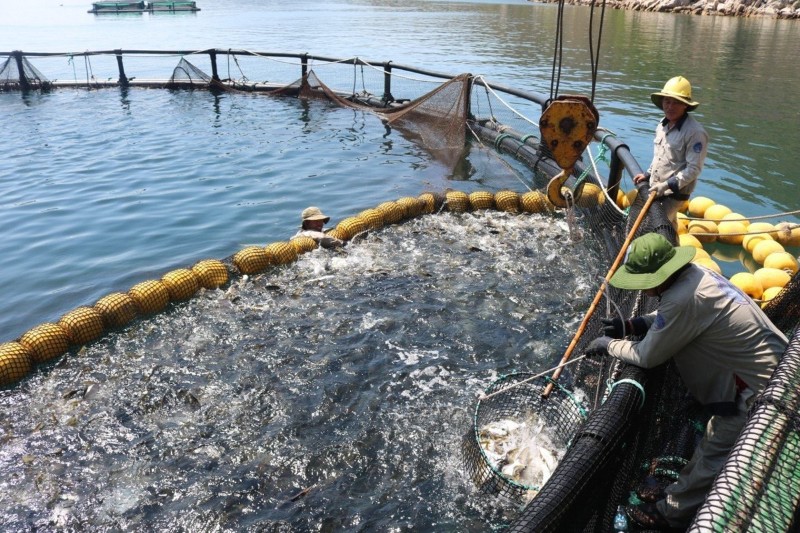
Vietnam's fisheries sector maintained positive growth momentum in the first half of 2026, with GDP value-added reaching 4.88% and contributing 1.56% to the national GDP.
Aquaculture remains the primary driver of this growth, powered by high-tech applications, stable consumption markets, and a recovery in exports, while capture fisheries maintained steady growth amid a shift toward sustainable development.
According to the National Statistics Office, aquaculture continues to play a leading role in the industry’s expansion, with second-quarter production estimated at 1.68 million tons, a 5.8% increase over the same period last year.
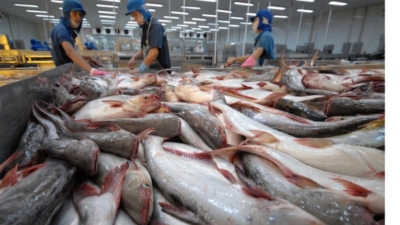
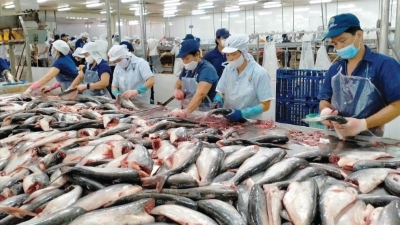
For the first six months of the year, cumulative aquaculture production reached nearly 3 million tons, up 5.7%. This included 1.98 million tons of farmed fish (up 4.4%), 702,500 tons of shrimp (up 8.1%), and 306,600 tons of other aquatic species (up 9.1%).
Notably, marine farming saw strong growth of 11.7%, while other seafood categories grew by 12.1%, specifically led by a 52.7% surge in oyster production.
The National Statistics Office noted that these results reflect the industry's shift toward sustainability—maintaining reasonable capture levels while focusing on increasing added value through expanded cultivation and scientific application to meet both domestic and export demands. With this momentum, the fisheries sector is expected to remain a vital contributor to the growth of the agriculture, forestry, and fisheries region throughout 2026.
This progress coincides with a recent review by the Ministry of Agriculture and Environment's Department of Fisheries regarding the Fisheries Development Strategy to 2030, with a vision to 2045.
For the 2021-2025 period, the industry has successfully met and exceeded several key targets, transitioning strongly toward a model of "reduced exploitation and increased cultivation," which creates a solid foundation for the next phase of development.
During the 2021-2025 period, total fisheries production maintained an average annual growth of 2.6%, surpassing the 9.8-million-ton target set for 2030.
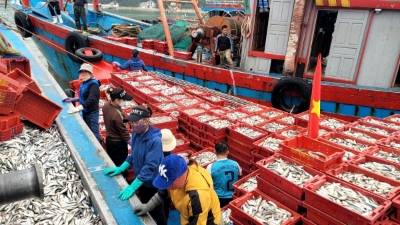
The production structure continues to move toward sustainability: capture fisheries decreased by an average of 0.9% per year to preserve resources, remaining at 3.8 to 3.9 million tons, while aquaculture grew by an average of 5.2% per year, rising from 4.89 million tons in 2021 to 6.11 million tons in 2025.
National programs have been implemented to modernize aquaculture through high-tech integration, climate change adaptation, enhanced traceability, the issuance of farm codes, VietGAP certification, and digital transformation.
Looking ahead to the 2026-2030 period, the sector aims to accelerate its transformation into a "green, clean, and responsible" industry. By focusing on high added value and deep international integration, Vietnam strives to become one of the world's top three seafood producers and exporters by 2045.



 Google translate