


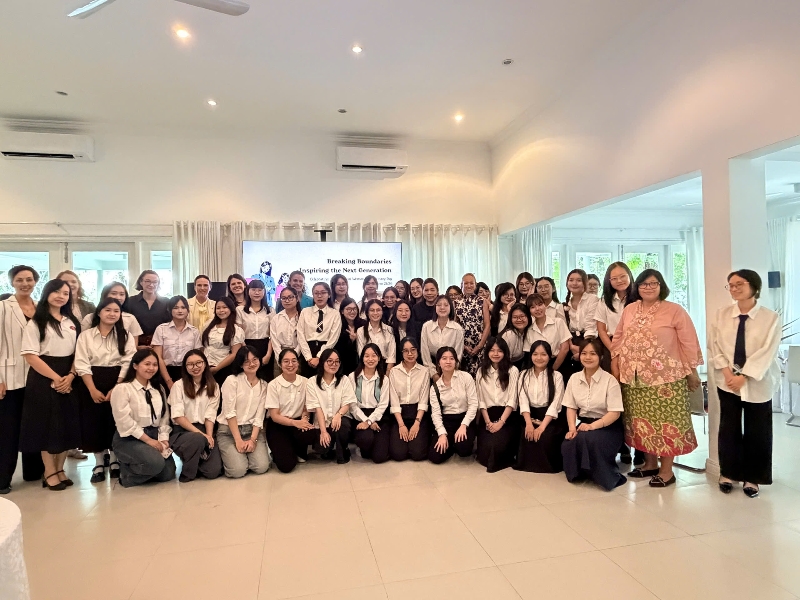
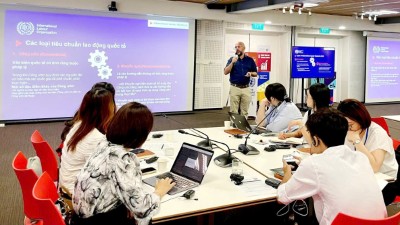
To mark the International Day of Women in Diplomacy on June 24, eight foreign female Consuls General serving in Ho Chi Minh City met with around 40 female students from the Faculty of History and International Relations at the University of Social Sciences and Humanities (Vietnam National University Ho Chi Minh City), to discuss opportunities, challenges, and the growing role of women in diplomacy.
The event brought together Consuls General from Australia, Canada, Germany, Indonesia, Italy, the Netherlands, Thailand, and the United Kingdom. Instead of traditional speeches, the program was organized as a series of roundtable discussions, allowing students to engage directly with each Consul General in 10-minute conversations.
Topics ranged from leadership, gender equality, and career development to work-life balance, personal identity, and the future of women in diplomacy.
Building confidence, networks and leadership skills
H.E. Ms. Kate Wallace, Australian Consul-General in Ho Chi Minh City, emphasised the importance of professional networks and mentorship in helping women advance their careers. “All around us are people who will go on to achieve remarkable things in different fields. It is important to value and nurture those relationships from today,” she said.
According to Ms. Wallace, although women are increasingly represented in leadership and diplomatic positions, gender stereotypes and structural barriers continue to exist. She encouraged young women to have confidence in their abilities, actively seek opportunities, and build supportive networks that can help sustain long-term career growth.
H.E. Ms. Alexandra Smith, British Consul General in Ho Chi Minh City, noted that gender balance has largely been achieved at the entry level of the UK diplomatic service, with women and men joining the profession in nearly equal numbers.
However, she noted that gender gaps tend to emerge later in careers, particularly at senior leadership levels. According to Ms. Smith, many women face additional responsibilities related to family care, which can affect career progression, while less visible barriers, such as informal professional networks, may also limit opportunities.
According to Ms. Smith, rather than introducing special recruitment policies for women, the UK focuses on promoting diversity and inclusion across the public sector. This includes internship programmes for people from diverse backgrounds, regular workforce surveys, and data-driven human resources policies aimed at ensuring public institutions reflect the diversity of British society.
She also highlighted the UK's "blind recruitment" approach, under which information such as an applicant's name, gender, and educational background is removed during the initial screening process to reduce unconscious bias and ensure candidates are assessed primarily on their skills and capabilities.
Ms. Smith encouraged students to seek mentors throughout their careers, noting that trusted advisers can provide valuable guidance, fresh perspectives, and support during key professional milestones.
Progress made but barriers remain
Sharing her perspective on women in diplomacy, H.E. Ms. Wiraka Moodhitaporn, Consul General of Thailand in Ho Chi Minh City, noted that while opportunities for women have improved significantly, a number of barriers remain. In many Asian societies, traditional perceptions of leadership are still often associated with men, while the demands of diplomatic careers, including frequent relocation and extensive travel can create additional challenges for women balancing professional and family responsibilities.
However, she observed that female representation in diplomacy is steadily increasing. In Thailand, women now account for a growing share of diplomats, ambassadors, and senior officials within the Ministry of Foreign Affairs. According to Ms. Wiraka, today’s generation of women is more confident in speaking up, pursuing leadership roles, and balancing career aspirations with personal life.
She also emphasized that many of the challenges faced by women in diplomacy are universal rather than regional. Regardless of whether they work in Asia or Europe, women often encounter similar decisions regarding career progression, family commitments, and leadership opportunities. "There are more opportunities today, and we are seeing more women in leadership positions. The key is to continue creating an environment where women can contribute and advance on equal footing," she said.
Speaking with Vietnam Economic Times/VnEconomy, H.E. Ms. Raïssa Marteaux, Consul General of the Kingdom of the Netherlands in Ho Chi Minh City, noted that the Netherlands pursues a feminist foreign policy that promotes equal representation of women in leadership positions, peace processes, and diplomatic affairs. However, she acknowledged that gender parity has not yet been fully achieved, even within the Dutch diplomatic service. Ms. Marteaux herself is the first woman appointed by the Netherlands as Consul General in Ho Chi Minh City.
According to the Dutch diplomat, women are playing increasingly important leadership roles not only in the public sector but also in business. Nevertheless, many barriers remain, and continued dialogue is needed to identify and address them.
Reflecting on the event, Ms. Marteaux said she was particularly impressed by the students’ curiosity, initiative, and willingness to learn. Diplomacy, she noted, is fundamentally about communication, listening, and continuous learning, all qualities that the participants demonstrated throughout the discussions.
Sharing her advice with the students, the Consul General emphasized two key messages: find your voice and be yourself. Every individual has a unique perspective that deserves to be heard, regardless of age, experience, or gender. Greater diversity of perspectives, she said, ultimately leads to better decision-making in both diplomacy and society. “As long as we have not achieved genuine equality, we cannot say that our efforts to advance women in diplomacy are enough,” Ms. Marteaux stressed.


 Google translate