


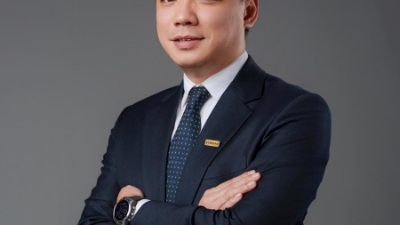
After nearly four decades across trading, treasury, risk, people, and governance, Mr. Jason Ho has seen banking through booms, crises, and transformations.
Now, as a member of Eximbank’s Board of Directors, he is contributing that experience at a pivotal stage in the bank’s development. His view of banking is disarmingly simple: it is not a race for the biggest balance sheet or the fastest profit. It is a business built on trust - and on the discipline to protect that trust over time.
“Do what is right.” That is the phrase Mr. Ho always persists. As simple as it sounds, however, it captures a principle shaped by some of the most consequential moments of his career.
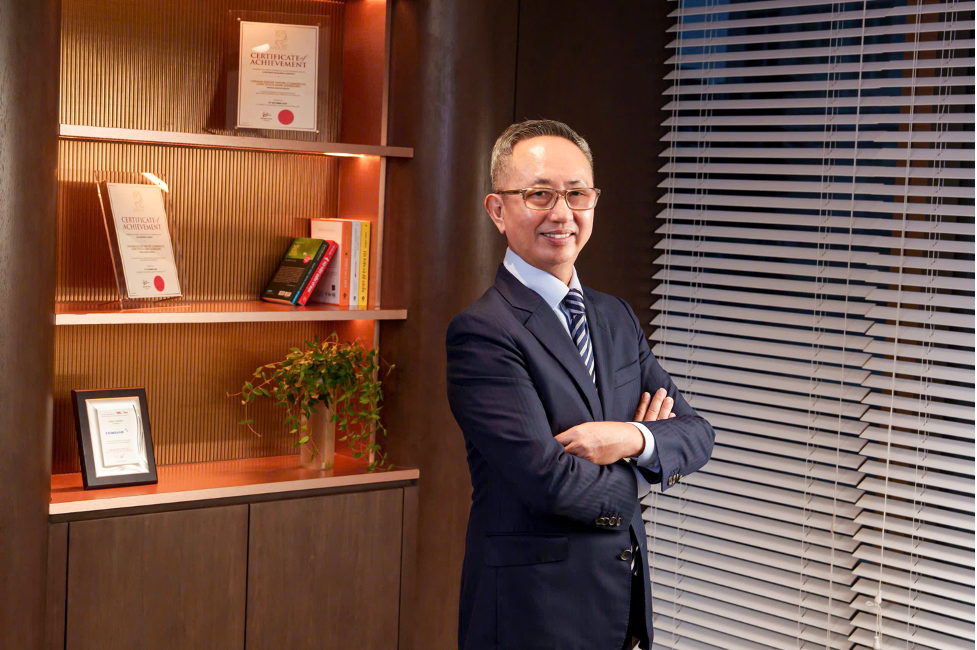
For Mr. Ho, doing the right thing is not an abstract statement of values. It is a practical test of strategy: understanding what a bank is good at, knowing the risks it is prepared to take, and resisting opportunities that may look attractive today but undermine the institution five or ten years from now.
Lessons forged in crisis
Mr. Ho began his career in 1986 at Citibank, later moving to Volvo Group Treasury Asia, Standard Chartered, and KBC Bank before joining OCBC.
Two financial crises, however, did more than any position in shaping his philosophy of banking.
During the 1997 Asian financial crisis, Mr. Ho was corporate treasurer for Volvo in Asia-Pacific. He watched companies borrow USD at lower interest rates without fully appreciating the currency risk. When local currencies came under pressure, he spent weeks travelling across the region to manage the fallout. A decade later, the global financial crisis offered another lesson: institutions could report strong profits even as leverage, liquidity risk, and weak judgement were building beneath the surface.
The conclusion he drew from both episodes was not that banks should avoid risk. Risk is inherent in banking. The responsibility is to understand it, price it, manage it - and never lose sight of whose money and confidence are ultimately at stake.
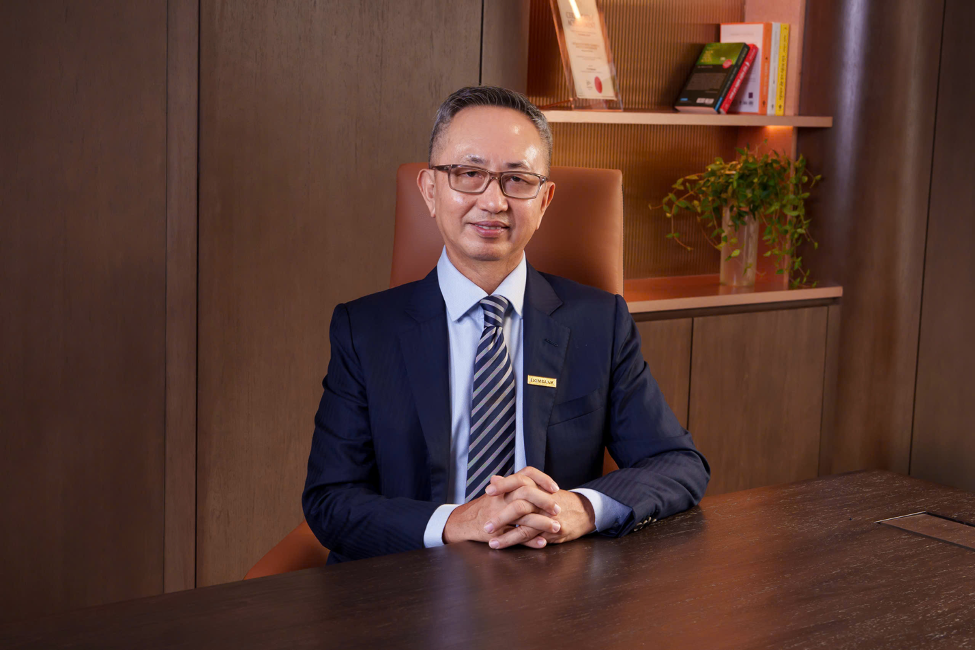
Banking philosophy: Responsibility before returns
That perspective informs what Mr. Ho considers the foundations of a good bank: fiduciary responsibility, reputation, sound governance, and sustainable profitability. The order matters. Profit, in his view, is not the ultimate purpose of banking; it is an outcome when an institution consistently makes sound decisions, manages risk well, and earns the confidence of its customers.
“A good bank has an enormous responsibility towards its depositors, clients, employees, and shareholders,” he said. “Profitability is an outcome of the quality of what you have done.”
The point is personal for Ho. He grew up in a low-income family in Singapore and remembers his mother setting aside small amounts in the Post Office Savings Bank. That experience left him with a lasting appreciation of what even a modest deposit can mean to a household. Asked what a depositor should expect beyond interest rates, his answer begins with two words: “peace of mind.”
Reputation is the other side of that promise.
“It takes many years to build a reputation, but it can be destroyed in the blink of an eye,” he continued. Once confidence disappears, even a financially-sophisticated institution can find its room to manoeuver narrowing rapidly.
This is why he returns repeatedly to governance. A strong corporate governance framework, he argues, creates the discipline for a bank to define responsibilities clearly, challenge assumptions, keep risk within agreed boundaries, and identify problems before they become crises.
For Mr. Ho, the Board’s contribution is therefore distinct from management’s. Management executes strategy and runs the bank. The Board provides oversight, approves strategy, oversees risk appetite, and asks difficult questions - while maintaining enough distance to exercise independent judgement.
“The Board should be close to the management team, but not too close,” he said. “Management executes and operates; the Board provides oversight.”
His career gives him a broad lens for his role. He has managed balance sheets and liquidity, worked through financial crises, led large-scale people transformations, and served on risk, ethics, digital, and sustainability committees. At Eximbank, he sees that experience as perspective for Board discussions - not a mandate to run the bank.
“In banking, it is not about making money at all costs,” he believes. “It is about building a sustainable business that can grow in a meaningful way. If you do the right things - with the right people, culture, risk management, and technology, supported by strong governance - sustainable profitability will follow.”
Long-term view of Eximbank
Mr. Ho joined Eximbank’s Board in 2026 as the bank entered an important period of strategic review and transformation. He is careful about the distinction between governance and execution: his role is to contribute independent judgement and experience at the Board level, while management remains accountable for operating the bank and delivering results.
That distinction also shapes how he thinks about success. Eximbank, he says, does not need to become the biggest bank in Vietnam. More important is whether it can build durable customer trust, strengthen its funding profile, keep risks under control, and create sustainable returns over time.
For the Board, he favors a balanced scorecard rather than a single financial measure: sustainable return on equity (ROE) growth, a stronger funding profile, customer satisfaction, employee engagement, fewer fraud incidents and controlled non-performing loans (NPLs). One telling culture measure, he suggests, is whether employees would recommend Eximbank as a place to work.
The same long-term lens applies to technology. Mr. Ho sees AI and digital investment as enablers, not ends in themselves: tools to understand customers better, improve decisions and simplify experiences, while preserving human judgement where it matters.
What will change is the speed at which banks must adapt. Customer behavior is evolving and technology is reshaping expectations. “The core pillars won’t change,” he said. “But we must increase our ability to adapt and our learning agility.”
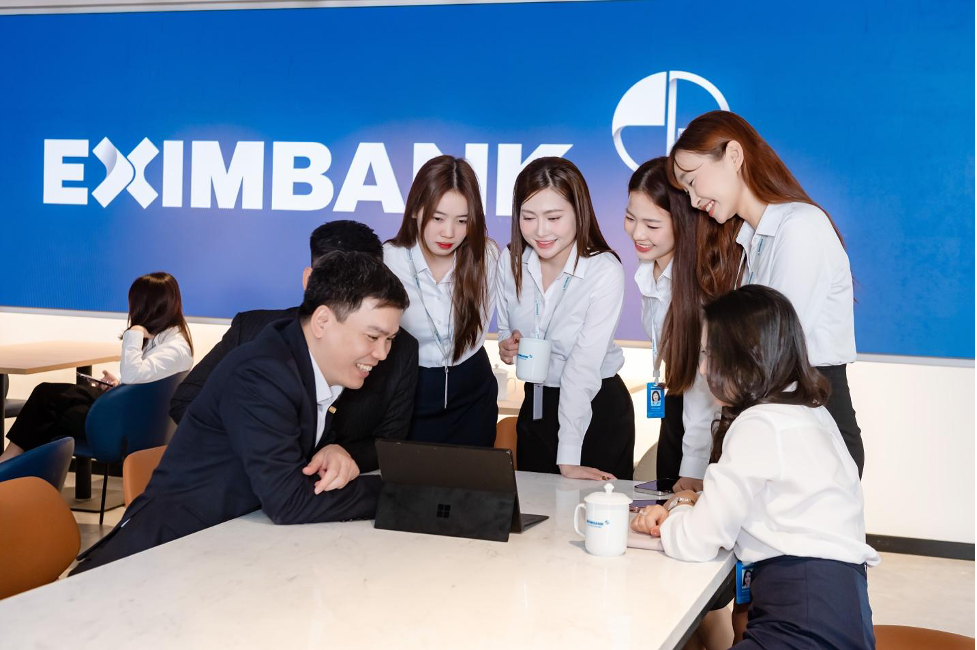
For customers, he wants that transformation to translate into something far less technical: Peace of Mind. For investors, the corresponding signals are governance, transparency, and institutional discipline.
Asked what depositors should expect beyond interest rates, Mr. Ho answered without hesitation: “Sleep at night knowing your deposits are safe. Trust that the bank will do the right thing. Simple, easy-to-use services. And fast, open support when problems arise.”
Eximbank is still early in that journey. The bank is examining customer journeys, where AI can improve service, and where human intervention remains important. For Mr. Ho, strategy, risk, culture, technology, management, and Board oversight must reinforce one another rather than move in isolation.
At the Board level, an immediate priority is to ensure that the bank has a clear and comprehensive strategy for its next phase of development, with the Board providing strategic direction and oversight and management responsible for execution. Mr. Ho is realistic about the scale of the task. “We are moving fast,” he said. “If we get 70 per cent of it right over five years, Eximbank will be a very different bank.”
His ambition is not about size. “Eximbank doesn’t need to be the biggest,” he said. “We need to do things correctly.” He also hopes to help develop a Young Banker Program to build technical capability and the right values in a new generation - talent he sees as essential not only to Eximbank but to Vietnam’s development as a credible financial center.





 Google translate