


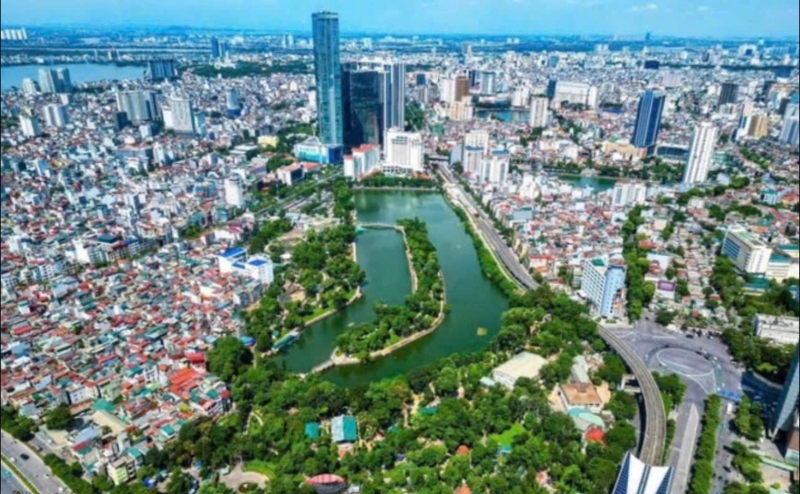
The Hanoi People’s Committee has approved the 1/500 scale detailed planning for a multi-purpose urban area located in Thu Lam and Dong Anh communes. The project is designed as a modern, integrated, and multi-functional urban model, combining various housing types with synchronized infrastructure and amenities.
The urban area covers approximately 696 ha, with an expected population of 200,000 and a total investment capital of about VND60 trillion ($2.28 billion).
According to the planning, the projected urban area is divided into Zone A and Zone B. Different housing types—including resettlement, social, official (civil service), and commercial housing—will be intermingled flexibly, ensuring all residents have equal access to infrastructure and essential services. The project follows a "live-work-play" model to help maintain and develop local livelihoods.
The land-use structure includes land for commercial and service facilities; education; culture, health, and sports; greenery and water surfaces; residential areas; transportation and parking; and technical infrastructure, among other urban functions.
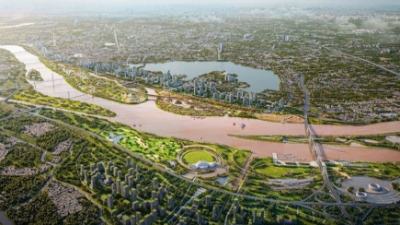
Public facility systems are arranged within a service radius of approximately 500 m, providing convenient access for residents. A network of green spaces and regulating lakes will be interconnected to create an ecological landscape in the southwest of Thu Lam commune and the east of Dong Anh commune.
High-rise building complexes will be situated along major urban traffic routes, such as Ring Road 3, the Hanoi–Thai Nguyen Expressway, the road to the Dong Anh Industrial Park, and at grade-separated interchanges and urban gateways. Additionally, commercial walking streets, cultural service spaces, entertainment areas, and late-night convenience stores will be established along main axes and central areas to develop a vibrant night-time economy.
The project also prioritizes smart city development, featuring smart LED lighting systems, digital technology applications, and AI-powered cameras for traffic monitoring. AI-driven fire and flood warning systems will be connected to a Smart Operation Center (SOC) to share real-time data with residents.
Furthermore, the urban area will be equipped with electric vehicle (EV) charging stations, public bicycle stations, and an internal bus system to encourage green transportation and ensure convenient and safe mobility for residents.

 Google translate