


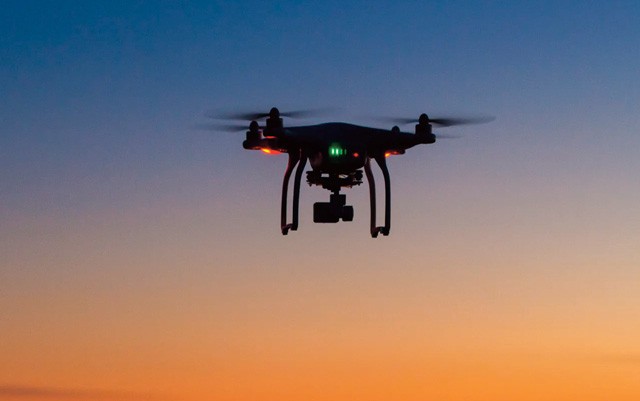
There is a firm belief that the space and low-altitude economies can drive Vietnam’s ambition of posting double-digit economic growth in the time ahead, but both face substantial bottlenecks. A host of institutional, infrastructural, technological, and market barriers were highlighted by business leaders, researchers, experts, and policymakers attending the “Developing Vietnam’s Aerospace and Low-Altitude Economies” dialogue held recently by Tap chi Kinh te Viet Nam / Vietnam Economic Times / VnEconomy.
Current barriers
As a public science and technology organization working in a specialized field, the Vietnam National Space Center (VNSC) has certain advantages in carrying out its mandate. But it also faces significant challenges due to the new, complex, and interdisciplinary nature of aerospace.
Dr. Le Xuan Huy, Deputy Director of the VNSC, said it has encountered numerous difficulties while some existing mechanisms need further refinement to better reflect the sector’s specific characteristics.
The first difficulty is financing and investment efficiency. For satellite projects, returns extend beyond direct revenue from satellite data and imagery to indirect benefits such as disaster prevention, resource management, environmental protection, scientific research, national defense and security, and the development of other economic sectors. These benefits, however, are difficult to fully quantify financially.
The second are legal procedures covering telecommunications, frequencies, and satellite operations. Satellites and ground stations form radio communication links and must comply with relevant regulations, requiring VNSC to complete procedures ranging from establishing dedicated telecommunications networks and obtaining frequency-use licenses to coordinating frequencies and orbital positions.
And the third are procurement and bidding procedures for specialized aerospace services. The global satellite launch market has a limited number of qualified providers, while launch slots often need to be booked well in advance. Conventional supplier-selection procedures can therefore be difficult to apply when few providers can meet technical, scheduling, and satellite compatibility requirements.
The same applies to satellite insurance; a highly-specialized market with relatively few insurers and reinsurers able to underwrite such risks. International practice typically requires project owners, brokers, and insurers to conduct technical discussions, risk assessments, and market consultations before an arrangement is made.
Projects using public funds, however, must still comply with procurement, bidding, and financial regulations. The challenge is to establish procedures that ensure transparency and legal compliance while remaining compatible with the international aerospace insurance market.
Mr. Ta Ngoc Thanh, Director of HTI UAS, the unit responsible for the HTI Group’s UAV research and manufacturing program, said companies seeking licenses to research, manufacture, assemble, maintain, and service UAVs must meet numerous requirements.
They must have a design and prototype and provide complete technical information, including evidence that the UAV meets applicable standards. But obtaining such documentation requires research, testing, and flight trials - and conducting those trials first requires a permit, which remains difficult to obtain.
Vietnam also lacks comprehensive domestic standards for determining whether a UAV meets the required criteria. Companies mainly refer to European, US, or Chinese standards, applying whichever they can meet. Product certification is further complicated by the lack of specific and detailed guidance.
As a result, gaps exist not only in technical standards but also in supply chain mechanisms and other foundations of the industry. HTI UAS believes regulators need to provide clearer guidance to help businesses move from product development to actual deployment.
“Hunger” for testing zones
In the low-altitude economy, particularly for UAVs, testing zones are critical in evaluating products before they are finalized and commercialized. Yet Vietnam faces a severe shortage of authorized testing areas, leaving companies with products to develop but few places to legally test them. “Before Decree No. 288/2025/ND-CP [on the management of unmanned aircraft and other aerial vehicles], UAV research, manufacturing, and testing faced a paradox,” Mr. Thanh explained. “You could have the components to assemble a UAV, but there was nowhere to test it. To test it, you need a product. To test the product, you had to register it. Yet that product could not be researched and manufactured.”
Even after Decree No. 288, he continued, finding an authorized flight testing area where companies can freely conduct test flights remains difficult.
Colonel and Associate Professor Nguyen Huy Hoang from the Military Technical Academy said many Vietnamese companies have the technical capacity to manufacture equipment but are held back by lengthy administrative procedures for obtaining production eligibility certificates.
This can delay contract execution with partners, while Vietnam also lacks sufficiently large flight testing areas to assess the technical safety of aerospace and UAV products before commercialization.
The northwestern province of Dien Bien recently became the first locality to receive approval for a controlled sandbox for the low-altitude economy, under the Law on Digital Technology Industry and the Law on Science, Technology and Innovation. However, the sandbox currently covers only service applications. Aircraft independently researched and manufactured by domestic companies also fall under the Law on Civil Air Defense and airspace management rules.
Against the backdrop of rapid global investment in the aerospace and low-altitude economies, experts believe Vietnam needs to move quickly on measures such as controlled testing frameworks for domestically-developed aircraft, import-duty exemptions for raw materials, components, and equipment used in aerospace technology research and manufacturing, and liability exemptions where damage occurs despite full regulatory compliance. Such measures would help Vietnamese companies keep pace with these fast-moving and strategically-important sectors.
Mr. Hoang said Vietnam should establish an open legal framework for the low-altitude economy, develop flight-testing areas, and build national unmanned traffic management (UTM) infrastructure to remove barriers facing businesses and research organizations.
Areas requiring attention
Mr. Nguyen Van Thuat, Deputy Director of the Department of Digital Economy and Digital Society at the Ministry of Science and Technology (MoST), said the biggest bottleneck is the lack of a unified governance framework for the low-altitude economy, given it is a new and cross-sectoral field.
Indeed, it spans defense, security, science and technology, aviation, and radio frequencies, among other matters. If each agency manages one part of the sector and businesses must navigate them separately, compliance costs can become prohibitive, making it difficult to build a market at scale, Mr. Thuat said.
He identified three key areas requiring attention. First is the national governance model. Yet domestically-manufactured aircraft currently face requirements that can be as stringent as those applied to commercial equipment. Imported equipment can generally begin operating once it receives a flight permit. For domestically-manufactured equipment, however, questions remain over how quality and standards should be assessed, who should certify them, and who should determine whether an aircraft is fit to fly. These uncertainties remain major obstacles for Vietnam’s UAV industry.
Second is digital infrastructure, particularly the UTM system. In the low-altitude economy, the UTM is effectively the backbone of digital airspace management. Managing a handful of aircraft is very different from managing hundreds or thousands, requiring automated systems and algorithms rather than traditional methods.
Third is the testing environment. Vietnam remains short of suitable testing space for low-altitude economic activities. The sandbox being implemented in Dien Bien province is the country’s first for the sector, allowing certain requirements to be waived or applied more flexibly.
Within the sandbox, businesses may receive exemptions or flexibility on two of six minimum flight conditions, while 60 of 69 requirements related to radio frequencies and electromagnetic compatibility under Circular No. 39 from the Ministry of National Defense may be reduced.
All sandbox flights must be planned, monitored, tracked, and reported through a unified data architecture. The resulting data will help the government assess safety, economic efficiency, and applicable standards, while identifying regulations that could be simplified.
Mr. Thuat stressed that developing the institutional framework for the low-altitude economy is a shared responsibility among multiple ministries and agencies, rather than solely MoST.
MoST has proposed a two-track management model. The first would cover commercialized equipment, which must meet required technical specifications, standards, and regulations. The second would cover equipment still undergoing testing, with a more flexible regulatory approach, to give Vietnamese UAV manufacturers greater room to test, refine, and ultimately accelerate innovation in the low-altitude economy.





 Google translate