



What are the reasons behind the rapid increase in housing prices and their irrationally high levels today?
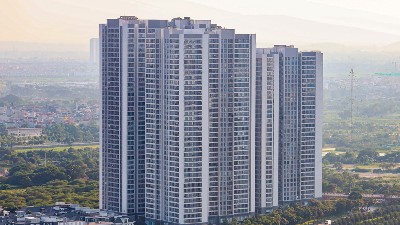
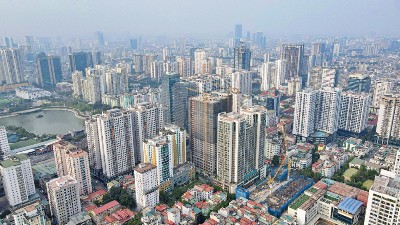
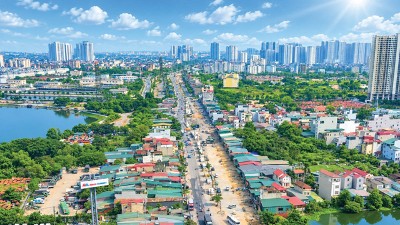
Housing prices have risen continually in recent years, with some areas even experiencing “fever” in the housing and land markets. There are many reasons why, but the fundamental one remains the mismatch between supply and demand.
For a long time, real estate projects were effectively “frozen.” Few new projects were launched, while many already under development were stalled by legal obstacles and could not be completed or put into operation. This has created a severe supply shortage even as Vietnam grows rapidly, liquidity remains strong, and housing demand continues to rise.
The imbalance is not only in the overall supply but also in its composition, with supply concentrated largely in the high-end segment while affordable housing, despite strong demand, has been largely overlooked.
Another major factor is widespread speculation. Many completed housing units have been bought and held by investors waiting for prices to rise before reselling for a profit. This has turned housing from an asset for use into an asset for wealth accumulation.
Some brokers and investors have also accumulated properties and created artificial scarcity to drive up prices. Together, these factors have pushed housing prices steadily higher, to far beyond what ordinary people can afford.
Given such challenges, can the market still fulfill its role?
The new development model is not simply about economic growth. It must be a comprehensive model built on multiple pillars - economic, social, security and defense, and environmental - with people at its center, both as the ultimate goal and as the driving force.
Development must revolve around people’s needs, and housing is one of the most fundamental. It not only reflects basic living conditions but is also a measure of living standards, quality of life, and the level of social development. Therefore, the housing market must ultimately be geared toward meeting people’s housing needs.
At the same time, if we effectively develop the housing market in particular and the real estate market in general, they can have spillover effects across an estimated 40 industries and sectors, including labor, construction, building materials, consumer goods, and interior and exterior furnishings and equipment.
Numerous figures show that every unit of capital invested in real estate can stimulate an additional 1.5 to 2.5 units of investment in other sectors. This creates broader economic growth. It is estimated that a 1 per cent increase in real estate growth can generate roughly 0.1-0.2 per cent growth in related industries in the short term.
Therefore, accelerating real estate growth would not only contribute to economic growth, as mentioned above, but also help address the shortage of housing supply. However, to achieve this, we must address the market’s shortcomings, particularly by removing the legal obstacles that have become a significant barrier to its sustainable development.
The Party Central Committee recently issued Resolution No. 21-NQ/TW, calling for continued amendments to the Land Law and related legislation toward greater consistency and coherence. In your view, once the Resolution’s directions are institutionalized, what will happen to housing supply and demand?
Resolution No. 21 sets out a number of objectives and solutions to manage and use land more effectively, turning land from a potential, untapped resource into an important resource for development.
In particular, it calls for decisive action to remove the legal difficulties and obstacles that have seen many real estate projects “mothballed.” Once these projects are unlocked, they can restart, freeing up resources for development, creating new momentum for growth, and, more importantly, increasing housing supply across different segments.
This will make an important contribution to restructuring the market, moving it beyond a concentration on high-end real estate projects and toward the stronger development of commercial housing that is affordable for ordinary people as well as rental housing and social housing.
Clearly, diversifying the housing segments in this way will create a more balanced and professional housing market, with the potential to meet the needs of a wider range of buyers, from those with substantial financial resources seeking high-end homes to those with more limited means who need quality housing within their budgets, such as young people, workers who move frequently, and lower-income households.
“Ensuring that every citizen has a place to live” is also the goal behind amendments to the Land Law, the Law on Housing, and other relevant legislation. What do you believe market participants need to do to make this goal a reality?
The goal of “ensuring that every citizen has a place to live” is enshrined in the Constitution as a fundamental right. But whether that right can be fulfilled depends largely on whether people have adequate access to housing. Achieving this goal therefore requires coordinated efforts from all levels of government, sectors, businesses, and citizens.
The State must establish a strong policy framework to support diverse types of housing and, in particular, encourage businesses to develop affordable and rental housing.
Businesses, as the main investors and developers, should focus on segments with genuine demand and real value. As the legal framework improves and the market becomes more selective, choosing the wrong segment could result in weak liquidity or unsold inventory, exposing developers to greater risks, particularly those overly reliant on credit.
Citizens, meanwhile, also need to shift their mindset from homeownership to having a place to live. For those without substantial financial resources, taking on heavy debt simply to own a home can mean spending much of their working lives paying it off, often at the expense of other needs such as children’s education, healthcare, leisure, and travel.
Renting, by contrast, can provide secure housing while offering greater flexibility to move when changing jobs or schools, starting a family, or needing more space. Without the burden of mortgage payments, household income can also be allocated more broadly to other needs, potentially delivering a better quality of life than devoting one’s entire working life to owning a home.
A well-developed rental housing market would also bring broader social benefits. It would make housing accessible to more people while ensuring that a greater share of the existing housing stock is actually used, reducing waste and improving social equity.
A high homeownership rate is not the only measure of housing security. In many developed countries, renting is more common than owning. As the gap between the need for housing and the ability to buy continues to widen, homeownership is not necessarily the optimal solution. The priority should be access to quality housing that matches people’s needs and ability to pay, which makes developing a professional rental housing market increasingly important.

Completing a real estate project takes at least three to five years on average, so we cannot expect large volumes of new housing to immediately flood the market next year. Nevertheless, we can reasonably expect that during the 2027-2030 period the housing market will return to a more stable footing in terms of both supply and demand and prices, without the runaway price increases seen in recent years.
How do you see the housing market developing in 2027?
Over the past year, many stalled projects have had the obstacles removed and resumed their development. Many new projects have also been launched, including several large-scale urban developments spanning thousands of hectares.
As a result, housing supply is expected to increase significantly in the time ahead. As supply rises, supply and demand will become more balanced, leaving less room for speculation and price manipulation. This should bring housing prices down to more reasonable levels.
However, completing a real estate project takes at least three to five years on average, so we cannot expect large volumes of new housing to immediately flood the market next year.
Nevertheless, we can reasonably expect that during the 2027-2030 period the housing market will return to a more stable footing in terms of both supply and demand and prices, without the runaway price increases seen in recent years.
The market’s various segments will be restructured in a more balanced manner, while supply will become much more diverse, giving people with genuine housing needs a wider range of choices.
Put simply, five years ago, the housing market was largely a seller’s market. Over the next three to five years, it will depend much more on the buyer.







 Google translate