



At a recent real estate forum organized by the Vietnam National Real Estate Association, Deputy Minister of Construction Nguyen Van Sinh said the development of rental housing has been identified by the government and the Prime Minister as a key priority to address the housing needs of citizens and workers. Under this approach, the State will play a leading role in shaping the market and mobilizing social resources to expand the rental housing segment.
He also emphasized the real estate market’s strategic role in the economy, noting its contribution to infrastructure development, housing provision, social welfare, urbanization, tourism, and economic growth. According to the Deputy Minister, Vietnam’s legal framework already provides for a range of rental housing models, including social housing, worker accommodation, official residences, commercial rental housing, and privately-developed rental properties, creating an important foundation for expanding rental housing supply in the years to come.
Market recovery gains momentum
As Vietnam pursues ambitious economic growth targets while maintaining macro-economic stability, the Party, National Assembly, government, and Prime Minister have introduced a series of policies aimed at fostering a stable, transparent, and sustainable real estate market.
Authorities have revised key laws governing investment, land use, planning, construction, housing, and real estate business activities, while also accelerating project approvals to increase housing supply. These reforms have improved consistency across the legal framework, streamlined administrative procedures, and helped remove longstanding obstacles facing investors and developers.
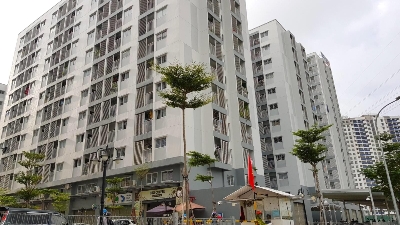
The government has continued to advance its program to build at least 1 million social housing units by 2030. To date, 781 projects totaling 720,055 units are under development, equivalent to 72 per cent of the target. Of these, 231 projects comprising 180,850 units have been completed, while 234 projects with 233,962 units are under construction and 316 projects with 305,243 units have received investment approval.
In 2025 alone, 102,633 social housing units were completed, exceeding the annual target of 100,275 units. During the first five months of 2026, construction began on an additional 34 projects comprising nearly 30,000 units.
The government has also stepped up efforts to resolve bottlenecks affecting real estate projects, particularly legal and administrative issues. According to the Ministry of Construction (MoC), obstacles have been removed at 3,289 land-related projects covering more than 70,000 ha, allowing them to resume development and move toward completion.
“With the decisive and coordinated implementation of these measures, the real estate market has shown encouraging signs,” Mr. Sinh said. “Major projects have broken ground, stalled developments have resumed, and both supply and liquidity have improved.” However, he also stressed that several structural challenges continue to constrain the market.
One of the most significant is the mismatch between supply and demand. While the high-end segment continues to attract investment, affordable housing remains in short supply, particularly in major urban centers.
The market also remains heavily focused on homes for sale, while the long-term rental housing segment has yet to develop at a scale capable of meeting actual housing needs.
Housing prices have risen much faster than incomes in recent years, making homeownership increasingly difficult for low and middle-income households. At the same time, existing policies have not been sufficiently attractive to encourage large-scale private sector investment in rental housing.
Another challenge is the incomplete integration of housing information systems and databases between central and local authorities, limiting transparency and complicating market oversight. “These are issues that have accumulated over time and cannot be resolved overnight, but they require immediate and coordinated action,” Mr. Sinh said.
Strategic focus
Against this backdrop, Party General Secretary and State President To Lam and Prime Minister Le Minh Hung have outlined a new direction for housing and real estate development. At the heart of the strategy is a shift from a model focused primarily on commercial housing toward a more balanced approach that promotes commercial housing, social housing, and rental housing simultaneously.
Under this vision, rental housing is no longer viewed as a supplementary segment but as a strategic, long-term component of the national housing system. It is expected to serve workers, laborers, students, civil servants, public employees, and members of the armed forces.
The government also aims to develop housing through a market-oriented approach supported by effective State management. The State will act as a facilitator through planning, policy, and financial tools designed to ensure market transparency and sustainability while maintaining affordability for residents.
Housing development will also be more closely integrated with urban planning, land-use planning, industrial development, public transportation systems, labor market strategies, and population management policies. Priority will be given to Transit-Oriented Development (TOD) projects, urban renewal programs, industrial parks, economic zones, and major economic corridors.
Another key objective is to diversify funding sources. Rather than relying heavily on State budgets, authorities plan to mobilize greater private sector participation and attract long-term investment from financial institutions and investment funds. Public resources will be used strategically to guide market development and catalyze private investment.
The government also plans to address underutilized public housing assets, strengthen anti-waste measures, improve accountability among local authorities, and enhance transparency in housing support programs to prevent abuse and speculation.
Expanding rental housing supply
Based on these policy directions, the MoC has outlined a number of priorities for the time ahead. These include reviewing the implementation of Directive No. 34-CT/TW, issued by the Secretariat in May 2024, and drafting a new directive aimed at strengthening Party leadership over housing and real estate development. The Ministry is also preparing amendments to the Law on Housing, the Law on Real Estate Business, the Land Law, and related legislation for submission to the National Assembly this October.
At the same time, authorities will seek to better balance housing supply by prioritizing social housing, reasonably-priced commercial housing, worker housing, housing for low-income groups, and rental housing projects that meet genuine market demand.

The State will take the lead in guiding the market, while local authorities must proactively accelerate rental housing projects to meet the rapidly-growing housing needs of citizens and worker.

Speaking specifically about rental housing, Mr. Sinh said the MoC is working with ministries, agencies, and local governments to amend the Law on Housing and the Law on Real Estate Business to create more favorable conditions for rental housing development.
The Ministry has urged local authorities to conduct detailed assessments of rental housing demand among different groups, including workers, students, public servants, and armed forces personnel, which will serve as the basis for investment planning and capital allocation.
City and provincial governments have also been asked to review local planning frameworks, allocate suitable land resources, and ensure adequate infrastructure for rental housing developments, particularly at industrial parks and in densely-populated urban areas.
In addition, local governments are being encouraged to invest directly in rental housing through local budget resources and to strengthen the role of local housing funds. Authorities have been instructed to reserve land for social rental housing projects and expand rental housing stock through the conversion of public assets and the acquisition of suitable housing from developers.
“The State will take the lead in guiding the market, while local authorities must proactively accelerate rental housing projects to meet the rapidly-growing housing needs of citizens and workers,” Mr. Sinh said.
He also called on city and provincial governments to accelerate social housing development, fast-track administrative procedures, remove obstacles facing delayed projects, improve market transparency, and speed up the development of housing and real estate databases.
The Deputy Minister expressed confidence that, with strong leadership from the Party and the State, close coordination between ministries and local governments, and active participation from businesses and industry stakeholders, Vietnam’s real estate market will continue to develop in a transparent, healthy, and sustainable manner.
He believes the sector will remain an important driver of economic growth, urban modernization, national competitiveness, and improved living standards while supporting the country’s broader long-term development goals.







 Google translate