


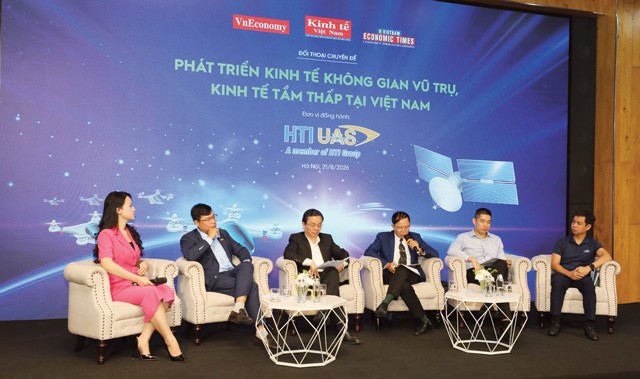

A new industry cannot be built on a single policy or through disconnected actors. To develop the low-altitude economy, Vietnam therefore needs a collaborative model in which each stakeholder has a clearly defined and complementary role.
First, the government should focus on creating the institutional framework, infrastructure, and initial market, while businesses concentrate on developing products and applications and commercializing technologies. Universities and research institutes should take responsibility for R&D in core technologies while also training the necessary workforce. Human resources for the low-altitude economy will not be limited to researchers and product development engineers, but will also include people with the skills to operate and control vehicles and provide services across the ecosystem.
Government ministries and agencies will be responsible for regulation, national defense and security, aviation, and the development of foundational infrastructure for the low-altitude economy. The Ministry of Science and Technology could serve as a coordinating hub for R&D activities, standards development, technology transfer, shared platforms, and support for localities in implementing pilot and new business models. Local governments, meanwhile, will play an important role by providing practical challenges and environments in which solutions and services can be tested.
The low-altitude economy is a new, cross-sectoral field, so an interagency coordination mechanism may be needed to address emerging issues and create more favorable conditions for businesses to participate.
Most importantly, this ecosystem must start with real-world needs rather than the technologies already available. Specific challenges in agriculture, logistics, energy, healthcare, rescue operations, and other fields should form a cycle from commissioning and research to testing, standardization, and commercialization.
The ultimate goal is not simply to manufacture UAVs or satellites, but to build national capabilities to leverage a new area of economic development through technology, data, and Vietnamese businesses, while safeguarding national sovereignty, safety, and interests throughout the process.
* * *
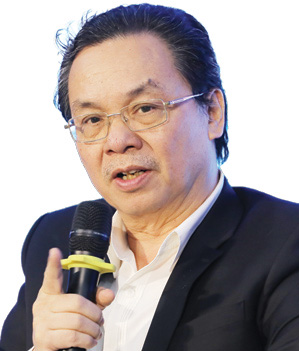
When discussing a strategy for the space or low-altitude economy, I believe we need more than an economic strategy. We need an overall development strategy for the sector, built around two components.
The first is a technology development strategy. We need to determine which technologies to pursue, which stages of the value chain to participate in, where to position ourselves, and which components of space and low-altitude equipment we should develop.
Should we manufacture every component ourselves? I don’t think so. But when it comes to the “soul” of the product - its software, control systems, and intelligence - I believe Vietnam has the capability to take ownership. The technology strategy must therefore clearly define where we want to position ourselves, what we want to do, and which areas to focus on. This is the first key component.
The second is an economic strategy. Once we can produce a product, where will it be used? Is there a market for it? Which businesses can participate, how will they compete, and what resources are available to support development? The economic strategy must help turn the technology strategy into reality.
The development strategy must therefore cover both technology and economics. We cannot focus solely on the economic side, nor can we develop technology in isolation.
Looking around the world, many countries have already moved ahead in developing their strategies. In 2024, for example, China identified the low-altitude economy as a new growth driver. It has since established a dedicated agency for low-altitude economic development, demonstrating the speed at which the sector is being promoted.
The UK, meanwhile, already has a space strategy and is continuing to increase investment and policy support for the sector. This reflects a broader shift in strategic thinking toward creating new areas for economic development.
The world no longer views the space or low-altitude economy as experimental fields. These sectors are moving into a stage of practical development and emerging as new industries. Once a sector reaches this stage, it needs a strategy.
Vietnam therefore needs to develop a strategy now, or risk falling behind. As I have said, that strategy should have two components. The first is a technology strategy that defines what we will do, where we will participate and which direction we will take. On that basis, we can develop an economic strategy to build the market and drive growth.
Vietnam does not yet have an overall strategy for this sector, but it already has policies and orientations covering different pieces of the puzzle.
For example, in 2021 we issued Decision No. 169 on the Strategy for the Development and Application of Space Science and Technology through 2030. This was an important policy direction but was is not yet a comprehensive strategy.
For unmanned aerial vehicles (UAVs), the technology has been included among 35 strategic technology products. This is also a specific policy covering a group of products rather than a sector-wide development strategy.
We have also introduced sandbox models in some localities, but these initiatives remain fragmented and have yet to form part of a broader framework. A genuine strategy must answer how the entire sector should be developed and what its long-term direction should be.
Vietnam therefore has some of the initial pieces in place, but they remain fragmented. I strongly hope it will soon develop a comprehensive strategy covering technology development, market development, and applications across industries and sectors, thereby laying the foundation for the space and low-altitude economies to grow in the years ahead.
* * *
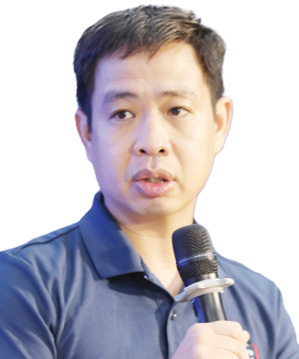
Some 20 years ago, when we began researching satellites, access to satellite components was extremely difficult. Over the past decade, however, the commercialization of components and equipment for satellite development has made access much easier.
Some modules, however, remain subject to export restrictions or controls such as the US’s International Traffic in Arms Regulations (ITAR) and Export Administration Regulations (EAR), because of the specialized nature of the market. Access to certain components, sensors, and related technologies is particularly challenging for high-performance satellite systems. For satellites with more standard requirements, we can generally purchase the components we need.
To optimize both development time and costs, developing everything from scratch would take too long, require significant investment, and expose the project to considerable risks.
A distinctive feature of satellite and space technology is that technological maturity is measured across nine Technology Readiness Levels (TRLs). Satellite equipment generally prioritizes technologies with high TRLs that have been validated in relevant environments, particularly equipment with flight heritage or that has been proven in orbit. Therefore, to ensure sustainable project development, we prioritize equipment with a high level of technological maturity.
For technologies that Vietnam is seeking to master, the Vietnam National Space Center will gradually develop capabilities in areas such as the central onboard computer, communication systems, satellite structures, and frames. Satellites are highly-customized products, with each having different characteristics. These are therefore capabilities we need to progressively master ourselves, along with system design capabilities.
We have already mastered the central onboard computer and related control software systems, while also working toward mastering communication systems. The latter, of course, involves greater complexity and higher technological requirements.
Another challenge is access to real-world data. With unmanned aerial vehicles (UAVs), a single flight can generate useful data. Obtaining real-world data from satellites, however, is much more difficult. We have participated in the development of three satellites, but the amount of on-orbit data collected from satellites developed domestically remains limited.
* * *
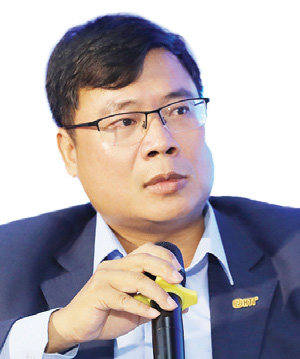
In developing unmanned aerial vehicles (UAVs), we have found that a number of products, modules, and components, if not developed and controlled domestically, could pose risks to national security and defense. One of HTI’s goals from the outset of its UAV research was therefore to develop key components in-house, including control systems, flight controllers, and certain sensors. The next step is to develop other critical modules, such as transmission systems and electrical and electronic systems for aircraft.
For components that we cannot yet develop ourselves, we have also sought partners both in Vietnam and overseas to manufacture them to our specifications. In practice, however, we have encountered various challenges related to certification, inspection, and documentation. If a product is manufactured only as a one-off, it is difficult for a partner to commercialize it, so they are often unwilling to take on the order.
In recent years, however, HTI has partnered with an organization on the R&D of a transmission system. This partner will conduct the research and product development, while HTI will be responsible for bringing the product to market. We expect to unveil the first information about a transmission system researched and developed by Vietnamese engineers for HTI’s products at a UAV exhibition in Vietnam around September.
At the initial stage, we recognized that we were starting from behind, with limited resources and many challenges. Our immediate goal was therefore not to invent entirely new technologies or master the deepest layers of technology overnight, but to develop products that work reliably and ensure that modules can be integrated effectively and meet specific application requirements.
We can reproduce and improve technologies that already exist in the world. As we research and manufacture, we will address problems and bottlenecks as they arise. Resolving these practical challenges will gradually help us master deeper layers of technology. If we focus from the outset on developing the deepest core technologies, we could spend a great deal of time while the rest of the world continues to move forward rapidly.
At present, most of HTI’s technology involves adopting, mastering, and further developing technologies that already exist, then optimizing them for specific customer needs and applications. We recognize this reality quite frankly. Our immediate goal is to master an increasing number of critical components, gradually raise the localization rate, and eventually develop deeper technologies ourselves.
While Vietnam’s capacity to manufacture hardware remains behind, software is a different story, particularly AI. HTI and many other companies in the sector have highly-capable engineers and development teams. Through the use and evaluation of various systems, we have found that some foreign software products perform very well but face limitations when applied to practical use cases in Vietnam.
At a deeper academic and research level, particularly in foundational and core technologies, close collaboration between businesses, universities, and research institutes will be essential. Working together to resolve practical problems will be an important requirement for advancing these technologies further.
* * *

Vietnam has a golden opportunity in the unmanned aerial vehicle (UAV) market as countries around the world seek alternative sources of supply to China. Vietnam has a strong pool of highly-skilled workers, as well as manufacturing capabilities across industrial parks and fields ranging from precision engineering, software, and hardware to AI and blockchain. These capabilities have increasingly reached acceptable levels in terms of quality, efficiency, and cost.
At the same time, Vietnam’s young talent is being trained through advanced programs at reputable domestic universities and leading institutions overseas to support the development of the low-altitude economy. They have also developed useful solutions, including inventions and patents recognized by the scientific community both domestically and internationally. This gives Vietnam a real opportunity to gradually master applied technologies and participate in high-skilled work across the country’s low-altitude economy.
In terms of mastering core technologies for civil aviation, space, and UAVs, Vietnam is also gradually developing its capabilities while gaining access to global technologies. Several areas stand out.
First, Vietnam’s semiconductor and chip design industry is undergoing rapid development and could create significant opportunities in the supply chains for aerospace, UAVs, and the low-altitude economy. Most recently, on May 16, Viettel officially broke ground on Vietnam’s first semiconductor chip manufacturing plant. This is an important milestone. For the first time, Vietnam is establishing domestic semiconductor manufacturing capabilities, creating a foundation for gradually mastering core technologies and developing a domestic semiconductor ecosystem.
Second, Vietnam’s telecommunications capabilities in 5G, and eventually 6G, are also developing rapidly. To operate UAVs beyond visual line of sight and transmit high-bandwidth, high-speed data over wide areas and at low altitudes, domestic telecommunications operators have the capacity to meet such requirements. Just over a year after commercialization, 5G coverage in Vietnam had reached 92 per cent of the population, with speeds twice as fast as those in developing countries. Vietnam’s mobile broadband speed has now reached 210.85 Mbps, ranking ninth globally.
In terms of technological self-reliance, Vietnam previously took eight years to master 4G equipment but has now taken less than two years to master 5G base-station manufacturing technology and is preparing for the next generation of networks, 6G.
Third, Vietnam is making strong progress in AI research and workforce development. Major investments by several reputable international corporations have also been made to support the development of AI and blockchain and the exploitation of big data. This work has already produced technologies that have been successfully deployed in practice, including Viettel AI.







 Google translate