


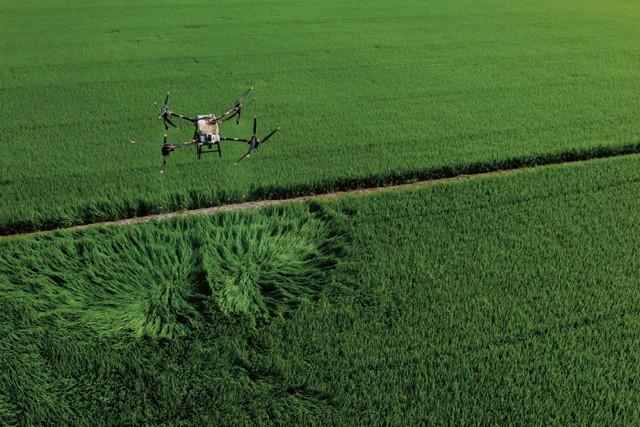
The space and low-altitude economies are increasingly being identified by countries around the world as new growth engines, as economies shift toward knowledge, technology, and innovation-driven development. Beyond creating high-tech industries with high added-value, the two sectors can transform growth models by raising labor productivity, optimizing supply chains, and expanding digital service markets.
Many countries have adopted national strategies for developing the low-altitude economy and aerospace industries. Current trends show that international competition is no longer limited to space exploration. It is increasingly focused on technology, value chains, data, and the ability to commercialize space-based products and services.
Global race
The US is the global leader in the space economy and a pioneer in building a low-altitude economic ecosystem around digital technology, innovation, and strong private sector participation. The government focuses on basic research, institutional development, infrastructure, and market creation, while businesses take the lead in technology development, manufacturing, and commercialization.
Over the past two decades, the US has shifted significantly from government-funded space programs toward commercial space activities. Rather than directly carrying out all research, manufacturing, and operational tasks, the government increasingly procures services from the private sector. This approach has driven rapid growth among technology companies and helped create the world’s largest commercial space market.
In the low-altitude economy, the US is building an integrated ecosystem combining unmanned aerial vehicles (UAVs), electric vertical takeoff and landing aircraft (eVTOLs), AI, big data, digital air traffic management systems, and next-generation communications networks. Numerous states and cities have launched pilot programs to prepare for the commercialization of urban air mobility and UAV-based logistics services.
In recent years, China has emerged as the world’s fastest-growing major market in the space economy and, particularly, the low-altitude economy. China has opted for a State-led model that combines national strategic planning, large-scale public investment, and mobilization of business resources. China considers the space economy a strategic industry for strengthening scientific and technological capabilities, safeguarding national security, and creating new growth engines.
A defining feature of China’s model is the simultaneous development of three pillars: space infrastructure, manufacturing, and an application ecosystem. The government leads planning, infrastructure investment, and policymaking, State-owned enterprises play a central role in strategic sectors, and private companies are expanding rapidly in high-tech research, manufacturing, and commercialization.
The EU, meanwhile, joins the US and China in being the world’s three major space economy hubs. It is building its space economy through cooperation between member states, a unified market, harmonized institutions and technical standards, and pooled resources for research, innovation, and technology commercialization.
The bloc’s overarching goal is to build an “open, competitive, secure, and sustainable space economy,” with space regarded as strategic infrastructure for digital and green transitions, technological sovereignty, and the EU’s competitiveness.
In the low-altitude economy, it is moving beyond UAVs and eVTOLs toward a Digital Sky ecosystem that integrates manned and unmanned aircraft within a modern, safe, and intelligent air traffic management system.
Japan, for its part, is one of Asia’s earliest aerospace powers and remains among the world’s leading spacefaring nations. Its national development strategy identifies aerospace as a strategic technology industry supporting innovation, advanced manufacturing, economic security, and national competitiveness. Japan also views space data and digital technology as important foundations for its Society 5.0 strategy, which seeks to create a super-smart society connecting the physical and digital worlds.
In the low-altitude economy, Japan has adopted a gradual approach, prioritizing high-value applications such as logistics, emergency response, disaster monitoring, infrastructure inspection, smart agriculture, and urban air mobility. Implementation typically begins with local pilot programs before being expanded nationwide.
Though it started later than other countries, South Korea has rapidly built a modern aerospace industrial ecosystem based on science, technology, and innovation, allowing it to participate more deeply in global value chains. Its model closely integrates national strategies for digital transformation, semiconductor development, AI, defense, and aerospace. South Korea sees the low-altitude economy as one of the emerging sectors capable of generating new growth after 2030.
Development strategies
Despite their different approaches, the US, China, the EU, Japan, and South Korea all regard the space and low-altitude economies as strategic technology sectors capable of creating new industries and strengthening national competitiveness.
The US does not have a single overarching space economy strategy. Rather, it has developed a highly-interconnected set of sector-specific strategies. The common goal is to maintain leadership in space technology, protect national interests, and promote commercialization and private sector growth.
For the low-altitude economy, the government is building a regulatory framework that supports innovation. The Federal Aviation Administration (FAA) continues to develop rules governing UAVs, beyond-visual-line-of-sight (BVLOS) operations, UAV integration into national airspace, and eVTOL testing. A risk-based regulatory approach gives businesses room to test and develop new models.
A defining feature of the US model is its innovation ecosystem, with relatively clear roles for government, research institutions, and the private sector. NASA, DARPA, and the National Science Foundation (NSF) fund foundational research, universities provide talent and technology research, investment funds support commercialization, and companies lead the market.
The growth of SpaceX, Blue Origin, Planet Labs, Maxar, and other technology companies has created new markets for satellite launches, Earth observation, satellite internet, UAVs, smart logistics, eVTOLs, and data services.
China has adopted a highly-centralized development model, linking the space industry to national modernization and international competitiveness. Programs covering satellites, the BeiDou navigation system, launch vehicles, space stations, Earth observation, and satellite internet are developed through coordinated medium and long-term plans. The low-altitude economy has been designated a “new growth engine,” alongside efforts to improve airspace management, develop flight-control infrastructure, and establish UAV and eVTOL pilot zones.
A key feature of China’s model is the combination of centralized national direction with flexibility at the local level. Local governments can establish pilot zones, attract investment, and develop applications. Aerospace industrial clusters bring together companies across components, engines, batteries, sensors, semiconductors, AI, software, and data services, creating relatively complete supply chains.
The EU, meanwhile, stands out for its focus on shared infrastructure and markets. The European Space Program, including Galileo, Copernicus, EGNOS, and GOVSATCOM, provides a foundation for a wide range of socio-economic applications. Open satellite data is made available to businesses, research institutions, and public agencies to develop applications in agriculture, transport, environmental management, urban management, and the marine economy. In the low-altitude economy, the U-space program aims to create a real-time UAV traffic management system integrating AI, big data, sensors, and digital communications networks.
Through Horizon Europe, the European Innovation Council, InvestEU, and sector-specific funds, the EU supports research, testing, technology transfer, and market expansion. Rather than focusing on direct support for individual companies, it prioritizes a shared ecosystem of infrastructure, open data, standards, testing facilities, and a unified market, giving participating businesses relatively equal access to resources.
Japan is developing the sector under its Basic Plan for Space Policy, combining space science, the space industry, and satellite-data applications. The Japan Aerospace Exploration Agency (JAXA) plays a central role in research, development, and technology transfer, working with businesses and universities to commercialize research. Major corporations are deeply involved across the value chain, from satellites, launch vehicles, and electronics to sensors and data platforms. In the low-altitude economy, Japan is developing UAV testing zones, flight control centers, and communications infrastructure for logistics, disaster management, infrastructure monitoring, and urban air mobility.
The country’s strength lies in maintaining stable, long-term support for R&D, combining public investment with tax incentives, credit, and policies that encourage corporate innovation. Cooperation between government, research institutions, and businesses helps shorten the path from research to commercial products.
South Korea is focused on strengthening technological self-reliance in space technology, satellites, launch vehicles, and data services. The establishment of the Korea AeroSpace Administration (KASA) has helped consolidate resources and improve national coordination. For the low-altitude economy, the K-UAM Roadmap sets a path toward 2035, covering regulatory development, infrastructure and traffic management systems, eVTOL testing, and the commercialization of air mobility services.
South Korea is also building a flexible regulatory environment and investing in UAV testing zones, certification facilities, flight control centers, and digital infrastructure. Major technology groups are participating in satellites, engines, sensors, AI, and eVTOLs. The government is providing substantial R&D funding, combined with tax incentives, credit, innovation funds, and public-private partnerships (PPPs) to accelerate technology commercialization.
Lessons for Vietnam
The experience of leading countries shows that the space and low-altitude economies need to be developed as complete ecosystems in which national strategy, institutions, infrastructure, science and technology, businesses, capital, and talent advance together. This is an important lesson for Vietnam as the two sectors open new avenues for growth.
First, Vietnam should recognize the space and low-altitude economies as long-term strategic sectors linked to national competitiveness and technological self-reliance and as new growth drivers. Countries have adopted different governance models, ranging from market-led approaches to strong government coordination, but they share a long-term vision and relatively clear coordination between regulators.
For Vietnam, this means developing an overarching strategy for the aerospace industry and low-altitude economy, with clear goals, priority areas, development roadmaps, and cross-sector coordination mechanisms.
Regulation also needs to move ahead of technology and create room for new technologies to be tested. UAVs, eVTOLs, and other next-generation aircraft are developing much faster than traditional lawmaking processes. International experience suggests that the answer is not to wait until technologies mature before developing policy, but to gradually shift toward risk-based regulation while establishing testing zones, testbeds, and regulatory sandboxes.
Businesses should be allowed to conduct research and testing within defined parameters, conditions, and timeframes, giving regulators real-world data to refine policies.
Vietnam should therefore move quickly to complete technical standards, regulations, and procedures for the registration, licensing, inspection, and certification of UAVs, eVTOLs, and other emerging aviation technologies. Alongside a national framework, selected localities with suitable conditions could establish testing zones before applications and commercialization are gradually expanded.
Second, international experience shows that infrastructure must be developed alongside aircraft and technologies. The low-altitude economy is not simply about manufacturing UAVs. To support thousands and, potentially, millions of aircraft in the future, Vietnam will need digital airspace management, monitoring networks, communications, digital maps, geospatial data, takeoff and landing facilities, control centers, and UAV traffic management platforms.
In the space economy, satellite data, navigation systems, Earth observation, and digital infrastructure are likewise becoming foundations for a growing range of economic activities. The EU experience, for example, shows how satellite data can support agriculture, transport, environmental management, urban development, and the marine economy.
Vietnam should therefore prioritize geospatial data infrastructure, digital mapping, intelligent airspace management, AI, communications networks, and shared databases alongside aircraft and satellite development. These should not be viewed solely as public management infrastructure but as resources that businesses can use to develop new services and business models.
Third, international experience shows that businesses must be at the center of technology commercialization, while the government focuses on creating the right environment, funding foundational research, developing shared infrastructure, and creating markets.
The strongest ecosystems link government, businesses, research institutes, universities, and investment funds. Public resources play a leading role in high-risk technology development, while businesses bring research to market and scale it.
Vietnam should therefore focus less on supporting individual companies and more on developing aerospace industrial clusters, research and innovation centers, laboratories, testing facilities, and shared certification and inspection centers. This should be accompanied by venture capital funds, tax incentives, R&D financing, commissioned research, and PPPs to share risks in technologies with long development cycles and high investment costs.
An important consideration is that the space and low-altitude economies should not be developed in isolation from other foundational technologies. UAVs, eVTOLs, satellites, and advanced flight control systems all integrate AI, semiconductors, sensors, robotics, advanced materials, batteries, telecommunications, cloud computing, and big data.
International experience shows that developing these foundational technologies in parallel can generate spillover effects across the wider ecosystem.
Vietnam should therefore link its AI, semiconductor, telecommunications, defense, aerospace, and national digital transformation programs. This could also create opportunities for Vietnamese companies with existing capabilities in electronics, telecommunications, AI, software, and high-tech manufacturing to move deeper into emerging value chains.
However, to create a genuine industry, technology must address real economic needs and generate markets of sufficient scale. In the early stages, Vietnam does not need to compete across every technology segment. Rather, it should prioritize applications with strong practical demand, such as UAVs for smart agriculture, forest monitoring, disaster prevention, search and rescue, infrastructure inspection, remote area logistics, urban management, the marine economy, and environmental monitoring.
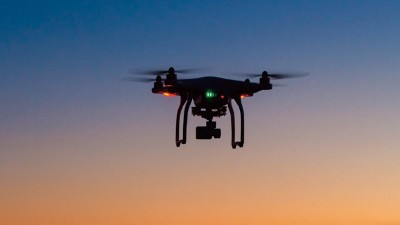
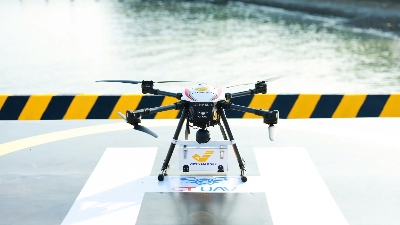
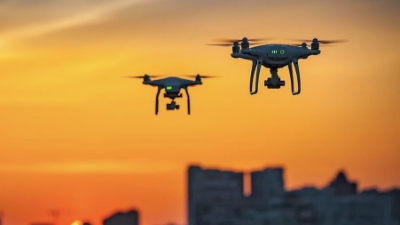
These applications are well suited to Vietnam’s geographic and economic conditions while offering potential early markets in which companies can test, refine, and commercialize technologies. International experience likewise shows that UAVs are already being widely tested in logistics, environmental monitoring, infrastructure inspection, rescue operations, and urban services.
Finally, long-term development will depend on talent and technological self-reliance. Aerospace and the low-altitude economy require interdisciplinary expertise spanning aviation, precision engineering, electronics, AI, semiconductors, data science, automation, and advanced materials.
Vietnam should therefore develop specialized training programs and strengthen links between universities, research institutes, and businesses to align education with market needs.
(*)Dr. Nguyen Nghia is the Secretary of the Scientific Council at the VinIT Institute of Technology.






 Google translate