


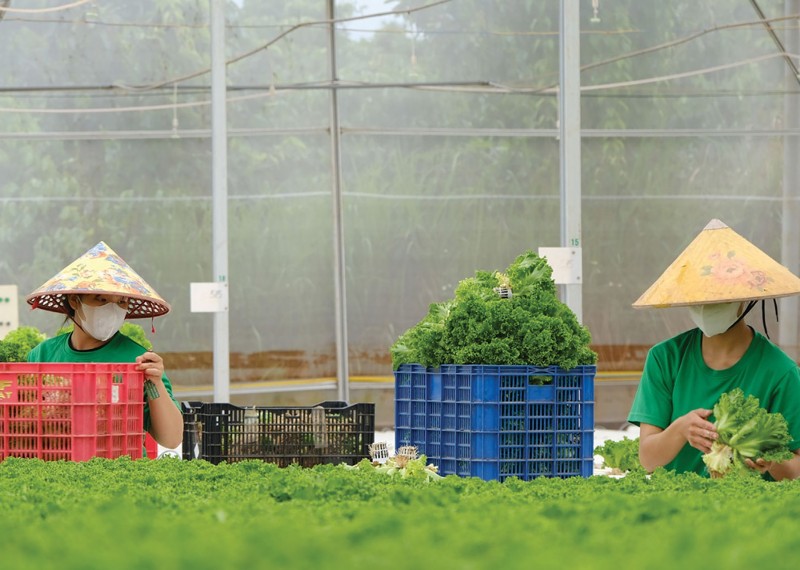
Transparency is becoming a defining feature of Vietnam’s food industry, as businesses respond to tighter regulatory requirements, changing consumer expectations, and rising demands in export markets. As a result, compliance records and traceability capabilities are emerging as key competitive factors, with product labels increasingly reflecting how well companies manage their supply chains.
According to Ms. Ho Ngoc Phuong Thao, an expert from the “High-Quality Vietnamese Product - Global Integration Standards” project, many food companies, particularly small and medium-sized enterprises (SMEs), still handle labeling, product declarations, and food safety documentation largely based on experience or by outsourcing to consulting firms. That leaves them exposed whenever regulations change or compliance requirements tighten.
Companies now need a thorough understanding of their own products, a firm grasp of the applicable regulations, and internal control processes rather than simply deferring to outside consultants. Ms. Thao noted that for mandatory nutritional indicators specifically, businesses are not permitted to substitute their own reference tables. In other words, a product label is no longer just a marketing tool; it has become a legal and ethical commitment to the consumer.
Transparency from the source
That shift toward mandatory accountability became concrete on July 1, 2026, when the Ministry of Agriculture and Environment (MAE) officially launched a nationwide Agricultural Traceability System, creating a unified data platform to make supply chains transparent, strengthen quality management, and support agricultural exports.
According to the Ministry, the system is designed to protect consumer rights, help businesses and producers standardize their data and raise product value, and strengthen the State’s capacity to monitor, issue warnings, trace products, and handle quality and food safety issues.
The system is more than a new piece of technology. Officials describe it as critical “soft infrastructure” for Vietnamese agriculture at a moment when major markets, including China, the EU, the US, and Japan, are tightening requirements around supply chain transparency, food safety, and producer accountability.
Speaking at the launch ceremony for the Agricultural Traceability System on June 30, organized by the MAE, Deputy Prime Minister Ho Quoc Dung emphasized that traceability is no longer a requirement specific to a handful of industries but has become an inexorable trend in quality management and market development. “To build a modern agricultural sector, Vietnam needs to develop strong agricultural brands alongside full transparency of the production process through traceability,” he said.
He also cautioned regulators against turning traceability into just another administrative procedure, insisting it must instead function as a tool that helps businesses raise quality, cut costs, and expand into new markets.
The system itself is built on an open architecture that integrates blockchain, digital signatures, GS1 product identification standards, and GS1 Digital Link QR codes, allowing consumers to look up product information while businesses and regulators use the same system to manage data and track products through production, processing, distribution, and sale.
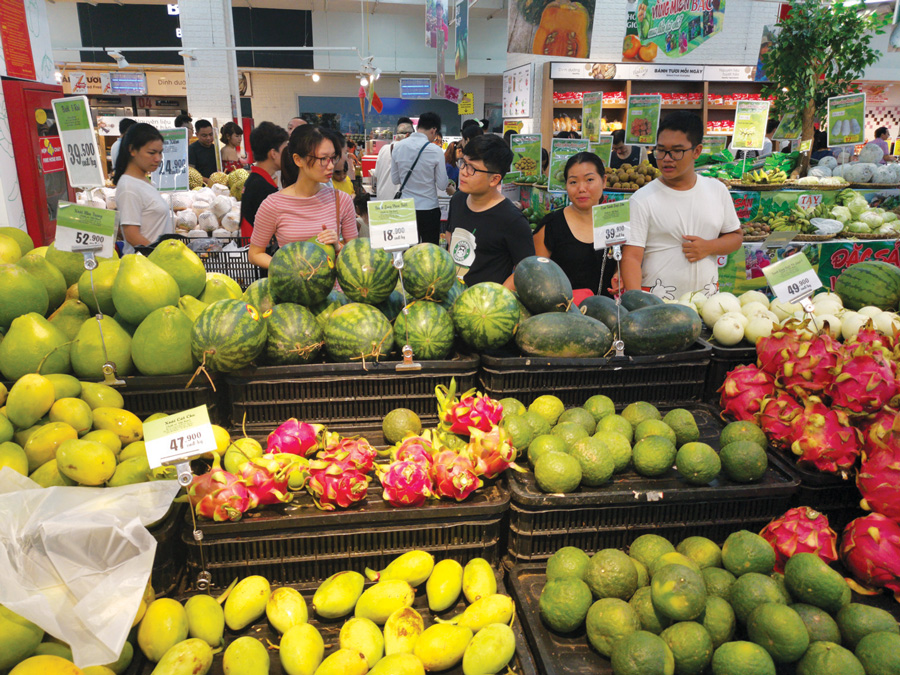
After a six-month pilot, the system had already integrated data for more than 18,500 products across 181 categories from 170 businesses in 24 of Vietnam’s 34 cities and provinces. For durian alone, 16 companies took part in the pilot, and six containers were successfully exported to China using fully electronic traceability data, an early but concrete signal of what the system could mean for market access.
Accountability for sustainability
Anticipating rising demand for green consumption, Ho Chi Minh City has been expanding its “Responsible Green Tick” program and strengthening cross-sector partnerships to stimulate demand; a strategic move aimed at building a more sustainable retail market and elevating the standing of domestic products.
It monitors quality across distribution chains based on voluntary participation by distributors and suppliers. The label recognizes suppliers and retailers that commit to safe business practices and strict compliance with quality standards from production through distribution.
The program operates on a system of mutual commitment and oversight among supply chain participants, including producers, suppliers, and distribution networks, giving businesses added incentive to invest in product quality, traceability, food safety compliance, environmental protection, and social responsibility. All information about participating businesses, products, and quality records is managed centrally in an electronic database, with products carrying QR codes that let consumers trace origin, verify information, and flag anything that appears questionable.
According to the southern city’s Department of Industry and Trade, as of June, the program had drawn in 12 of Vietnam’s leading retail groups, spanning a combined network of 10,091 supermarkets and stores nationwide, and had built an ecosystem of more than 450 producers with 5,594 products certified under the Responsible Green Tick standard, most of them fresh food items that carry a higher food safety risk.
A representative from the Co.opmart supermarket chain said the Responsible Green Tick label is becoming a genuine competitive criterion, now built into the chain’s internal standards for evaluating suppliers; certified products receive priority shelf space, promotional support, and stronger customer preference.
Ms. Nguyen Thi Bich Van, Head of Communications at Central Retail Vietnam, said that after an initially cautious start, most suppliers are now ready to participate thanks to fuller guidance and support; the city’s Department of Industry and Trade has also handed over management software to make registration, quality control, and data traceability easier for participating businesses.
A number of businesses have also expanded their participation. MM Mega Market currently carries 329 Responsible Green Tick-certified products, nearly 300 of them fresh food items, and is targeting the standardization of 100 school kitchens by September.
Mr. Nguyen Duc Toan, Managing Director of MM Mega Market Vietnam, said the company has partnered with more than 100 farming households and cooperatives nationwide, concentrated in Lam Dong province, the Mekong Delta, and agricultural areas surrounding Ho Chi Minh City, to develop standardized raw material zones. Suppliers who join the program receive priority display space, dedicated branding, and a commitment to stable purchasing policies. “This isn’t simply a support policy, it’s a way of building a sustainable agricultural supply chain that delivers long-term benefits for farmers,” Mr. Toan emphasized.
Its early impact is already showing up in sales figures, with Responsible Green Tick-certified products posting annual growth of more than 20 per cent. Mr. Nguyen Dinh Thiet, Director of the Fresco Food Company, said the program’s greatest value lies in giving consumers peace of mind, particularly families with young children. “When all the information is transparent, customers trust the quality of their family’s meals more,” Mr. Thiet said.
According to Mr. Nguyen Nguyen Phuong, Deputy Director of the Ho Chi Minh City Department of Industry and Trade, businesses join the program voluntarily but remain subject to ongoing oversight from regulators, consulting units, and distribution systems alike. Any company found to have deliberately violated its commitments has its products removed from the program.
Amid rising demand for safe food, the emergence of a mechanism built on voluntary commitment, public disclosure, and continuous oversight is expected to give consumers a stronger basis for choosing what they buy. Beyond that, it is also becoming a driving force pushing Vietnamese agricultural production toward greater transparency, raising the value of Vietnamese produce and building durable trust in the market.


 Google translate