


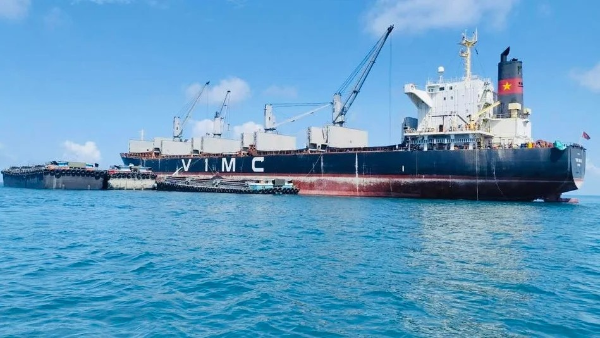
The Ministry of Construction (MoC) has requested the Vietnam Maritime and Waterway Administration (VIMAWA) to develop a plan to mobilize Very Large Crude Carriers (VLCCs) and specialized vessels for LPG and LNG to transport energy from the Persian Gulf to Vietnam, ensuring a proactive domestic supply.
According to the directive, the VIMAWA is tasked with closely monitoring the operations of the Vietnamese fleet in the Middle East. The administration must maintain regular communication with shipowners and provide timely information to the Ministry of Foreign Affairs and other relevant agencies should any situation arise requiring support.
Furthermore, the VIMAWA will lead and coordinate with departments under the Ministry of Industry and Trade and the Vietnam National Oil and Gas Group (Petrovietnam). Together, they will work with shipowners to establish mobilization plans for large-capacity vessels (including VLCCs) to transport crude oil, gasoline, and liquefied gases (LPG, LNG) from the Persian Gulf to Vietnam. This initiative aims to secure a steady supply of crude oil for the Nghi Son Refinery and stabilize the overall domestic energy market.
In addition, the VIMAWA is directed to collaborate with relevant bodies to address recommendations from the Vietnam National Petroleum Group (Petrolimex) regarding transport logistics. This includes the urgent evaluation and approval of maritime safety plans for ports receiving tankers with capacities exceeding their original design (but which have been lightened to a suitable draft), particularly in Quang Ninh and Ho Chi Minh City. These measures are intended to facilitate the rapid offloading of imported energy products.
These new requirements are part of a broader strategy to implement solutions for national energy security, stabilize transport and construction activities, and maintain socio-economic development amidst the complex conflicts currently unfolding in the Middle East.



 Google translate