


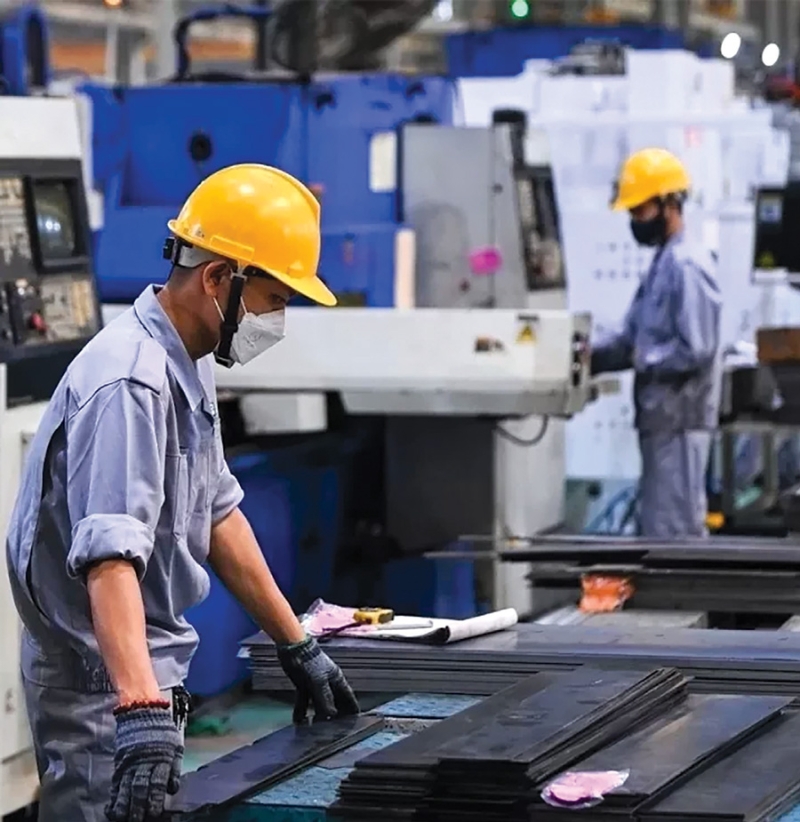
For Nordic companies, Vietnam has long been a familiar opportunity - fast-growing, open to trade, and deeply integrated into global supply chains. But cost advantages alone are no longer enough. As the market enters a more complex phase, success now requires greater precision, adaptability, and a shift in approach. “Entering Vietnam is easier than ever, but the real question now is how well you can execute,” Mr. Thue Quist Thomasen, Chairman of NordCham Vietnam and CEO of Decision Lab, told the Nordic Business Briefing: Strategic Access to Vietnam’s Growth Economy on April 15.
That transition, from entry advantage to execution challenge, framed discussions among Nordic investors, all pointing to the same conclusion: Vietnam remains a market of high potential, but one that increasingly rewards those who can adapt quickly, localize effectively, and compete on more than just cost.
From cost to capability
Vietnam’s economic success over the past three decades has been built on a clear formula: competitive labor costs, strong export orientation, and steady integration into global trade networks. That formula is now being recalibrated.
The country continues to target high growth and has ambitions to move even further up the value chain. However, the nature of investment driving that growth is changing. Rather than labor-intensive production, Vietnam is increasingly attracting capital-intensive, technology-driven projects that emphasize efficiency, sustainability, and specialization.
When asked whether the shift reflects tighter localization or greater transparency, Mr. Lasse Pedersen, Commercial Counsellor at the Embassy of Denmark in Vietnam, said it depends on the sector, “but we clearly see a move toward more specialized production and deeper supply chain integration.”
This transition is particularly visible in infrastructure and energy. Vietnam’s ambitions in offshore wind, targeting 6 GW by 2030, highlight both the scale of opportunity and the constraints that remain. While the country seeks foreign capital and expertise, investors are increasingly focused on regulatory clarity and long-term predictability.
At the same time, investment models themselves are evolving. According to Mr. Marcus Persson, Trade Commissioner of Sweden to Vietnam at Business Sweden, traditional collaboration frameworks are being expanded. “We are no longer just talking about the triple helix,” he said. “Now it is the quadruple helix - government, academia, industry, and financing.”
This more integrated approach reflects a broader reality: entering Vietnam is no longer simply about establishing operations, but about embedding within a wider ecosystem of partnerships, financing structures, and institutional support. Large-scale projects, such as Long Thanh International Airport, illustrate how these elements come together, with financing acting as a key enabler of access and influence.
For Nordic companies, this shift plays to inherent strengths. Their experience in regulated environments, combined with a focus on transparency and long-term value creation, aligns closely with Vietnam’s direction. However, it also raises the bar. Competing in this environment requires not only technical capability but also strategic coordination across multiple stakeholders.
Demanding market
While Vietnam’s industrial landscape is evolving, its consumer and operational environment is changing just as rapidly. The country is becoming one of Southeast Asia’s most digitally-dynamic markets. E-commerce is no longer defined solely by traditional platforms, as social commerce and livestreaming are reshaping how products are discovered and purchased. The rapid rise of platforms like TikTok reflects a broader shift toward integrated, content-driven commerce.
At the same time, the adoption of AI is accelerating at a pace that few markets can match. A significant share of consumers are already using the technology in daily activities, from studying to shopping, and are even paying for premium AI services. This has implications not only for business operations, but also for how consumers evaluate brands and products.
Yet beneath this dynamism lies a more cautious consumer mindset. Despite strong GDP growth, consumer sentiment has remained relatively stable in recent years. According to Mr. Thomasen, this reflects a more pragmatic and selective approach to spending. “Consumers are becoming more critical,” he said. “They expect value and relevance, and they are more selective in what they buy.”
For companies, this creates a more demanding environment. Market entry alone is no longer sufficient; success depends on the ability to continuously adapt offerings, refine positioning, and respond to rapidly-shifting preferences.
This need for agility extends to operations. Traditional long-term planning models are increasingly difficult to maintain in a market where conditions can change quickly. Instead, companies are adopting shorter planning cycles, with more frequent adjustments to pricing, partnerships, and go-to-market strategies.
At the same time, competition is intensifying. As global supply chains shift, more companies, are establishing operations in Vietnam, often bringing advanced technology and aggressive pricing strategies.
On the ground
Across Vietnam, these macro trends are playing out in distinct regional and sectoral patterns, shaping how companies approach investment and operations. From an industrial development perspective, the country is becoming increasingly segmented. According to Ms. Jess Yoon, Associate Vice President at Sembcorp Development Vietnam, different regions are specializing in different types of activity.
The north has emerged as a hub for electronics and high-tech manufacturing, driven by major investments from companies such as Samsung and LG. The central region, with lower land and labor costs, is attracting more labor-intensive industries, including garments and basic manufacturing. Meanwhile, the south is diversifying into higher-value sectors, including advanced manufacturing, fintech, and AI-related services.
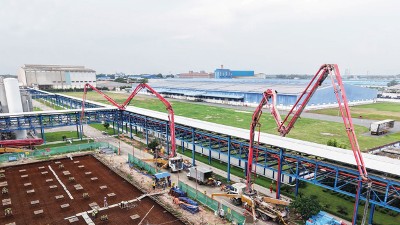
This regional differentiation is supported by large-scale infrastructure and industrial park development. Over the past 30 years, Sembcorp has invested around $24 billion in Vietnam, developing more than 20 industrial parks and supporting a broad mix of industries.
At the same time, new investment formats are gaining traction. Demand for ready-built factories and warehouses is increasing, reflecting a preference for faster setup and greater operational flexibility. For many companies, the priority is no longer just securing land, but accelerating time to market.
Sustainability is also becoming a defining factor. Projects such as LEGO’s carbon-neutral factory, supported by dedicated solar infrastructure, illustrate how environmental considerations are being integrated into industrial development. However, as Ms. Yoon noted, such initiatives require early planning and regulatory alignment, particularly when large-scale energy solutions are involved.
For manufacturers, Vietnam offers both opportunity and complexity. Mr. Christian Da Silva Wendelbo, Managing Director of Wendelbo SEA, has experienced this transformation over nearly two decades. His company, originally Danish, has expanded its operations in Vietnam to nearly 800 employees, with production increasingly concentrated in the country. “Vietnam is a very interesting market for us,” he said. “But we also need to be sharp.”
The competitive landscape has intensified, particularly with the entry of Chinese manufacturers relocating production and bringing advanced machinery. At the same time, rising input costs, from materials to logistics, are squeezing margins.
Despite these challenges, opportunities remain strong, particularly in higher-value segments. Wendelbo’s positioning in “affordable luxury” allows it to differentiate through design, quality, and speed. “We can deliver in two to three weeks,” he noted. “Others need four to six months.” In a market where consumers are increasingly demanding but less patient, speed becomes a critical advantage.
We are no longer just talking about the triple helix. Now it is the quadruple helix - government, academia, industry, and financing.
At the same time, perhaps the most significant shift for foreign investors lies in the evolution of Vietnam’s workforce. In the early stages of market entry, many companies struggled to find qualified management talent locally. Over time, this has changed dramatically. “When we started, we struggled to find senior managers,” Mr. Wendelbo said. “Today, we rely entirely on our local team.” This transformation reflects broader improvements in education, language skills, and professional experience among Vietnamese workers. It also underscores the importance of localization in long-term success.
Mr. Anton Magnusson, Owner and CEO of Hestra Gloves, highlighted a similar experience. His company grew its workforce in Vietnam from 50 employees in 2017 to more than 600 today, with the country now accounting for over half of global production. “The key is building a strong local team,” he said. “That has been essential to our success.”
He emphasized that this requires significant upfront investment, not only in capital, but also in time and leadership attention. He personally spent two years in Vietnam during the initial setup phase.
At the same time, he pointed to less tangible factors that influence decision-making. “I like the mindset in Vietnam - hardworking, friendly, and globally connected,” he said. “It is difficult to quantify, but it feels right.”
Vietnam’s next phase is shaped by converging forces, from industrial upgrading and digital transformation to shifting consumer behavior and tighter regulation, making it a more demanding but still highly attractive market. For Nordic companies, this plays to core strengths such as compliance, transparency, and long-term thinking, but success now depends on greater adaptability, faster decision-making, and stronger local execution.
Entering Vietnam is easier than ever, but the real question now is how well you can execute.






 Google translate