


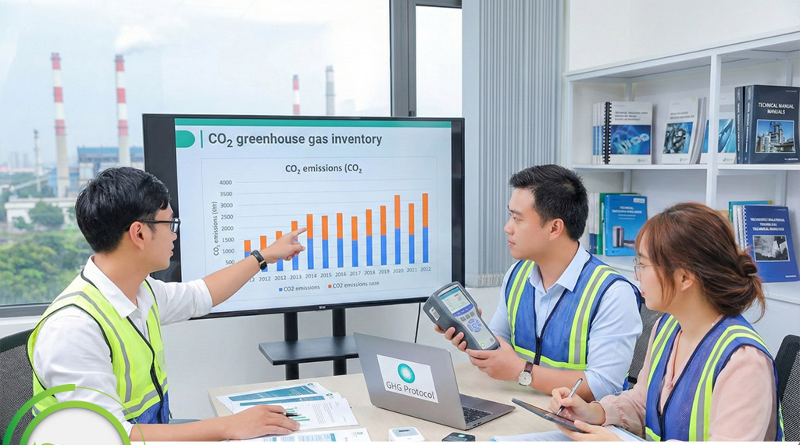
Starting September 25, 2026, a total of 2,441 greenhouse gas-emitting facilities across six sectors will be required to conduct inventories in accordance with the newly updated 2026 list.
Prime Ministerial Decision No. 42/2026/QD-TTg, issued in August 2026 regarding the updated list of sectors and greenhouse gas-emitting facilities subject to mandatory greenhouse gas inventories, marks a significant shift in the number of designated establishments. When the Government first released the mandatory inventory list under Prime Ministerial Decision No. 01/2022/QD-TTg on January 18, 2022, 1,912 facilities across six primary sectors were required to comply.
By 2024, under Prime Ministerial Decision No. 13/2024/QD-TTg, the updated count rose to 2,166 facilities. Under Decision No. 42/2026/QD-TTg, that figure has climbed further to 2,441 establishments.
Consequently, from 2022 to 2026, the total number of facilities required to conduct greenhouse gas inventories increased by 529. This includes an addition of 254 establishments between 2022 and 2024, and another 275 facilities between 2024 and 2026.
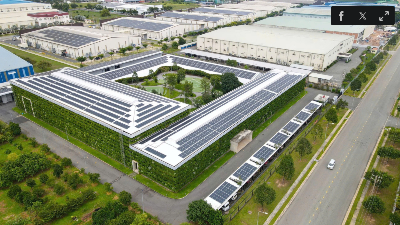
The qualifying criteria for facilities across designated sectors continue to follow the provisions of Decree No. 06/2022/ND-CP. However, structural shifts across industries have emerged: the industry and trade sector continues to account for the largest share with 1,916 facilities, representing nearly 80% of the total roster; the construction and transport sector includes 53 facilities in transportation and 411 in construction; while the agriculture and environment sector accounts for 61 facilities.
Among the 1,916 facilities within the industry and trade sector, manufacturing and processing represents the lion's share (93.5%) with 1,792 establishments.
The sub-sectors accounting for the highest proportions under Decision 42 are plastics and rubber (19.3%) and textiles and garments (19%). In contrast, facilities belonging to electrical and electronics manufacturing and other general commodity production saw the most pronounced decreases.
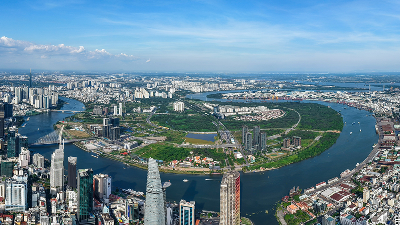
By geographic distribution, Ho Chi Minh City, Tay Ninh, Dong Nai, Bac Ninh, and Hung Yen are home to the largest number of facilities subject to mandatory inventories.
These adjustments demonstrate that emissions management is broadening to guarantee comprehensive greenhouse gas oversight across a diverse spectrum of industries, advancing sustainable manufacturing, emissions reduction, and the realization of Vietnam's commitment to achieve net-zero emissions by 2050.





 Google translate