


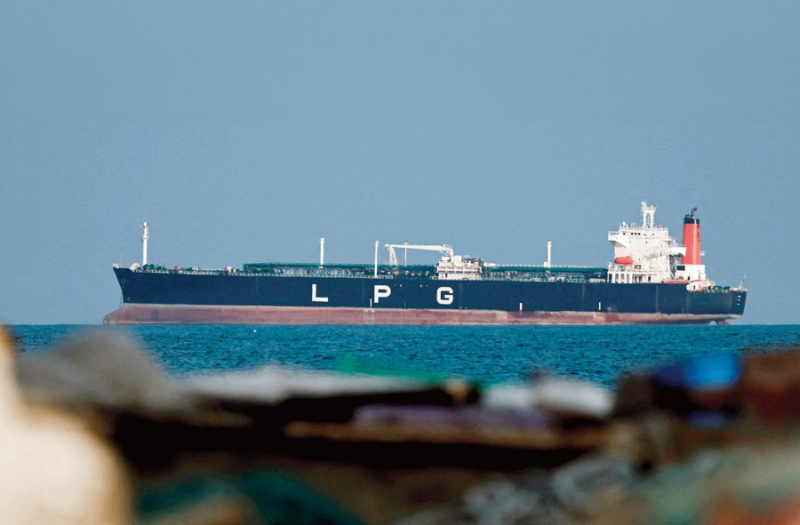
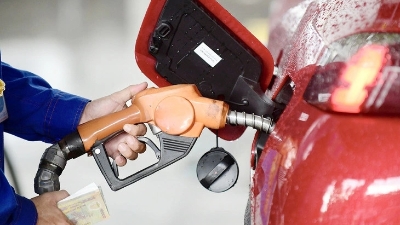
Oil, and energy more broadly, is a critical input for the economy, embedded in the cost structure of most goods and services. When conflict erupted recently in the Middle East, the blockade of the Strait of Hormuz and attacks on regional energy facilities triggered a sharp surge in oil prices, driving up energy costs. Brent crude futures have exceeded $100 a barrel, up more than 50 per cent compared to three months earlier. Gasoline and gas prices across many Asian and European countries have risen by similar or even greater margins.
Ripple effects
Compared with the energy price shock stemming from the Russia-Ukraine war, the crisis linked to tensions involving Iran is potentially more severe. Many countries have moved to increase strategic reserves or adjust their energy strategies, adding to overall economic costs.
Rising oil prices and supply disruptions from the Middle East also have significant spillover effects on global fertilizer and food markets. Energy and food are major components of the inflation basket of goods and account for a substantial share of household spending. When both categories rise sharply and persistently, real purchasing power is eroded.
As costs increase, prices follow, leading to higher inflation. Energy prices are particularly prone to asymmetric transmission: they rise quickly but decline slowly. If the energy shock is prolonged, inflation tends to become more persistent as households and businesses adjust to a new, higher price baseline.
According to a recent report from the Organisation for Economic Co-operation and Development (OECD), sustained increases in energy prices can have a meaningful impact on inflation. In a baseline scenario where energy prices gradually ease, inflation across G20 economies is projected at 4 per cent in 2026 and 2.7 per cent in 2027. In a downside scenario, global inflation could rise by an additional 0.7 percentage points relative to the baseline.
Minutes from the US Federal Reserve’s March 17-18 meeting show that many policymakers are increasingly concerned about the inflationary impact of energy prices. The 2 per cent inflation target may prove difficult to achieve if elevated inflation persists. While only a few members had previously supported tighter monetary policy as of January, a majority now appear to favor the possibility of further rate hikes.
Inflation is only the first shock. The conflict involving Iran could also affect employment and economic growth. A likely scenario is that prolonged high prices reduce household spending, prompting businesses to scale back operations and hiring, or even cut jobs, leading to slower growth.
The OECD projects global economic growth of 2.9 per cent in 2026. However, under an adverse energy price scenario, growth could decline by 0.3 percentage points in the first year and 0.5 percentage points in the second.
The World Bank’s latest regional report, the “East Asia and Pacific Economic Update,” indicates that growth in the region is expected to slow from 5 per cent in 2025 to 4.2 per cent in 2026. Regional economies are heavily dependent on imported energy and are highly sensitive to disruptions in the Middle East. Notably, Vietnam is among the most affected. Growth is forecast at 6.3 per cent in 2026, down from over 8 per cent in 2025.
Challenges and policy trade-offs
Vietnam’s economy grew 7.83 per cent in the first quarter of 2026. To meet a full-year growth target of 10 per cent, the remaining quarters would each need to exceed 10 per cent growth. However, the Iran conflict and the resulting energy crisis present significant headwinds.
With volatile energy prices, supply chain disruptions, and mounting inflationary pressure, achieving multiple objectives simultaneously - high growth, macro-economic stability, inflation control, and balanced economic fundamentals - will be difficult. Trade-offs and prioritization are inevitable.
Government messaging suggests that double-digit growth remains the top priority. If so, the main drivers will likely be public spending and investment, alongside a more accommodative monetary policy from the State Bank of Vietnam (SBV). This approach is already evident in accelerated disbursement of major infrastructure projects, efforts to boost budget revenues, directives for commercial banks to lower interest rates, and adjustments to the SBV’s balance sheet. Transfers may also serve as an additional driver of GDP growth.
In this context, lessons from Vietnam’s macro-economic instability in 2011 are worth revisiting. At that time, prolonged monetary easing and credit expansion were followed by abrupt tightening. Structural issues emerged, including inefficient capital allocation, maturity mismatches (such as short-term borrowing used for long-term lending), ineffective public investment, rising non-performing loans, and systemic risks. Inflation at one point surged to 18-20 per cent.
International observers view Vietnam’s current double-digit growth target as ambitious. Forecasts from major institutions are notably lower, with the International Monetary Fund projecting 5.6 per cent, the World Bank 6.3 per cent, and a Bloomberg survey 7.2 per cent. One explanation is that Vietnam may be overestimating its structural strengths while underestimating the external challenges.
If Vietnam remains committed to achieving double-digit growth in 2026 by mobilizing all policy tools, from fiscal and monetary measures to foreign investment attraction, it may be achievable. However, policymakers should carefully weigh the long-term costs, particularly in terms of macro-economic stability and inflation.
Given the increasing uncertainty and volatility in the global economy, including emerging risks such as private credit market vulnerabilities and potential AI-driven asset bubbles, Vietnam would be well advised to prioritize macro-economic stability and inflation control.
(*)Dr. Vo Dinh Tri is a Lecturer at the IPAG Business School in Paris and the University of Economics Ho Chi Minh City,





 Google translate