



The International Energy Agency (IEA) has concluded that achieving net-zero emissions by 2050, rather than the previously targeted 2070, would require a nearly 50 per cent increase in carbon capture, utilization, and storage (CCUS) deployment. In 2023, the IEA also identified CCUS as a necessary solution for achieving net-zero targets. According to the Global CCS Institute, as of July 31, 2026, the world had 113 commercial carbon capture and storage (CCS) projects in operation, 59 under construction, 308 in advanced development, and 352 in early development.
CCUS offers a promising pathway to emission reductions, particularly in hard-to-abate industries, and could help Vietnam achieve its net-zero target. Despite the country’s considerable potential, deployment faces challenges involving policy frameworks, technology, infrastructure, and investment.
Possibilities and advantages
At a recent workshop entitled “Carbon Capture, Utilization and Storage (CCUS): A Solution to Advancing Net Zero in Vietnam,” Dr. Nguyen Huu Luong, Senior Expert at the Vietnam Petroleum Institute (VPI), said collaborative research by the Vietnam National Industry - Energy Group (Petrovietnam) and the Japan Organization for Metals and Energy Security (JOGMEC) identified Vietnam as one of Southeast Asia’s most promising countries for CO2 storage.
The country’s estimated storage potential stands at approximately 71 billion tons of CO2, concentrated in three geological basins: Song Hong (39 billion tons), Nam Con Son (22 billion tons) and Cuu Long (10 billion tons).
Vietnam has three potential areas for developing CCS hubs. Mr. Luong identified five essential conditions for establishing such hubs: concentrated emission sources, an anchor project, suitable storage sites near planned CO2 transportation routes, long-term policy and financial support, and a dedicated coordination team.
CCUS also offers opportunities for integration into the oil and gas industry, whose operations share similarities with the technology’s value chain. According to Mr. Luong, CCS could help remove CO2 from natural gas and reduce Scope 1 and Scope 2 emissions across upstream and downstream operations, including natural gas processing, liquefied natural gas (LNG) production, oil refining, petrochemicals, fertilizer manufacturing, and power generation.
Dr. Nguyen Thanh Tung, Deputy Director of the VPI, said Vietnam’s advantages included substantial CO2 storage potential, existing infrastructure, oil and gas industry expertise, and established geological data. Its sedimentary basins could store tens of billions of tons of CO2, providing a foundation for further research and deployment.
Existing petroleum infrastructure and technical expertise could also support CCUS development, given the similarities between the technologies and established oil and gas operations. Vietnam’s databases and methodologies for assessing geological storage potential provide an additional advantage in identifying suitable sites.
Furthermore, Vietnam’s net-zero commitment at the 26th UN Climate Change Conference (COP26) has strengthened the impetus for developing CCUS as a greenhouse gas emissions reduction solution.
High investment costs
CCUS technology is gradually advancing toward industrial applications, offering opportunities to reduce emissions in major emitting sectors, including cement, steel, chemicals, oil refining, and thermal power generation. Mr. Le Van Nghi, Chairman and General Director of QIS Global, said Vietnam had favorable conditions for adopting CCUS, particularly in oil and gas, cement, steel, chemicals, fertilizers, and thermal power generation.
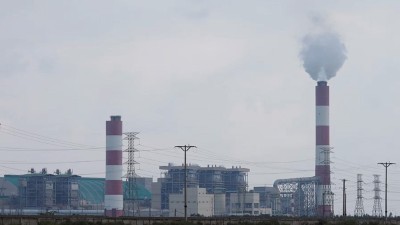
However, technologies and operating conditions vary across industrial facilities, making case-by-case feasibility assessments essential rather than applying a single model to every plant. Mr. Nghi identified investment costs as a major obstacle. Preliminary estimates suggest that a carbon capture project at a thermal power plant with a capacity of some 600 MW could require tens of millions of USD in investment.
Mr. Le Quang Huy, Head of the Greenhouse Gas Emissions Management and Ozone Layer Protection Division within the Department of Climate Change at the Ministry of Agriculture and Environment (MAE), said CCUS had significant emission reduction potential but faced considerable challenges in practical implementation.
Though Vietnam is developing its policy framework to facilitate pilot projects, financial and technical barriers remain substantial. Equipment for CO2 injection alone could cost hundreds of millions of USD for a medium-sized project. Additional requirements include appropriate technology, CO2 transportation systems, and storage infrastructure that meets technical standards.
Achieving net-zero by 2050 will require coordinated transformation across the economy. Despite their high costs, CCS and CCUS could encourage technological change in major emitting industries, helping reduce emissions and strengthen competitiveness.
Authorities have worked with the Ministry of Industry and Trade to assess CCUS applications in oil and gas, coal mining, and iron and steel production, while coordinating with the Ministry of Construction regarding cement manufacturing. CCUS is also being considered for inclusion among the emission reduction measures in Vietnam’s Nationally Determined Contribution (NDC), subject to international support.
Suitable roadmap
According to experts, CCUS deployment should reflect the specific conditions of each industry and facility, ensuring technical feasibility, economic efficiency, and environmental safety. Vietnam needs to refine its policy framework, establish measurement, reporting, and verification (MRV) methodologies for captured, transported, utilized, or stored CO2, clarify long-term liability for storage sites, mobilize investment, and strengthen international cooperation. With no companies yet willing to undertake large-scale CCUS deployment, experts recommend starting with manageable projects to assess feasibility.
Mr. Nghi said Vietnam should adopt a phased approach, prioritizing projects with accessible CO2 sources, clearly-defined utilization markets or storage plans, and the capacity to mobilize necessary resources. Emission reduction performance should be assessed across the entire technology chain before projects are expanded.
Building on initial projects, Vietnam could develop industrial clusters sharing CO2 collection, transportation, and storage infrastructure. This would help optimize costs and enable broader participation by businesses. In the longer term, CCUS development should form part of a wider technology ecosystem supporting the country’s net-zero target.
Developing CO2 capture technology for industrial emissions is another priority. Though injecting CO2 into geological formations is an established application, capturing it from industrial sources remains challenging. Vietnam needs to acquire and gradually master cost-effective capture technologies to improve the economic viability of CCUS projects.
Strengthening the institutional framework
Vietnam has several initial conditions for developing CCUS, including concentrated emission sources in the industrial and energy sectors, potential storage sites in sedimentary basins and depleted offshore oil and gas fields, and the petroleum industry’s technical expertise and geological data. The gradual development of a carbon market and improvements to petroleum legislation also provide a foundation for future deployment.
Notably, the Law on Petroleum No. 10/2026/QH16, which takes effect on March 1, 2027, and its draft implementing decree contain provisions on carbon capture and storage associated with petroleum activities, establishing an initial legal basis for the technology’s development. Dr. Tung described the inclusion of these provisions in the revised Law on Petroleum as an important step toward moving Vietnam from assessing its potential to implementing projects in practice.
However, commercial-scale deployment will require regulations covering the entire project lifecycle, from block allocation and investor selection to site surveys, assessments, injection permits, operations, monitoring, and long-term liability. Geological storage potential alone does not guarantee that a commercially-viable project can be developed.
Vietnam must further strengthen its institutional framework, establish transparent financial mechanisms, develop supporting infrastructure, and expand international cooperation.
Deputy Minister of Agriculture and Environment Le Trong Yen said preparations for practical deployment should begin by clarifying the role and scope of CCUS in Vietnam’s emission reduction roadmap. This requires a stronger scientific and technological foundation, alongside clear safety requirements across the entire CCUS value chain. Geological storage studies must be supported by detailed survey data assessing CO2 storage capacity, reservoir stability and monitoring requirements.
Mr. Nguyen Tuan Quang, Director of the Department of Climate Change at MAE, said additional CCUS-related provisions should be incorporated into the legal framework for environmental protection and climate change response. Clear MRV mechanisms and national technical regulations and standards would provide a foundation for developing tax incentives and credit support policies to attract private investment.





 Google translate