


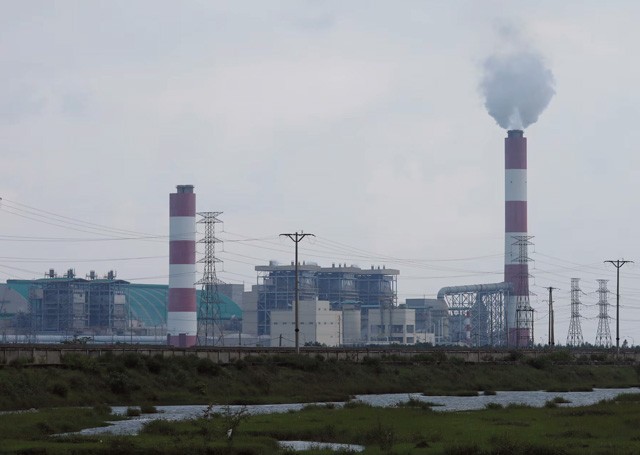
Vietnam is moving from the policy-building phase to actually operating a domestic carbon market, with the carbon exchange having begun operations on June 29. Alongside this move, Vietnam is also completing its greenhouse gas inventory system, measurement, reporting, and verification (MRV) framework, emissions allowance allocation mechanism, and regulations governing carbon credit trading.
These are considered the fundamental building blocks for a functioning carbon market. Accurate measurement of emissions at each facility is particularly important for establishing allowances and tradable carbon assets. In the initial phase, the market will focus on major emitting sectors, including thermal power, cement, and steel.
Strategic asset
According to Mr. Hai Ho, Co-founder and CEO of Alternō, these sectors have very high heat demand, with a significant share of their emissions coming directly from burning fossil fuels to generate heat for production. The development marks a “structural turning point” for the economy, as emissions begin to be reflected directly on corporate balance sheets. “Emission reductions were previously viewed largely through the lens of corporate social responsibility and voluntary action,” he explained. “But with carbon now carrying a starting price of around VND136,000 ($5) per ton of CO2e [carbon dioxide equivalent], carbon is shifting from an environmental indicator to a financial obligation or an asset that businesses can manage.”

Companies that cut emissions early will gain a cost advantage, while those that delay the transition could face increasingly tight allowances and rising emissions costs. Mr. Tien Do, CEO of NAYAN Sustainability, said the emergence of the carbon exchange does more than introduce a new commodity into circulation. “The carbon exchange is expected to serve as an economic lever, encouraging private capital to flow into clean, low-emission technologies and circular production models,” he said. “This market-based mechanism could provide an effective way to advance the government’s commitment to achieving net-zero emissions by 2050 while reducing pressure on the State budget.”
In his view, this will change how businesses approach carbon management in two ways. First, emissions will gradually shift from being a “compliance cost” to a “strategic asset.” And second, businesses will have to take a more proactive approach to emission reductions.
During the pilot phase, the carbon exchange is focusing on around 110 major emitting facilities in the thermal power, steel, and cement sectors. However, according to Mr. Hai, the impact will extend beyond companies directly participating in the market and spread across supply chains, particularly as exporters face increasingly-stringent carbon requirements in international markets.
For exporters, the pressure is becoming more apparent as the EU’s Carbon Border Adjustment Mechanism (CBAM) increasingly affects the calculation of product costs and carbon footprints. Emission reductions capacity could therefore become a key factor determining businesses’ competitiveness in international markets.
The changing market mechanism is also reshaping how businesses assess emission-reduction technologies. “When Alternō first introduced its sand-based thermal energy storage solution to factories, the main questions were how long it would take to pay back the investment and whether the fuel savings would offset the upfront cost,” Mr. Hai said.
Once carbon has a price, however, the calculation changes. Businesses must consider not only fuel savings but also avoided emissions allowance costs and the potential to generate revenue from carbon assets in the future. This is particularly relevant for heat-intensive industries such as thermal power, steel, and cement, where fossil fuels account for a significant share of emissions from industrial heat.
The “new game” is therefore not simply about buying or selling allowances, but about investing in technologies that reduce emissions at the source. Alternō is focusing on industrial heat, developing renewable energy storage systems, and supplying clean heat to factories rather than relying solely on downstream emissions offsetting.
At a multinational confectionery group’s production facility, Alternō uses surplus weekend solar power to store heat, which is then used to dry food waste into animal feed. The model helped its partner increase resale value by 16.7 per cent under a circular economy model. According to Mr. Hai, a 46 per cent reduction in thermal energy use could become a “financial buffer” against rising carbon allowance costs, while digitized, verifiable emissions data could provide a foundation for managing carbon assets.
Key barriers and opportunities
Despite the opportunities, most Vietnamese businesses are not yet ready to participate deeply in the carbon market. Mr. Tien believes they can be broadly divided into three groups: large corporations, FDI enterprises, and manufacturers serving export markets with stringent requirements, which have already begun conducting emissions inventories and developing carbon strategies; businesses adopting a wait-and-see approach because they recognize the importance of the carbon market but lack sufficient resources or technical capabilities to act; and a large number of small and medium-sized enterprises (SMEs) that still face insufficient regulatory or global supply chain pressure to invest immediately in emission reductions.
According to Mr. Tien, the two most prominent barriers are a lack of expertise and limited financial and human resources. Many businesses have yet to master processes ranging from greenhouse gas inventories and emission-reduction roadmaps to MRV, carbon-credit project development, and carbon trading.
From a technology perspective, Mr. Hai said high upfront investment costs for clean technologies, together with the costs of MRV, are two major bottlenecks preventing businesses from entering the market.
Alternō is seeking to address part of this challenge through its sand-based thermal energy storage system. According to the company, locally-sourced sand accounts for around 90 per cent of the system, resulting in raw material costs approximately eight-times lower than lithium-based systems and four-times lower than solutions based on metals or steel.

The carbon exchange could help channel private capital into low-emission technologies and circular production, supporting Vietnam’s net-zero 2050 goal while reducing pressure on the State budget.

It said the solution can reduce operating costs at factories by up to 75 per cent over four years, with an average payback period of around 3.45 years before external support is taken into account. The system is also modular, allowing units to be stacked and requiring less space than an equivalent lithium-based system.
Another notable feature is that MRV is integrated directly into the system. Sensors continuously record energy input and output data, enabling automatic calculation of the fossil fuel and CO2 displaced.
According to Mr. Tien, the early beneficiaries of Vietnam’s carbon market would extend beyond businesses on the emissions allowance allocation list to sectors with strong potential to generate carbon credits, including waste management, agriculture, and forestry.
Emission reduction projects in these sectors could provide a source of credits for businesses seeking to offset their emissions. Renewable energy is also expected to benefit as corporate demand for clean electricity grows. The combination of direct power purchase agreements (DPPAs) and growing demand to reduce emissions associated with electricity consumption could further support the development of the green energy market.
In the longer term, both Mr. Hai and Mr. Tien expect Vietnam’s carbon market to expand and have a deeper impact on production activities.
According to Mr. Hai, the current phase, with free allowances and a low starting carbon price, is expected to end around 2028. The market would then gradually move toward an auction-based mechanism, with tighter emissions limits and broader coverage beyond the three initial sectors.
At the same time, implementation of Article 6 of the Paris Agreement could facilitate Vietnam’s connection with international carbon markets, while CBAM will continue to put pressure on exporters. For carbon credits, Alternō also plans to integrate emissions data measured by its systems into the process of developing carbon assets. However, the company said it would proceed cautiously to ensure compliance and avoid double counting of emission reductions.







 Google translate