



Nearly every Vietnamese traveler associates travel with positive emotions, and most say the anticipation and planning are part of the pleasure. But Booking.com’s inaugural Travel Happiness Index, based on insights from 10,000 travelers across ten Asia-Pacific markets, including Vietnam, reveals a more nuanced picture: while 99 per cent associate travel with positive emotions, 92 per cent say having a trip to look forward to lifts their mood and 71 per cent believe anticipation helps them cope with daily stress. Their enthusiasm is tempered, however, by concerns over costs and a growing reliance on trusted platforms to ease the planning process.
Mr. Branavan Aruljothi, Country Head of Booking.com in Vietnam, said the findings reflect a broader shift in how people see travel. “Travel is increasingly becoming more than just a break from routine - it is an investment in personal well-being, relationships, and meaningful discovery,” he said.
Anticipation and its limits
According to data, while 62 per cent of Vietnamese travelers find planning a trip enjoyable, 21 per cent say it does not affect their mood and 17 per cent describe it as more of a chore - meaning nearly two in five do not draw joy from the process. The most enjoyable parts of planning are finding activities or experiences (39 per cent), researching destinations (35 per cent), consuming content about the destination (35 per cent), making reservations (32 per cent), and booking accommodation (31 per cent).
Mr. Aruljothi said the contrast is worth highlighting. “Planning the journey and experiencing it both bring a lot of joy, but they often bring similar points of stress and concern as well,” he explained. “The important thing is not just to plan the journey, but to plan it in a balanced way - reducing as much friction as possible, so there is more room for moments of joy.”
Booking accommodation - the transaction at the heart of an online travel platform - ranks last of the five, albeit by a narrow margin. The pattern suggests travelers enjoy the inspiration stage of a trip more than the transactional one - a gap the report’s later sections argue technology can bridge. Relaxation is the strongest emotion associated with travel, cited by 67 per cent, ahead of happiness (47 per cent) and excitement (38 per cent). Excitement, the emotion most closely tied to anticipation, comes only third.
The report says Vietnamese travelers increasingly find fulfillment in simple moments rather than trying to pack everything into one trip. Appreciating natural scenery (36 per cent), enjoying good food or drinks (28 per cent), and spending quality time with travel companions (24 per cent) rank as the happiest moments, while 68 per cent say trips with family are the most enjoyable.
Mr. Aruljothi said this behavior stood out in the data. “Looking at how Vietnamese people travel, we found something very special and interesting: Vietnamese travelers increasingly find complete fulfillment in the simplest moments, rather than in packed itineraries or long lists of places to check in,” he said.
Yet the section on what makes a trip worthwhile carries a less romantic message. The report says 77 per cent prioritize trying local food and meaningful experiences, 74 per cent extend trips to rest and recharge, and 71 per cent choose travel dates or destinations based on deals and offers.
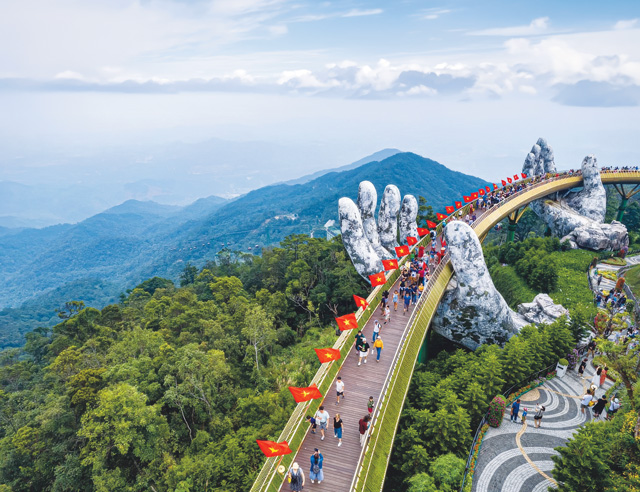
Deal-seeking is the most conditional of the three: 42 per cent say they would probably choose based on price, compared with 29 per cent who definitely would. That does not make cost any less relevant. Rising costs or inflation at the destination is the top travel concern, cited by 33 per cent, and budget-friendly options are among the Top 5 features giving travelers peace of mind (32 per cent). Travelers may be shaping trips around meaning, but the data suggests price remains the constraint.
Positive sentiment
The report’s technology section finds that 88 per cent of Vietnamese travelers say digital tools simplify travel planning and booking. A larger 93 per cent feel more at ease booking through a trusted platform.
That last figure is the sum of two groups: 58 per cent who feel much more relaxed and able to focus on enjoying the trip, and 35 per cent who feel only somewhat more at ease. In other words, trust is a comfort for nearly all travelers but a decisive relief for a smaller majority. The report also does not define what a “trusted platform” means to respondents, and the finding appears in a document published by an online travel platform that concludes it helps travelers move from intention to experience.

Travel is increasingly becoming more than just a break from routine - it is an investment in personal well-being, relationships, and meaningful discovery.

What provides that peace of mind is also instructive. Transparent pricing with no hidden fees leads at 45 per cent, followed by traveling with trusted companions (36 per cent) and responsive customer support (33 per cent). The report names flexible cancellation policies and a simple, seamless booking process among the factors that build confidence, but neither appears in the Top 5. Price clarity, rather than convenience, is what travelers say settles their nerves most.
When asked what Vietnam’s tourism businesses should do to bring visitors back and encourage them to spend more, Mr. Aruljothi framed the challenge as moving the country beyond a value-led image while crediting the progress already made. He pointed first to connectivity and second to personalization.
Operators on the ground are already moving in that direction. Mr. Nguyen Ngoc Thien, Deputy Director of the Hai Van Cat International Travel Company (Hava Travel), said the company builds tours linking craft villages, local specialties, and community tourism across Da Nang, regularly taking guests to the Non Nuoc stone sculpture village, the Thanh Ha pottery village, “One commune, One product” (OCOP)-certified producers, and community sites in Hoa Vang.
Thanks to these linked packages, average spending outside the tour by international and MICE (Meetings, Incentives, Conference, and Exhibitions) guests has risen by around 20-30 per cent compared to traditional tours, he said. Guests also rate the programs highly for authenticity and variety, and the average length of stay has grown.
Mr. Nguyen Quoc Duy, Sales Director at luxury cruise and resort group Paradise Vietnam, said the company varies activities between Ha Long Bay sightseeing, live international music, cooking classes, spa sessions, and morning tai chi so that guests can explore local cuisine and culture more deeply. “Many guests book two to three nights or more at the Paradise Suites hotel to enjoy its restaurant, sea-facing pool, and spaces for walking and cycling,” he added. “We keep refreshing seasonal activities to enrich the stay and make the product more attractive to international guests.”
For all the positive sentiment, with Vietnamese travelers remaining enthusiastic about travel and the prospect of new experiences, rising costs can shape their decisions and make transparent pricing and trusted platforms increasingly important. Beneath the positive sentiment is a pragmatic market where travelers are most committed to rest and local experiences, more conditional about price-driven choices, and most reassured by knowing exactly what a trip will cost.



 Google translate