


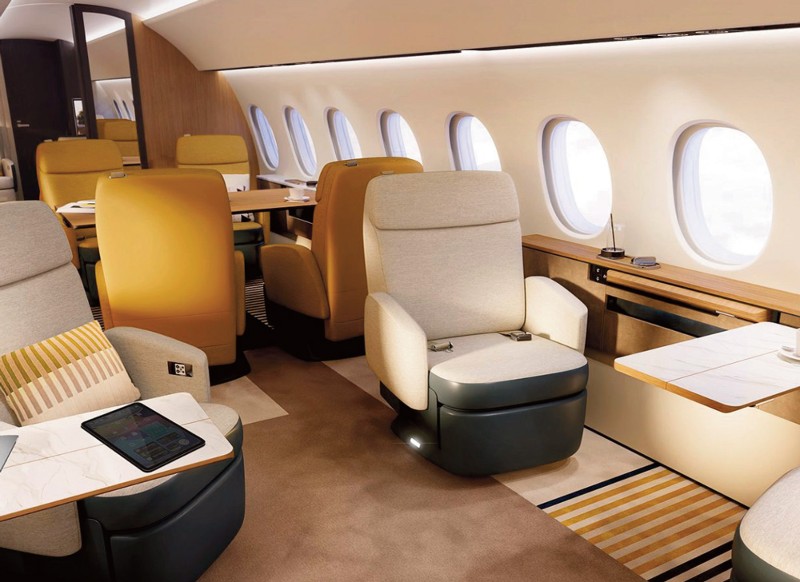
Vietnam’s aviation sector is being reshaped by private capital, and that shift is now visible at every altitude - from conglomerates building airports and launching commercial airlines to individual business owners buying jets of their own.
A record 83.5 million passengers were carried in 2025, up 10.7 per cent year-on-year, with international traffic reaching roughly 46.6 million, an increase of 12 per cent. The sector is targeting around 95 million passengers for 2026. Growth has indeed continued into the year, with passenger numbers rising 16.4 per cent in the first quarter against a year prior.
Analysts at MBS Securities believe the sector is likely to sustain that momentum, pointing to rising international passenger traffic, supportive visa exemption policies, political stability, and relatively low living costs as the main drivers, alongside continued investment in aviation infrastructure.
Private sector entrants
That infrastructure investment is increasingly coming from the private sector rather than the State. Experts at SHS Securities noted that Vietnam’s airport network, already denser than the global average, is being expanded under a more favorable regulatory environment, one that has opened the door for private investors to take on projects historically reserved for the State-owned Airports Corporation of Vietnam (ACV). Van Don International Airport in northern Quang Ninh province set the precedent as Vietnam’s first privately-developed airport, built under a build-operate-transfer (BOT) model and fully financed by the Sun Group.
Since then, several of Vietnam’s largest private conglomerates have followed suit. The Masterise Group has set up a wholly-owned aviation infrastructure company with charter capital of VND29.3 trillion ($1.12 billion) after being selected by the government as the investor in the Gia Binh International Airport project in northern Bac Ninh province, a $7.45 billion development the National Assembly approved in December 2025 and designed to meet international five-star service standards.
The Sun Group has established a new aviation subsidiary in the central highland’s Lam Dong province tied to the planned Phan Thiet Airport, building on an aviation ecosystem that already includes Sun Phu Quoc Airways and the Phu Quoc International Airport expansion. The Crystal Bay Tourism Group entered the sector in November 2025 with a new airline subsidiary, while the T&T Group-backed Vietravel Airlines raised its charter capital to VND2.25 trillion ($85.67 million) in December, with plans to raise it further to fund fleet expansion.
The scale of ambition varies widely. Sun Phu Quoc Airways expanded its fleet from zero to nine aircraft in just six months between August 2025 and February 2026, while newer entrant LOTHA Airlines started out with charter capital of just VND10 billion ($380,600), but the direction is consistent.
SHS Securities estimates that Vietnam’s total fleet will grow from 193 aircraft at the end of 2025 to 228 in 2026 and 260 by 2027. Vietnam Airlines and Vietjet Air still control more than 86 per cent of the domestic market, and MBS Securities expects competitive pressure on the two incumbents to remain limited as they pivot toward higher-margin international routes. But the broader picture is unmistakable: private capital, once mostly absent from Vietnamese aviation, is now building runways, fleets, and airlines.
Exclusive flying
According to aviation consultants the Asian Sky Group, Vietnam’s private jet fleet grew from nine to 15 aircraft in 2025, an increase of nearly 67 per cent; the highest growth rate in the Asia-Pacific region. By mid-2026, the number of business jets in operation had risen further, to 16.
Speaking at the unveiling of Dassault Aviation’s new Falcon 10X business jet in Hanoi on July 9, Mr. Carlos Brana, Dassault Aviation’s Executive Vice President of Civil Aircraft, said the main drivers for this trend are the country’s economic growth, the internationalization of domestic businesses, and rising demand for direct travel to major global economic hubs. “This shows that aircraft owners in Vietnam increasingly want to fly directly to Europe and North America,” he said.
He also cautioned, however, that Vietnam’s business aviation market remains small relative to regional peers. The combined Falcon fleet operating in Thailand, Malaysia, Indonesia, Singapore, and China already exceeds 100 aircraft, with Vietnam accounting for less than 10 per cent of that total.
Ms. Crystal Wong, President of Asia Pacific at VistaJet - one of the fastest-growing private jet companies in the world - said that Vietnam remains an emerging business aviation market and this presents a tremendous opportunity. “Singapore and Hong Kong (China) have long-established aviation ecosystems and supporting infrastructure,” she continued. “Vietnam is still at an earlier stage of development, which means there is considerable room for growth across the entire value chain.”
VistaJet recorded a 34 per cent year-on-year increase in flying hours in Vietnam this year, alongside a 21 per cent increase in flight legs. To put that into perspective, traffic across Asia-Pacific grew by around 25 per cent overall. Even established private aviation markets such as Singapore and Hong Kong (China) recorded growth of 24 per cent and 26 per cent, respectively, which makes Vietnam’s performance particularly noteworthy.
Mr. Paul Desgrosseilliers, CEO of private-jet service provider ExecuJet Haite, said Vietnam had almost no privately-owned aircraft before 2020. Vietnamese business leaders are now increasingly using private jets for trips to North America and Europe, specifically to avoid layovers on commercial routes. “That not only helps them avoid long waiting times but also allows them to work efficiently and privately during the flight,” he said.
The wealth underpinning that demand is growing quickly. Knight Frank’s Wealth Report 2026 found that Vietnam had 1,233 ultra-high-net-worth individuals - those with net assets of $30 million or more - as of 2026 and projected that figure to grow 59 per cent by 2031, reaching roughly 1,960 individuals with a combined net worth of about $790 billion. That would place Vietnam among the five fastest-growing markets globally for ultra-wealthy individuals, alongside Indonesia, Saudi Arabia, Poland, and Australia.

This shows that aircraft owners in Vietnam increasingly want to fly directly to Europe and North America.
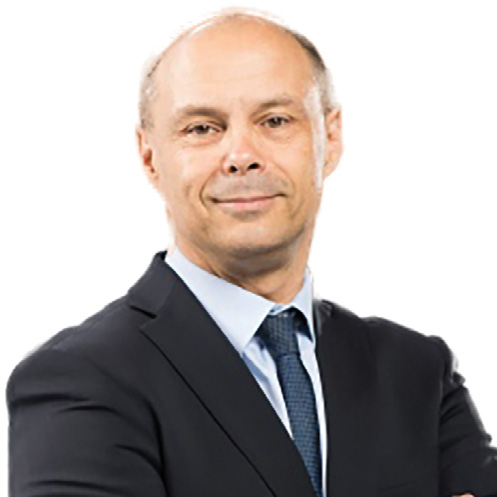
Ms. Ho Thanh Huong, Chairwoman of Bluesky Airways, a business aviation service provider in Vietnam, said local entrepreneurs are showing growing interest in the business jet segment, including newer models such as the Falcon 10X.
Mr. Brana argued that realizing the market’s full potential will require Vietnam to invest further in airport infrastructure and streamline procedures for this segment specifically. He suggested it consider building dedicated immigration and security screening processes for business jet passengers to shorten processing times and strengthen the market’s competitiveness, alongside continued airport expansion.
He also noted that Vietnamese clients are drawn to the Falcon’s ability to operate from shorter runways, such as those at Con Dao and Ca Mau airports, thanks to the aircraft’s aerodynamic design and lighter structural weight; a capability he said matters in a market where much of the country’s regional airport infrastructure remains a work in progress.
Overall, private capital is now involved in nearly every layer of Vietnamese aviation: financing airport construction, launching and expanding commercial airlines, and, increasingly, putting individual business jets into private hands.
The opportunity lies not just in serving Vietnam’s expanding commercial aviation sector but in building the infrastructure, from dedicated terminals to maintenance and charter services, that a fast-growing population of ultra-wealthy Vietnamese individuals will need as private aviation moves from a rarity to a routine part of doing business.



 Google translate