


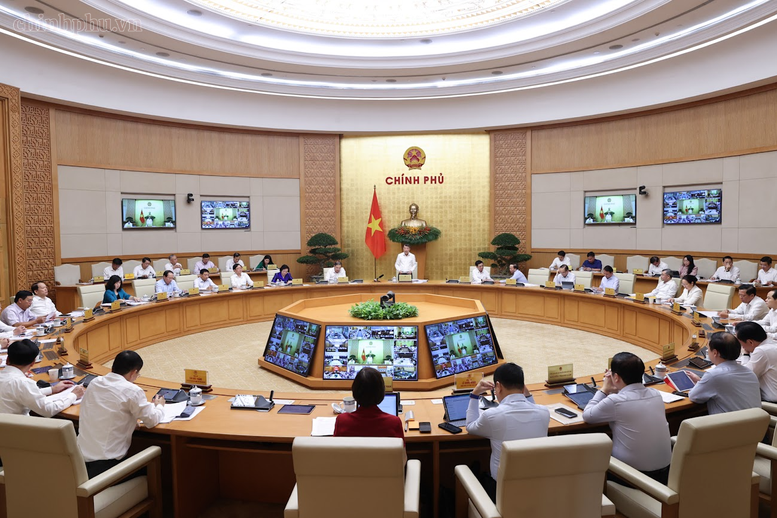
The regular Government meeting for September 2026 was held on October 3 with the attendance of leaders from ministries, government agencies, sectors, and localities nationwide, focusing on assessing the socio-economic situation over the past nine months and determining key tasks for Q4.
The hybrid meeting was chaired by Prime Minister Le Minh Hung.
To achieve the double-digit growth target in 2026, GDP in Q4 must increase by over 12.5%, according to Prime Minister Le Minh Hung, who urged ministries, sectors, and localities to be fully committed, maximizing growth potential while controlling inflation, not increasing electricity prices, and ensuring growth serves the interests of the people.
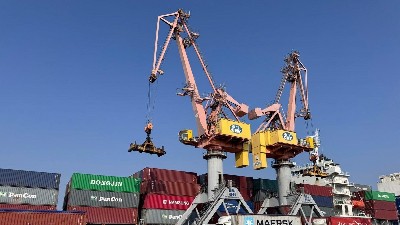
The economy continues to maintain a high growth momentum this year, with GDP in Q3 increasing by 9.95%, bringing the growth rate for the first nine months to 9.01%, the highest level since 2011. Industrial production rose by over 12%; total import-export turnover reached $888 billion; registered FDI capital was nearly $50.4 billion, with realized capital exceeding $21 billion.
Disbursement of public investment reached nearly VND643 trillion (more than $24.86 billion), equivalent to 63% of the plan. State budget revenue reached VND2.19 quadrillion (more than $84,68 billion), nearly 90% of the estimate. The average CPI for the first nine months increased by 4.52%.
Alongside the achieved results, the Prime Minister pointed out that the pressure on macroeconomic management and inflation is increasing; high growth has not yet met the targets. Some growth poles have not met expectations, interest rates remain relatively high, small and medium-sized enterprises still face difficulties in accessing capital; some backlog projects have not been resolved.
According to the Prime Minister, the last months of the year are crucial for achieving the socio-economic targets for 2026. To achieve the double-digit growth target, GDP in Q4 must increase by over 12.5%, creating significant pressure and requiring ministries, sectors, and localities to be determined and make the highest efforts.
The Prime Minister requested continued improvement of institutions and laws, removing bottlenecks, and unlocking resources; ensuring the quality of draft laws submitted to the National Assembly and issuing detailed regulations fully and on time.
A key task is to strive to disburse 100% of the public investment plan, complete key projects according to the 2026 schedule, and continue to resolve backlog projects that have been prolonged.
Ministries, sectors, and localities must strongly promote the domestic market, stimulate consumption and tourism at the end of the year; boost exports, reduce trade deficits; encourage private investment, attract FDI, and leverage new growth drivers. State-owned corporations and companies are required to complete their investment, production, and business plans.
For localities, the Prime Minister requested an urgent update of the growth scenario after nine months, a specific assessment of each industry and sector, and a clear identification of gaps compared to the plan to develop solutions for Q4.
Localities must review all potential growth areas, especially industries, sectors, and projects capable of creating added value; while resolving outstanding issues related to investment, land, site clearance, and project implementation procedures.
Major growth poles such as Ho Chi Minh City, Hanoi, Hai Phong, Quang Ninh, Dong Nai, and Bac Ninh are required to strive for higher targets, focusing on immediately implementable solutions such as boosting production, investment, consumption, exports, disbursement of public investment, and attracting private investment, thereby increasing contributions to overall growth.
For localities with growth lower than targets, the Prime Minister demands a thorough assessment of potential and immediate implementation of strong, specific, and effective solutions. The end-of-year results will serve as a basis for evaluation, allocation, and rotation of personnel.
Along with promoting growth, the Government leader requires strict price control, striving to maintain the inflation target for 2026 approved by the National Assembly.
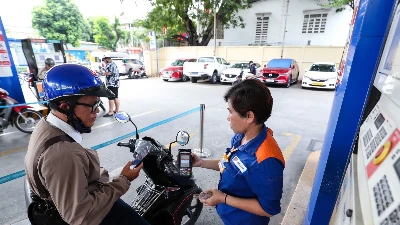
Ministries and sectors must ensure the supply of essential goods such as petroleum, electricity, food, building materials, and medicines; enhance measures against hoarding, speculation, and smuggling. The Prime Minister requested no increase in electricity prices and continued research on appropriate regulatory solutions for state-managed goods.
The Ministry of Finance is tasked with regularly updating growth and CPI scenarios monthly; promptly proposing solutions to alleviate difficulties for production and business and effectively mobilizing resources for development.
Notably, the Prime Minister requested the urgent submission by the Ministry of Finance of a decree to the Government to reduce income tax by 30% for enterprises and household businesses with revenue not exceeding VND10 billion /year; while simplifying tax management processes and procedures related to public investment.
The Ministry of Finance must also comprehensively assess the operational situation of enterprises, focusing on removing bottlenecks related to capital, credit, land, market, compliance costs, as well as procedures for entering and exiting the market.
The State Bank of Vietnam is required to ensure liquidity for the economy, implement measures to stabilize interest rates and the foreign exchange market; proactively create credit sources and appropriate interest rate mechanisms for social housing, rental housing, key projects, and priority sectors.
The Ministry of Industry and Trade focuses on promoting exports, controlling trade deficits, diversifying markets, leveraging new-generation FTAs, and stimulating domestic demand; while ensuring adequate supply of petroleum and electricity, and enhancing coal and oil and gas exploitation.
The Prime Minister also requests accelerating the development of science and technology, innovation, and digital transformation; completing the "100 peak days" to address bottlenecks in digital transformation, promoting the development of strategic technology products.
Emphasizing that growth targets must be linked to the quality of life, the Prime Minister requested continued development of social housing and rental housing; implementing tasks related to education, healthcare, and social welfare.
"Ensuring high economic growth must serve the interests of the people, improve the material and spiritual lives of the people, and ensure social equity," the Prime Minister emphasized.
 Google translate