


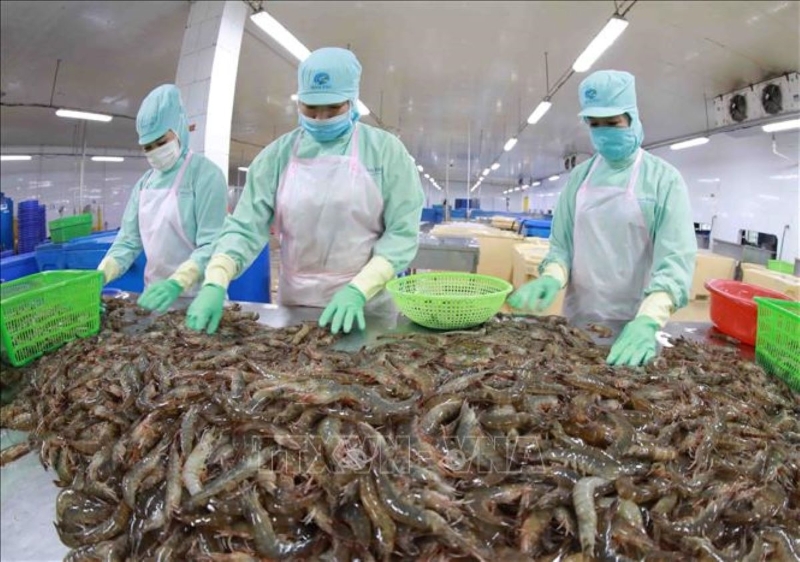
Vietnam's seafood exports in May 2026 reached $1.02 billion, a slight increase of 0.6% compared to the same period last year, according to the Vietnam Association of Seafood Exporters and Producers (VASEP).
For the first five months of the year, the industry's total export turnover hit $4.67 billion, marking an 11% increase over the same period in 2025.
Shrimp remains the flagship export product, generating $1.9 billion in the first five months—an 11.5% increase that accounts for approximately 40.4% of total seafood export value. The growth in the shrimp sector has been driven by recovering demand in several Asian markets, a rise in the consumption of processed products, and increased lobster exports to China.
However, a significant issue currently facing the industry is the mismatch between domestic production and import demand. Many localities are trending toward farming large-sized shrimp to optimize product value, whereas demand in several major markets is shifting toward smaller sizes to serve budget-conscious consumer segments.
Furthermore, Vietnamese shrimp continues to face fierce competition from Ecuador, India, and Indonesia. US trade defense measures, including anti-dumping and anti-subsidy duties along with administrative reviews, also pose ongoing challenges for this sector.
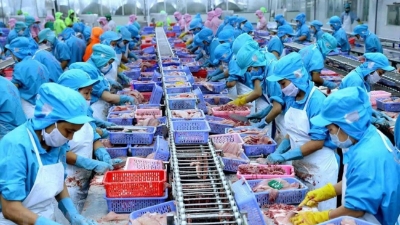
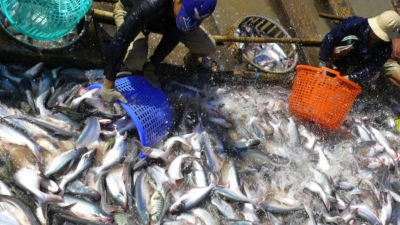
VASEP also reported that pangasius exports in the first five months reached $905 million, up 12.6% year-on-year. This industry is considered to have a favorable foundation due to its stable supply, competitive pricing, and consumer demand that aligns with global "saving" trends.
Pangasius maintains significant growth potential in China, ASEAN, the Middle East, the European Union (EU), and several emerging markets. As global consumers continue to prioritize reasonably priced products, pangasius is well-positioned to maintain its status within the whitefish category.
Despite these opportunities, the pangasius industry is under increasing pressure from rising production costs. The price of fingerlings has remained high since 2025, and increases in feed, transportation, and other input costs have made farmers more cautious about expanding their farming areas. If this trend persists, rising farming costs could continue to drive up raw material prices, ultimately squeezing the profit margins of export processing enterprises.








 Google translate