


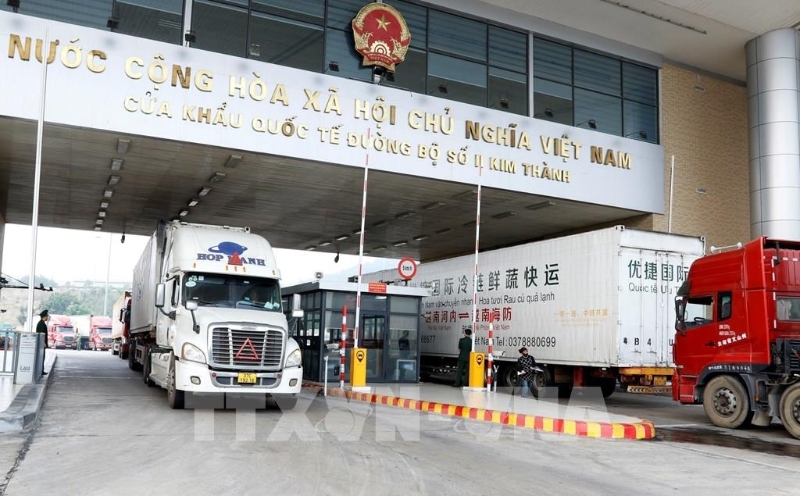
The Prime Minister has approved a plan to develop “smart border gates” at Kim Thanh road bridge clearance point and the Ban Vuoc clearance point under Lao Cai International Border Gate, aiming to modernise trade and logistics links with China.
The model will apply advanced technologies such as artificial intelligence (AI), the Internet of Things (IoT) and fully automated smart transport systems. It will also involve synchronised upgrades of multimodal logistics infrastructure, connecting railways, inland container depots and expressways.
The initiative is designed to create a major import-export hub, strengthen connectivity between Vietnam, ASEAN and southwest China, and enhance competitiveness while supporting sustainable border economic development.
The smart border gate model will integrate cross-border e-commerce and digitalised customs management, helping to ease congestion, cut transport costs and streamline procedures. It is also expected to improve logistics services, boost state revenue, curb smuggling and trade fraud, and reduce emissions while ensuring security and border sovereignty.
By 2030, cargo throughput at the two customs clearance points is projected to double, while logistics costs could fall by 20–30% for firms using fully automated transport. Total trade value through the clearance points is expected to reach about $9 billion.
The project will begin in the second quarter of 2026, and full operations targeted by 2029.


 Google translate