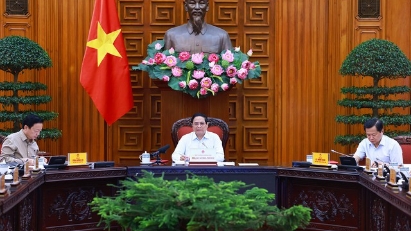
The adjustment aims for greater flexibility, with the threshold to be raised to approximately VND1 billion ($38,000) to reflect economic realities, support household businesses, and ensure budget balance.
Though results indicate a degree of recovery momentum in Q1 and March, ongoing global headwinds continue to pose concerns for Vietnam macro-economic situation.
Only VND728 billion ($31 million) has so far been disbursed out of the VND6.6 trillion ($281 million) of the housing rental support package for employees, or 11.23 per cent. Some localities disbursed less than 1 per cent and four have not disbursed any funds. Disbursement in Ho Chi Minh City and Hanoi represented just 7.1 per cent and 12.3 per cent, respectively.
The Hanoi Department of Education and Training has released a list of foreign-invested educational institutions in the city, including seven multi-level schools and 23 pre-schools.
According to the Ministry of Labor, Invalids and Social Affairs (MoLISA), 81,429 people went to work abroad in the first seven months of 2022, or 90.8 per cent of the annual plan. Meanwhile, there are currently more than 111,000 foreign workers in Vietnam.
Many workers who were employed overseas have experience and foreign language skills but still struggle to find a job, while many businesses are short of workers and struggling to recruit. The main reason for such a paradox is that many of these workers find salaries to be too low compared to what they earned while abroad.
The Webometrics Ranking of World Universities in August put the Vietnam National University - Hanoi (VNU) at 758th place in the world, 183rd in Asia, and 14th in Southeast Asia, up 186 places globally since the previous rankings last January.
Ho Chi Minh City is planning to spend nearly VND1.8 trillion ($76.9 million) on rental support for nearly 1.8 million workers, but has so far disbursed only VND104 billion ($4.47 million) to nearly 196,000 workers, or just 5.8 per cent of the support package.