


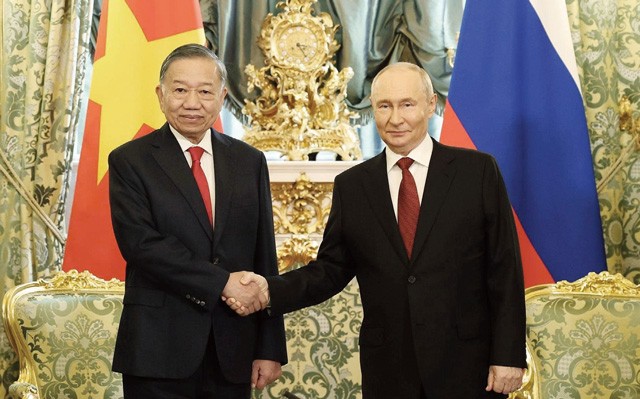
- Following Party General Secretary and State President To Lam’s visit to Russia in September, which further strengthened the Comprehensive Strategic Partnership, what new priorities do you see as most important for advancing bilateral economic cooperation in the time ahead?
From September 7 to 9, 2026, General Secretary of the Communist Party of Vietnam Central Committee and President of the Socialist Republic of Vietnam To Lam paid a State visit to the Russian Federation, leading a high-level delegation. During his stay in Moscow, Comrade To Lam held constructive and in-depth exchanges with the top leadership of our country. A key highlight of the program was his talks with President Vladimir Putin, which culminated in the adoption of a Joint Statement.
Numerous meetings were also held on the sidelines between the leaders of relevant ministries, agencies, and companies of the two countries. A substantial package of documents was signed, aimed at giving fresh impetus to practical cooperation.
The two Heads of State discussed in detail the prospects and priority areas for developing bilateral trade and economic ties over the medium term. They noted that, despite sanctions-related restrictions, bilateral trade continues to grow steadily. Cooperation is expanding in energy, transport, agriculture, tourism, science and technology, education and human resources development, healthcare, and humanitarian exchanges.
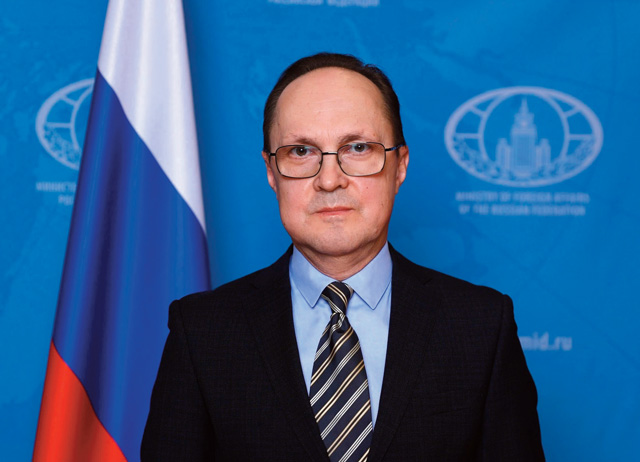
Undoubtedly, the visit marked an important milestone in Russian-Vietnamese relations. We look forward to the consistent implementation of the agreements reached and to translating new major economic projects into concrete action. These projects are expected to become symbols of successful cooperation between Russia and Vietnam in the current era.
- How effectively is the Vietnam-Eurasian Economic Union Free Trade Agreement (Vietnam-EAEU FTA) supporting businesses on both sides? What additional steps could be taken so that bilateral trade may reach the targeted $15 billion by 2030?
Our practical cooperation is multifaceted. We work productively in the oil and gas industry, the energy sector, including nuclear energy for peaceful purposes, automobile manufacturing, agriculture, and tourism.
Bilateral trade continues to expand. Russian-Vietnamese trade turnover increased by 5.7 per cent last year and this positive trend has continued into the current year. During the first eight months, Russian exports to Vietnam recorded strong growth of nearly 20 per cent compared with the same period last year. Imports of Vietnamese goods into Russia are also firmly on an upwards trajectory.
I am pleased that coffee, tea, tropical fruit, nuts, spices, and other products from friendly Vietnam can now be found on the shelves of many Russian shops. Official statistics for the full year 2026 will be released at a later date, but there are good grounds to expect that bilateral trade will reach its highest level in recent years.
The Vietnam-EAEU FTA, which entered into force in 2016 - exactly ten years ago - plays an important role in expanding economic cooperation. I would like to take this opportunity to congratulate our Vietnamese partners on this anniversary!
Vietnam was the first country with which the EAEU signed such an agreement. The FTA provides Vietnamese businesses with preferential access to a market of nearly 200 million people. According to the Eurasian Economic Commission, trade between EAEU member states and Vietnam has increased significantly: 61-fold for Armenia, 34 per cent for Belarus, 4.2-fold for Kazakhstan, 14.5-fold for Kyrgyzstan, and 1.3-fold for Russia. The figures speak for themselves.
Businesses in both countries continue to implement joint projects, identify new areas of growth, establish direct business links, and build sustainable production and logistics chains. The bilateral Intergovernmental Commission on Trade, Economic, Scientific and Technical Cooperation pays close attention to intensifying cooperation in these areas. Its next meeting is scheduled to take place in Hanoi before the end of this year.
At the same time, the absolute value of our bilateral trade has yet to reach a level commensurate with the intensity and depth of our political dialogue. We believe there is substantial untapped potential in this area that needs to be fully unlocked. Russia, for its part, is taking all necessary measures to achieve this.
- Russian investment in Vietnam and Vietnamese investment in Russia both remain modest relative to the overall partnership. What priority areas does Russia see for expanding two-way investment?
Expanding mutual investment is undoubtedly one of the priority areas for the further development of the Comprehensive Strategic Partnership. We are interested in establishing a solid foundation for increasing reciprocal investment, developing production links, and strengthening the long-term presence of companies from both countries in each other’s markets.
Among the promising areas for Russian investment in Vietnam, we identify industry, processing, transport infrastructure, logistics, digital technologies, pharmaceuticals, and biotechnology. Projects with high-added-value and the establishment of joint high-tech manufacturing facilities are of particular interest.
The existing potential is reflected in the statistics. According to Vietnam’s Ministry of Finance, as of 2026, a total of 244 Russian investment projects had been implemented in Vietnam at various points in time, with combined registered capital of $996.81 million. Meanwhile, Vietnam had 19 investment projects in the Russian Federation, with total investment of $1.64 billion. These figures point to considerable opportunities for further expanding investment cooperation.
An important step in this direction was the aforementioned State visit to Russia. Following the visit, MoUs were signed involving the Russian Direct Investment Fund (RDIF), the Ministry of Economic Development of the Russian Federation, and Vietnam’s Ministry of Finance. These documents are intended to facilitate the identification of promising projects, strengthen institutional cooperation, and support Russian and Vietnamese investors.
One concrete example of technological cooperation is the initiative to establish a Rosatom Additive Manufacturing Technology Centre in Vietnam in cooperation with the Vietnam National Industry - Energy Group (Petrovietnam). The agreement provides for the supply of Russian 3D printers to manufacture complex metal components required for drilling and pumping equipment, as well as specialist training. The two sides are considering the possibility of localizing production in Vietnam in the future. Thus, this initiative is not merely about supplying equipment; it is also about developing new technological capabilities and establishing industrial cooperation.
The strategic cooperation roadmap between Russia’s AFK Sistema and the Vietnam Academy of Science and Technology signed during the visit is also intended to strengthen cooperation in high technology. In addition, agreements between Russian and Vietnamese scientific and educational institutions provide a foundation for joint research, knowledge sharing, and the training of highly-qualified personnel.
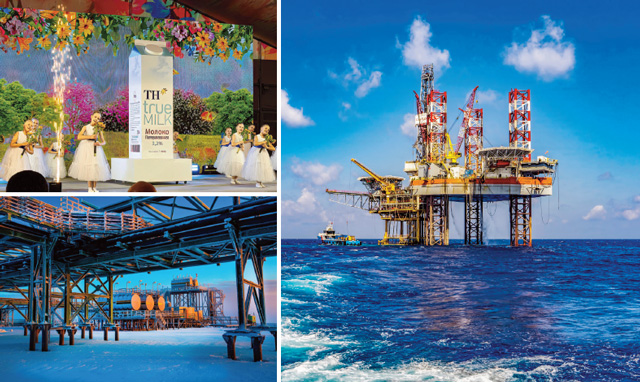
We are equally interested in expanding the investment presence of Vietnamese companies in Russia. There are already successful examples, notably projects undertaken by the TH Group in dairy farming and agriculture as well as the Rusvietpetro joint venture. Other promising areas include consumer goods manufacturing, textiles, furniture, agriculture, and tourism.
Our task, therefore, is to consistently implement the agreements reached, remove existing barriers, and create favorable conditions for businesses. We are confident that closer financial cooperation, industrial partnerships, and technological collaboration will significantly expand reciprocal investment and provide additional momentum to Russian-Vietnamese economic ties.
- Energy remains a cornerstone of the partnership. How do you view the next phase of energy cooperation with Vietnam, particularly in supporting its energy security and green transition?
Cooperation in the fuel and energy sector has remained one of the key pillars of the Comprehensive Strategic Partnership for decades. The recent State visit fully reaffirmed this.
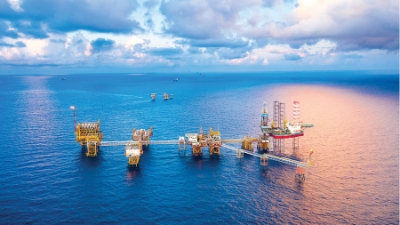
Leading companies from both countries are involved in cooperation in this sector, including Zarubezhneft, Gazprom, NOVATEK, and Petrovietnam. The flagship of this cooperation remains the Vietsovpetro joint venture, which marks its 45th anniversary this year. Its counterpart project in the Russian Federation, the Rusvietpetro joint venture, is also operating successfully. The package of intergovernmental agreements concluded in May 2025 established the conditions for these enterprises to continue their operations until 2050.
It is also worth noting that, on the sidelines of the high-level events in September, Zarubezhneft and Petrovietnam signed a Framework Agreement on a project to establish a strategic oil reserve in Vietnam. In the context of global economic uncertainty, such measures are intended to strengthen the country’s energy security.
Russia has traditionally supported the development of Vietnam’s energy sector. Many power plants built with Russian assistance continue to supply electricity to consumers to this day. These include the Hoa Binh, Yaly, Tri An, and Thac Ba hydropower plants (120 MW), as well as the Pha Lai thermal power plant and many others. We stand ready to participate in both the modernization of existing facilities and the construction of new power plants of these types.
As the importance of clean energy sources continues to grow, we are paying close attention to opportunities for supplying liquefied natural gas (LNG) to Vietnam. We are also exploring projects involving the use of renewable energy sources.
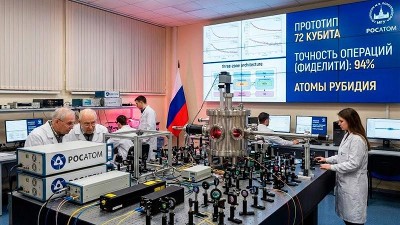
Nuclear power is another promising area. In March this year, an intergovernmental agreement was signed on cooperation in the construction of Vietnam’s first nuclear power plant with the participation of the State Atomic Energy Corporation Rosatom. This agreement establishes the legal framework for implementing the large-scale project, including the construction of two Russian-designed power units, maintenance services, fuel supply, and personnel training. Both sides have completed their respective domestic procedures for the agreement to enter into force and have begun the preparatory phase of work.
Rosatom has unique experience in the construction of nuclear facilities. The State corporation is currently building nuclear power plants in nine countries around the world. Russian nuclear specialists possess the expertise required to carry out complex technological tasks while complying with the most stringent safety requirements.
It is important to emphasize that nuclear technologies are used not only to generate electricity. Their applications also include nuclear medicine, the production of new materials, the treatment of agricultural products to protect them against pests, and many other fields.
In this regard, we are attaching considerable importance to another major project: the construction of a Nuclear Science and Technology Centre (NSTC) in Vietnam. In May 2025, Rosatom and Vietnam’s Ministry of Science and Technology signed a roadmap for the development of nuclear technologies through 2030. In November, a specialized division of Rosatom delivered another batch of nuclear fuel for the Da Lat research reactor, sufficient to meet its requirements until the early 2030s.
- Among Russian investments in Vietnam, the Vietnam-Russia Joint Venture Bank has served as a key financial bridge between the two countries for 20 years. How do you view its role in facilitating trade settlement, supporting investment projects, and strengthening overall economic cooperation?
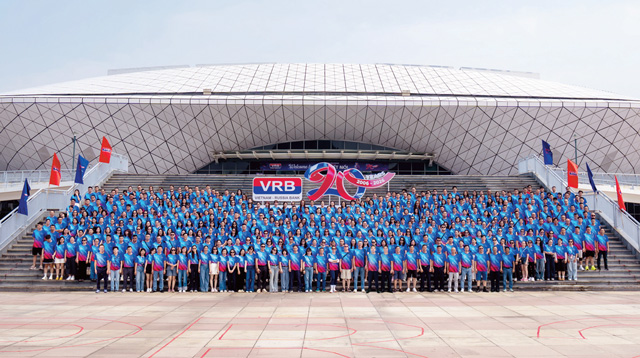
The Vietnam-Russia Joint Venture Bank (VRB) commenced operations in November 2006 and has made considerable progress over the past 20 years. Today, the bank operates its head office and a network of branches in the country’s major cities. It has established a substantial customer base of both corporate and individual clients, as well as a highly-professional workforce.
These foundations have enabled the bank to achieve positive results despite well-known challenges. The institution remains profitable, its loan portfolio is expanding, settlements under contracts are being conducted in national currencies, and employment opportunities are being created for local people.
Overall, VRB makes a significant contribution to strengthening Russian-Vietnamese trade, economic, and investment ties by providing a reliable channel connecting the payment systems of the two countries.
VRB is directly involved in Russian-Vietnamese business activities, which, as I have already mentioned, are showing a strong positive trend. Bilateral trade is growing, cooperation in the fuel and energy sector has received fresh impetus, and agricultural trade between the two countries is expanding. The number of Russian tourists visiting Vietnam also reached a historic high of 1.1 million during the first nine months of this year.
With support from competent authorities in both countries, VRB provides comprehensive banking services for these and other initiatives. I am confident that, thanks to the dedicated efforts of its founding shareholders and staff, the bank will continue to improve its payment and settlement mechanisms, expand its branch network, and broaden the range of services it offers.
In this regard, we greatly appreciate the opening of a VRB branch in the northern province of Lang Son, the expansion of the ATM network supporting MIR cards, and the introduction of QR code payments, which are particularly important for Russian citizens in Vietnam.
Taking this opportunity, I would like to wish VRB continued success and efficiency in its operations, and its management and staff good health, professional success, and all the very best!
- Looking ahead, what do you believe will be the next phase of economic cooperation between the two countries?
The qualitative strengthening of our bilateral ties in the years ahead would be greatly supported by expanded cooperation in new technologies and the development of high-value-added manufacturing. These are precisely the priorities identified by the leadership of our two countries. Particular emphasis is being placed on science, innovation, and the training of highly-qualified personnel in AI, digital solutions, microelectronics, new materials, biotechnology, and medical technologies.
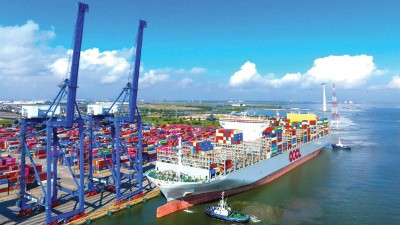
We see considerable potential for fruitful cooperation in the transport sector. At present, we are using a rail corridor connecting Russia and Vietnam overland, which is capable of ensuring high-speed cargo deliveries. However, the potential of maritime transport has yet to be fully tapped. Since 2022, Russia’s FESCO transport group has been operating shipping services between Vietnam and Russia’s Far East.
Direct air connectivity is developing at an even faster pace. Aviation authorities in the two countries recently announced a substantial expansion of air services. This creates favorable conditions for increasing passenger traffic and opening new routes. The geographical coverage of flights is expanding, and opportunities are being explored for launching services to Russian cities such as Kazan, Barnaul, Novokuznetsk, and Blagoveshchensk.
Russian companies are ready to consider, or are already considering, opportunities to participate in the development and modernization of Vietnam’s transport infrastructure, including its railway network, metro systems, and seaports.
Vietnamese businesses are actively engaging in projects in our country. Russia is not only a reliable supplier of energy resources but also a producer of high-quality agricultural products, meat, wheat, fertilizers, confectionery, consumer goods, pharmaceuticals, and polymer products.
As digitalization gathers pace across various areas of life, broad opportunities are emerging for cooperation in information and communications technology (ICT). Russian companies have extensive experience in developing digital ecosystems, implementing smart city technologies, and applying innovative solutions to ensure information security.
Overall, the prospects are promising. We will make coordinated efforts to convert this potential into concrete results.


 Google translate