


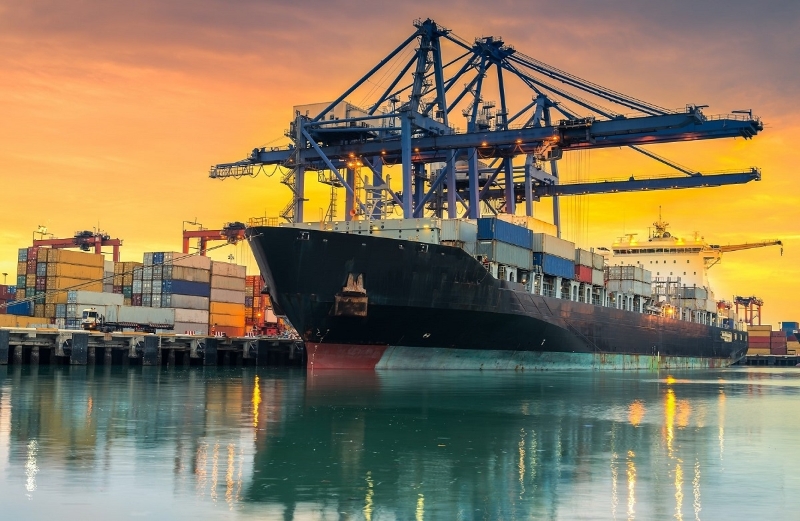
Despite the various “aftershocks” stemming from the global geopolitical situation and severe domestic natural disasters, Vietnam’s total trade turnover in 2025 reached $930.6 billion, up 18.2 per cent against 2024, with exports accounting for $475.04 billion, rising 17 per cent. Its trade surplus of more than $20 billion is not merely a financial statistic but also affirmation of its position in the global trade landscape.
At the recent “2026 Export Promotion Conference: Synchronized Solutions for High and Sustainable Growth”, held by the Ministry of Industry and Trade (MoIT), participants noted that global trade will continue to fluctuate rapidly and unpredictably due to geopolitical tensions, rising protectionism, and tariff policy adjustments by major economies. Meanwhile, increasingly stringent technical standards, green requirements, sustainability criteria, and the impact of digital transformation and AI pose new challenges for production and export activities.
Dependence risks
Vietnam’s export growth still faces structural constraints, including a heavy dependence on foreign-invested enterprises (FIEs), reliance on imported inputs across many industries, limited brand-building capacity, and difficulties in meeting high and comprehensive standards in international markets, particularly for small and medium-sized enterprises (SMEs).
One of the greatest barriers is the imbalance in the structure of exporters and markets. Mr. Tran Thanh Hai, Deputy Director General of the Agency of Foreign Trade at MoIT, pointed to a sobering reality: though manufacturing and processing account for as much as 85 per cent of Vietnam’s exports, this value is still heavily concentrated in the FDI sector, which contributes roughly two-thirds of total export turnover. This underscores the need to raise the share of domestic enterprises to create a more balanced and sustainable export structure.
“Export turnover is now concentrated in electronics and mobile phones, which could pose risks, especially when supply chains are disrupted,” he explained. “In addition, the US accounts for up to one-third of export market share, creating significant exposure as reciprocal tariffs and protectionist barriers increase.”
He stressed that growth by expansion alone has little space left, while shocks from markets, policies, and global supply chains are becoming increasingly unpredictable. Heavy dependence on a few key markets such as the US and China leaves exports vulnerable to international policy and trade fluctuations. Notably, Vietnam still lacks strong national brands in export markets and largely performs contract manufacturing for foreign companies and brands.
In 2026, alongside these persistent challenges, speakers agreed that the tasks facing the industry and trade sector will be formidable. Mr. Nguyen Anh Son, Director General of the Agency of Foreign Trade, said 2026 is particularly significant as the first year of implementing the 2026-2030 Five-Year Socio-Economic Development Plan, marking the start of a new phase aimed at fulfilling the targets set by the 14th National Party Congress.
Pressure from new highs
Government Resolution No. 01/NQ-CP dated January 8, 2026, sets a target of 15-16 per cent export growth in 2026 compared to 2025, with total export turnover to reach $546-550 billion, equivalent to an estimated monthly average of $45-46 billion.
To meet these goals, Mr. Son said MoIT has outlined six key groups of solutions: expanding production and developing new export products with higher domestic value added; shifting from processing to manufacturing-based exports; improving compliance with technical and environmental standards and proactively responding to trade remedies; strengthening links between domestic firms, FIEs, and global corporations to develop industrial clusters and closed supply chains; closely monitoring major economies’ trade policy adjustments while modernizing market information, trade promotion, and digital transformation; maximizing free trade agreements (FTAs), diversifying export markets, and developing new ones; and continuing with administrative reforms and simplifying specialized inspections in import-export activities.
“Export targets for 2026 will be challenging, requiring strong efforts from ministries, local authorities, and businesses,” Mr. Son emphasized. “Breakthrough, feasible policies that can be implemented immediately are essential to boost export growth, increase domestic value, leverage FTAs, remove bottlenecks in institutions and logistics, and enhance business competitiveness.”
Dr. Can Van Luc, Chief Economist at BIDV, said 2026 will likely be turbulent as global demand remains weak, with many countries still absorbing the impact of tariffs. To navigate these challenges, Vietnamese enterprises will need flexible strategies supported by targeted financial policies.
He proposed expanding domestic firms’ access to capital through credit guarantee funds for exporting SMEs, preferential credit packages, and stronger supply chain financing. Vietnam should also prioritize green credit with concessional interest rates for high-tech agriculture, renewable energy, and production transformation that meets environmental and green trade standards.
Tax and export rebate policies should be refined, and an export credit insurance mechanism established to protect exporters and banks from risks. Businesses must also increase self-reliance, boost localization rates, and their deepen participation in global supply chains. Priority should be given to supporting industries and strategic sectors such as semiconductors, AI, and green energy; promoting high-tech products; developing national brands; and expanding service exports, particularly logistics and tourism.
Efforts should focus on technology adoption, green and modern logistics development, and sustainable infrastructure, alongside support measures such as export insurance guarantees, bank credit, stronger linkages between FIEs and SMEs in supply chains, and initiatives to raise localization rates.
Strategy focused on depth
Mr. Phan Duc Hieu, Standing Member of the National Assembly’s Economic Committee, noted that businesses should not focus solely on traditional key export items but also develop products with export potential, including those not previously emphasized in strategies. Vietnam must fully leverage its FTAs and build brands to increase value added.
Recommendations also highlight the need for a comprehensive import-export strategy covering both goods and services, not only to meet turnover targets but also to create space for enterprises and contractors to enhance competitiveness and integrate more deeply into global value chains.
In the current context, Mr. Hai stressed that shifting the export growth model from quantity to quality, from scale expansion to higher value added and stronger domestic capabilities, is no longer optional but imperative.
In addition to promoting goods exports, greater attention should be paid to service exports, building foundational industries around key products, increasing domestic value, securing input supply, and strengthening R&D. Agricultural exports should prioritize brand building linked to traceability and green standards. Vietnam should also continue negotiating FTAs, tap emerging markets such as the Middle East, Africa, and Latin America, and expand cross-border e-commerce.




 Google translate