


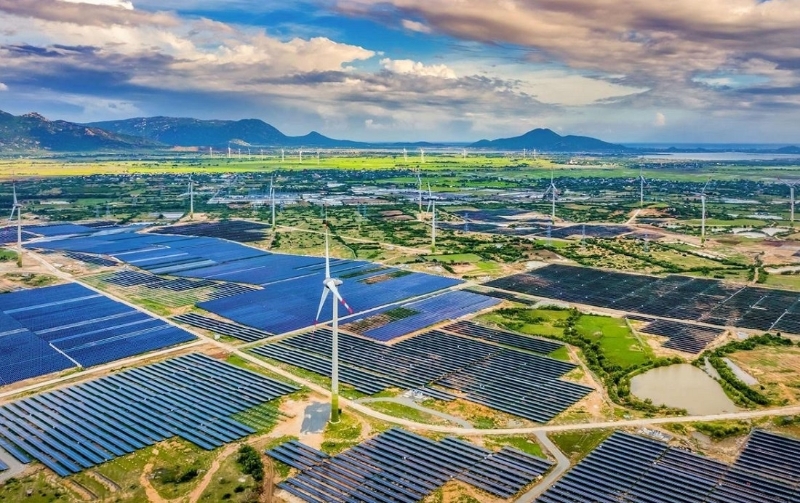
Deputy Prime Minister Bui Thanh Son has approved a revised plan to implement the Just Energy Transition Partnership (JETP), aimed at accelerating Vietnam’s shift toward a cleaner and more sustainable energy system.
The plan aligns with the national power development strategy for 2021–2030, with a vision to 2050, and seeks to ensure energy security while supplying sufficient electricity for economic growth, national defence and daily life.
It outlines a roadmap for a “just” energy transition, promoting renewable and new energy sources alongside more efficient energy use, contributing to Vietnam’s net-zero emissions target. By 2030, the country aims to complete a policy and regulatory framework to attract investment in offshore wind, solar power and energy storage.
Vietnam plans to work with global partners to upgrade transmission infrastructure and build a smart grid capable of integrating large-scale renewable energy.
The plan targets the establishment of two renewable energy industry and service hubs by 2030, while linking the transition to job creation, workforce retraining and social welfare for vulnerable groups.
Renewable energy is expected to account for around 47% of total installed power capacity by 2030, while coal-fired power capacity will be capped at just over 30 GW. Emissions from the power sector are projected to peak at no more than 170 million tonnes of CO2 equivalent.
Beyond 2030, Vietnam will continue policy reforms to support clean energy development, aiming for renewables to make up 80–85% of total primary energy by 2050, while phasing out ageing coal plants and further cutting emissions.





 Google translate