


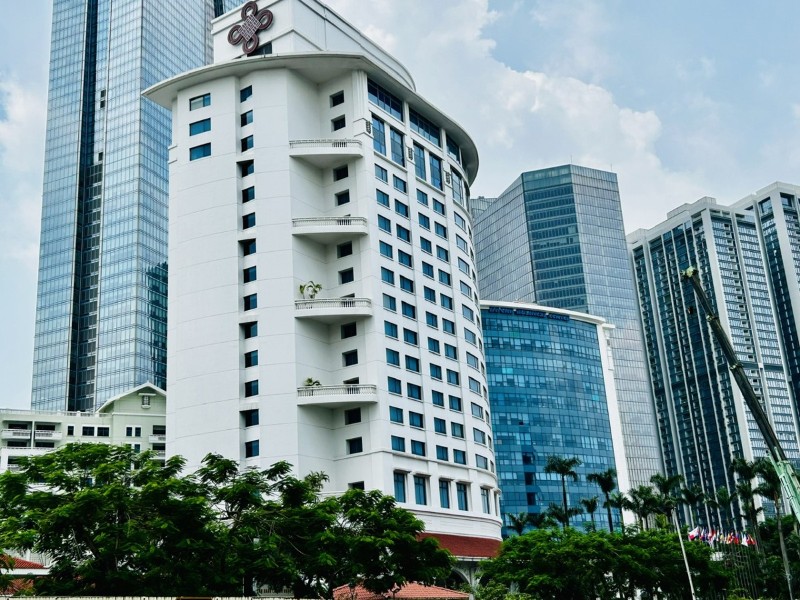
According to the 2026 Global Real Estate Transparency Index (GRETI) released by Jones Lang LaSalle (JLL), Vietnam achieved a transparency score of 3.15, placing it 50th globally and maintaining its position in the “Semi-Transparent” tier.
Notably, Vietnam stood out as one of the 10 markets making the strongest transparency score advancements globally during the 2024-2026 survey period. The country joined a distinguished group of top improvers that includes Poland, Thailand, Australia, Qatar, South Korea, India, Saudi Arabia, Dubai, and Abu Dhabi.
“Vietnam’s top 10 improver spot reflects persistent legal reforms since 2012,” said Ms. Le Thi Huyen Trang, Country Head & Head of Research and Consulting at JLL Vietnam. “Synchronized reforms from 2025 in legal frameworks and administration have driven positive economic results, evidenced by record registered FDI of $38.1 billion in the first seven months of 2026 - a 10-year high proving Vietnam’s strong appeal in Asia-Pacific.”
To evaluate transparency levels, the index assesses 260 individual criteria across 88 global markets. These criteria span six core sub-indices: Market Performance Measurement accounting for 25 percent, Governance and Regulatory Environment at 23.5 percent, Market Fundamentals at 16.5 percent, Transaction Process at 15 percent, Listed Vehicle Governance at 10 percent, and Sustainability at 10 percent.
On a regional scale, Asia-Pacific posted the most robust improvements in this year’s survey, accounting for half of the top 10 globally improved markets led by India, Vietnam, South Korea, Australia, and Thailand. Parallel to these transparency enhancements, cross-border capital flows into the region rebounded strongly over the past 12 months, driving direct transaction volumes to record highs in several key markets, including Vietnam.
Globally, two-thirds of the 88 surveyed markets raised their transparency scores over the past two years. However, the gap between market leaders and remaining economies continues to widen. The “Highly Transparent” and “Transparent” tiers together attract over 98 percent of total global commercial real estate investment, with the top tier alone capturing 81 percent.
Conversely, the “Semi-Transparent” tier - which includes Vietnam - accounts for roughly 1.3 percent of global capital flows. This disparity highlights substantial growth potential for Vietnam to attract foreign capital as market openness advances.
Looking back at historical data from JLL and LaSalle, Vietnam was classified in the “Low Transparency” tier prior to 2020. That era was characterized by scarce market data, complex regulatory frameworks, and a lack of legal clarity, which posed significant hurdles for foreign investors regarding property ownership and investment processes.
Highlighting measures to narrow the transparency gap, Mr. Vo Van Huu Phuoc, Head of Value and Risk Advisory at JLL Vietnam, emphasized the role of structural modernization.
“Relying on experience over public data raises information costs, valuation timelines, and legal risks,” he noted. “Digitizing land records, building a unified national real estate registry, and adopting international standards like IPMS are key to closing this gap and reinforcing international investor confidence.”


 Google translate