


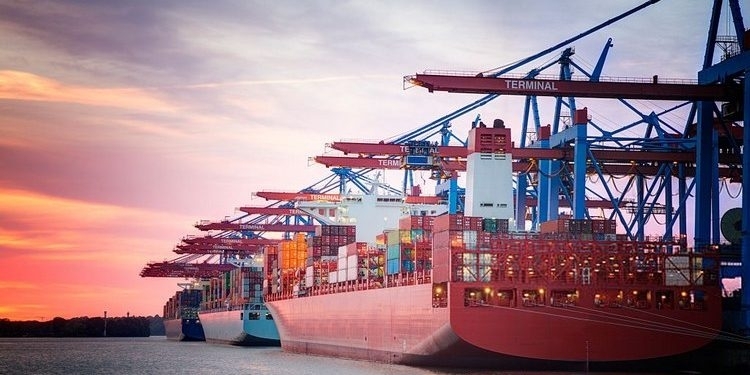
After five consecutive periods of deficit, Vietnam's trade balance reversed to a surplus of $87.69 million in the second half of April 2026.
However, this development primarily reflects a short-term decline in imports, while deficit pressure remains evident when considering the first four months of the year.
According to preliminary reports from Vietnam Customs, in the second half of April 2026, Vietnam's total import-export turnover reached approximately $48.56 billion, a decrease of 6.86% compared to the second half of March 2026.
Despite this, the cumulative total for the first four months of the year reached $345.68 billion, an increase of 24.66% over the same period in 2025. This indicates that the growth trend is being maintained, even with signs of a short-term slowdown.
On the export side, turnover in the second half of April 2026 reached about $24.32 billion, down 6.59% compared to the second half of March. This decline was widespread, concentrated heavily in key commodity groups within the processing and manufacturing sectors.
Specifically, "computers, electronic products, and components"—the category with the highest export value at $6.21 billion—plumpmeted by 16.22%, becoming the primary factor dragging down total turnover. This was followed by "machinery, equipment, tools, and spare parts" at $3.12 billion (down 6.83%) and "phones and components" at $2.39 billion (down 6.81%).
Beyond high-tech sectors, labor-intensive industries also recorded a downward trend. Textiles and garments decreased by 4.7%, reflecting that consumer demand in major markets like the US and the EU has yet to recover stably.
Regarding imports, Vietnam’s import turnover in the second half of April 2026 reached approximately $24.23 billion, a 7.13% decrease compared to the second half of March.
Similar to exports, the import structure remains focused on the processing and manufacturing sectors, particularly high-tech products. The decline in these key groups pulled the overall figures down. The stagnation of export orders has prompted businesses to proactively scale back input imports to control inventory and optimize production costs.
The Foreign Direct Investment (FDI) sector continues to play a dominant role in the import structure, especially in high-tech goods serving export production. During this period, the import turnover of the FDI sector reached nearly $17 billion, down 6.9% from the previous period.
Meanwhile, the domestic business sector recorded import turnover of approximately $7.24 billion, a decrease of 7.65%. This trend reflects a simultaneous decline across both sectors, though the FDI sector's heavy reliance on global supply chains made the impact more pronounced within that group.





 Google translate