


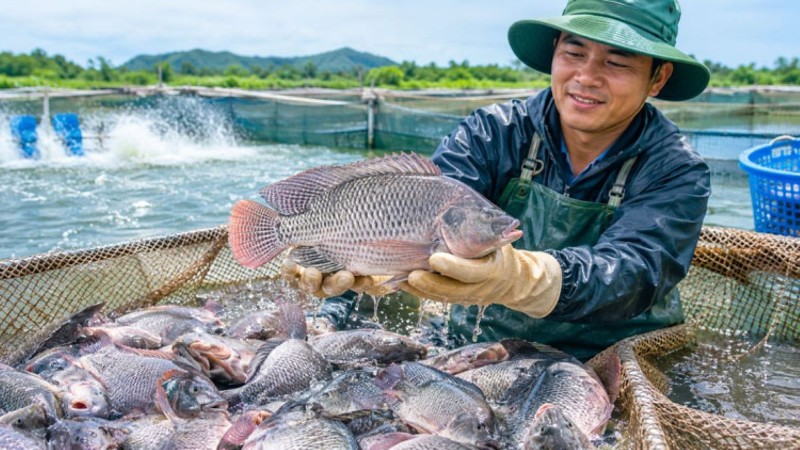
Vietnam’s tilapia exports expanded significantly during the first eight months of 2026, reaching $90 million, a 43 percent increase compared to the same period last year, resulting from Brazil's import growth, according to the Vietnam Association of Seafood Exporters and Producers (VASEP)
Brazil has emerged as the primary growth engine for Vietnamese tilapia. In August alone, exports to Brazil reached $4 million, bringing the eight-month cumulative total to $44 million, up 22.14 percent year-on-year. Accounting for nearly half of Vietnam’s total tilapia export value, Brazil represents a crucial market as shipment volumes expand rapidly from previous baseline levels.
In contrast, exports to the United States faced persistent headwinds. August shipments to the US fell 72 percent year-on-year to approximately $2 million, pulling eight-month exports down 48 percent to $21 million. Weak consumer purchasing power and elevated inventory levels in the US continue to make importers cautious, putting pressure on Vietnamese exporters in one of their traditional target markets.
Meanwhile, other regions registered promising growth. In the Middle East, exports to Saudi Arabia rose 23 percent year-on-year in the first eight months to $7 million. Performance across the Comprehensive and Progressive Agreement for Trans-Pacific Partnership (CPTPP) member nations also climbed 50 percent to $6 million, driven largely by Mexico and Japan. Shipments to the EU reached $4 million, up 7 percent, supported by a decline in wild-caught whitefish supplies across Europe that created opportunities for stable farmed species like tilapia.
Japan also stands out as a high-value market with immense potential. Exports to Japan totaled $2 million in the first eight months of 2026, surging 77 percent year-on-year. Notably, Vietnamese brackish-water tilapia has successfully penetrated Japan's premium sushi and sashimi segment.
VASEP highlighted that meeting Japan’s rigorous quality, environmental, and traceability standards allows Vietnamese tilapia to capture higher added value rather than competing solely in lower-cost commodity segments.
To address market concentration risks and maintain long-term competitiveness, industry stakeholders are prioritizing quality control, international certifications, and brand building across the value chain.
Reinforcing these efforts, the Vietnam Fisheries Society recently issued Decision No. 30/VF5-QD to establish the Vietnam Tilapia Association (VTA), headquartered in Hanoi.
Led by Vice Chairman Pham Anh Tuan, the new association aims to connect farmers, processors, exporters, and research institutions to professionalize the supply chain, elevate product quality, and enhance the global standing of Vietnamese tilapia.





 Google translate