


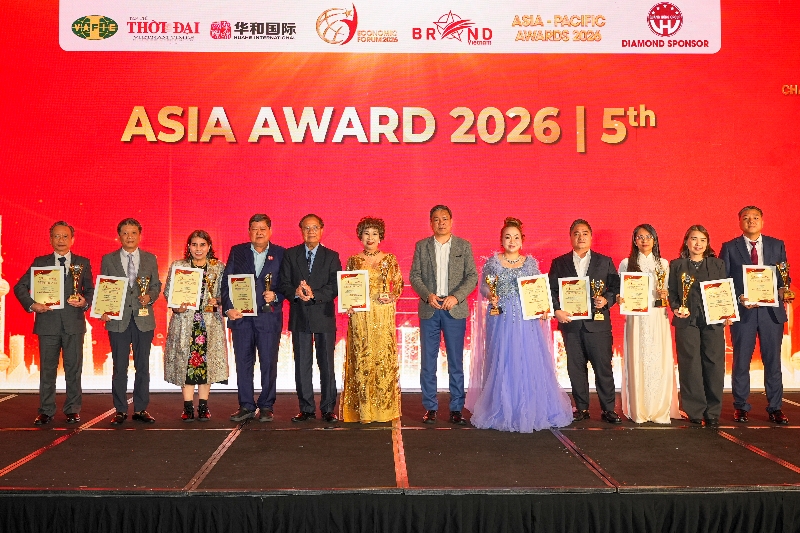
Van Hien University and the Institute for Research and Development of Comprehensive Education are among several Vietnamese educational institutions which received recognition at the 5th Asia–Pacific Economic Forum 2026, held in Beijing, China, from May 30 to June 2.
The recognition reflects these institutions' ongoing efforts to internationalise their curricula, expand global partnerships and contribute to the broader education community.
Beyond institutional achievements, the forum also acknowledged the leadership and strategic vision of Vietnamese educators. Individual honourees included Ms. Pham Thi Minh Nguyet, Vice Chairwoman of Van Hien University; Dr. Nguyen Thi Hong Loan, Director of the Institute for Research and Development of Comprehensive Education; and Dr. Nguyen Vinh Hanh, Chairman of the School Council of Nguyen Sieu Primary School.
However, beyond the awards and recognition, a broader issue attracting increasing attention among education experts is how schools can effectively balance national curricula with international standards, particularly at the primary level. As a foundational stage for language acquisition and character development, primary education requires global programmes to be carefully balanced with the preservation of local cultural values.
Speaking to VnEconomy/Vietnam Economic Times on the sidelines of the forum, Dr. Nguyen Vinh Hanh, who was honoured in the "Outstanding Leader of the New Era" category, said that after more than a decade of implementing the Cambridge programme, Nguyen Sieu Primary School has developed an integrated model combining the curriculum of Vietnam's Ministry of Education and Training with international programmes by selecting complementary content and eliminating overlaps. "The Ministry of Education and Training's curriculum remains the core foundation. Building on that, students are introduced to modern learning approaches, open-minded thinking and global competencies," Dr. Hanh said.
According to Dr. Hanh, the biggest challenge of a bilingual education model is not the simultaneous implementation of multiple programmes, but rather designing an appropriate learning pathway that avoids placing excessive pressure on students.
Rather than requiring students to learn "double the content", the integrated curriculum is designed to reduce duplication and ensure subjects complement one another. In addition to academic knowledge, students are encouraged to develop self-learning skills, independent thinking, collaboration and problem-solving abilities through project-based activities conducted in both Vietnamese and English.
One concern frequently raised about international education models is the potential erosion of local cultural identity. Dr. Hanh argued that internationalisation should not come at the expense of traditional values. "Primary education is a crucial stage for shaping children's character, values and cultural identity. Alongside global competencies, students need to develop a strong understanding of Vietnamese culture and core moral values," Dr. Hanh said.
From a governance perspective, Dr. Hanh argued that the success of an educational model should not be measured solely by awards or accolades, but by the overall development of each student. In his view, the goal of primary education extends beyond academic achievement to nurturing future citizens who embrace lifelong learning, respect diversity and are prepared to adapt to an increasingly interconnected world.
As more schools in Vietnam adopt international programmes, striking a balance between global integration and preserving cultural identity is becoming an increasingly important priority for education leaders.
 Google translate