


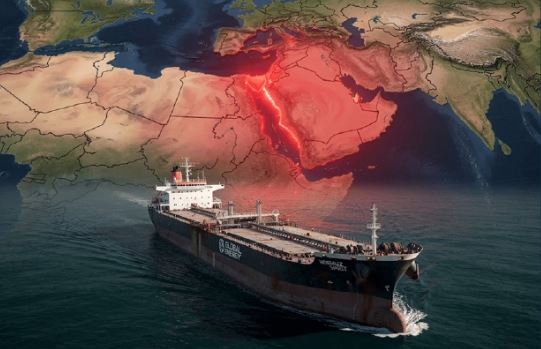
The US and Israel launching large-scale coordinated airstrikes on February 28 targeting multiple locations and cities across Iran marked the most extensive regional conflict in the Middle East since 2003, with a high risk of spillover into global energy supply chains, maritime routes, and the broader economy.
Given its geographic position as a leading exporter in Southeast Asia, particularly on routes to Europe, the Middle East, and Africa, Vietnam is facing significant direct and indirect impacts. The logistics sector, a critical artery of supply chains, is under the greatest pressure.
Sector in turmoil
To assess the situation, the Vietnam Logistics Business Association (VLA) conducted a rapid survey from March 3 to March 11 involving 49 representative enterprises, to sketch a picture of the sector’s “health” in the face of this external shock.
The Middle East conflict, it found, is affecting logistics companies through three primary channels: energy prices, transportation costs, and supply chain risks. According to the survey, 73.4 per cent of respondents monitor developments regularly or daily, reflecting the sector’s heightened sensitivity to global geopolitical shifts. Notably, no enterprise reported being completely uninformed, signaling a marked improvement in risk awareness compared to the pre-Covid period.
In terms of operational impact, 89.8 per cent of businesses - an exceptionally high level - reported moderate to severe effects. Notably, 51 per cent are experiencing impact levels rated 4-5, indicating severe disruption or crisis conditions requiring urgent policy responses. Only 10.2 per cent reported minimal or no impact - largely firms focused on domestic operations or those not reliant on international shipping routes.
The survey identified four key areas of disruption. Freight rates emerged as the most pressing concern, with 42.9 per cent of respondents reporting sharp increases, making it the most widespread issue. Delivery delays were cited by 16.3 per cent of companies, disrupting production schedules and business planning. Meanwhile, 14.3 per cent said customers had begun canceling or postponing orders due to elevated transport costs and unreliable delivery timelines. War risk surcharges and rising insurance costs were mentioned less frequently, but these remain embedded within freight rates, further amplifying overall cost pressures.
According to Mr. Dao Trong Khoa, President of the VLA, the situation is not a one-off shock but a disruption originating from a strategic chokepoint in global trade - the Strait of Hormuz. Flexport data indicates that 202 vessels have been affected since the conflict began.
Route diversions have significantly extended transit times. A container from Singapore to Saudi Arabia now takes approximately 40-44 days, followed by an additional 4-5 days of inland transport, compared to just 10-12 days previously, or 12-14 days from Vietnam. In effect, transit times have tripled.
Mr. Khoa emphasized that logistics is no longer about cost optimization but has become a matter of risk management, where time itself is the most expensive factor. Prolonged transit disrupts entire business cycles. Meanwhile, voyage cancellations are rising, congestion is spreading to transshipment hubs such as Singapore, and freight rates are fluctuating, sometimes multiple times a day.
Information as a strategic asset
Amid mounting challenges, the logistics community cannot respond in isolation. Businesses have submitted urgent recommendations to the VLA and the government, seeking critical support. Companies are calling on the Association to strengthen its risk forecasting role, including more frequent updates on shipping schedules and port congestion. Specifically, they want real-time information on international transport conditions, such as port backlogs, container shortages, schedule changes, and new surcharges, as well as warnings on war-related risks and forecasts of freight and fuel price volatility. Regular advisory support for members is also requested.
The VLA is also urged to consolidate industry feedback and propose timely policy interventions to the government, including tax relief measures such as VAT and corporate income tax reductions or deferrals for small and medium-sized enterprises. Companies also seek mechanisms to stabilize domestic fuel prices and impose tighter controls on container handling and port service fees.
Additionally, businesses recommend engaging with shipping lines and airlines to stabilize international freight rates, while ensuring transparency in local charges at both origin and destination ports. Extending free demurrage and detention periods during this period of disruption is also proposed.
The business community further suggests expanding export markets beyond the Middle East, in coordination with the Ministry of Agriculture and Environment, and organizing expert forums on risk management during geopolitical instability. Learning from international organizations, such as the International Federation of Freight Forwarders Associations (FIATA), is also encouraged.
Greater collaboration within the sector is seen as essential, including alliances among small and medium-sized logistics companies to strengthen collective bargaining power, as well as cost-sharing models between logistics providers and cargo owners.
Policy support
Beyond industry-led solutions, logistics companies are urging the government to implement measures to stabilize fuel supply and prices, particularly diesel, to prevent supply disruptions, price spikes, or black market activity. Tax and fee relief is also a priority, including reductions in corporate income tax, VAT, and fuel import taxes, as well as cuts to sector-specific fees and seaport infrastructure charges.
Firms are calling for stricter oversight of freight rates and surcharges imposed by maritime and air carriers, particularly those related to war risk and port congestion. Port, warehouse, depot, and ICD (Inland Container Depot) service fees should also be regulated to maintain competitiveness.
Customs reform is another key recommendation. Authorities are urged to upgrade systems, increase green-lane clearance rates, accept electronic documentation, and simplify procedures for carrier changes and declaration processing.
Financial support measures, such as preferential interest rate loans, are needed for affected companies, alongside assistance in accessing new markets, especially for those heavily exposed to the Middle East.
The VLA has emphasized that in the face of unprecedented risks, business awareness alone is insufficient and immediate government policy responses are essential. With costs at the center of the crisis, including rising freight rates, higher input costs, shrinking margins, and canceled orders, direct intervention in pricing mechanisms and surcharges is necessary.
At the same time, freight forwarders must shift from being “transport agents” to “solution providers,” and even “risk managers.” Companies should adopt multi-route strategies, avoid long-term fixed pricing in volatile conditions, and continuously update surcharges while advising clients on appropriate delivery terms.
Digital and green transformation are highlighted as strategic solutions. Technology adoption can optimize routes, manage inventory, and allocate resources in real time - reducing costs and improving adaptability. Meanwhile, energy efficiency and a transition toward renewable energy can help reduce dependence on fossil fuels.
“Logistics is no longer about cost optimization but has become a matter of risk management, where time itself is the most expensive factor.”
Mr. Dao Trong Khoa
President of the Vietnam Logistics Business Association (VLA)




 Google translate