



During a panel discussion of the Vietnam New Economy Forum 2026 (VNEF 2026) on October 3, delegates from the World Bank, local governments, the economic community, and the Vietnam Chamber of Commerce and Industry (VCCI) addressed key challenges in executing reforms and sustaining economic momentum. Spanning institutional frameworks, subnational administration, capital efficiency, and the business climate, discussions converged on the urgent imperative to close the gap between policy design and real-world outcomes.
The policy–implementation gap
Ms. Temina Khan, Lead Economist for Vietnam, Cambodia and Laos at the World Bank noted that throughout the reform process, close attention must be paid to the disconnect between formal regulations and how the administrative system operates in practice. Laws, statutory regulations, contracts, and market structures represent only one facet of the system; social trust, working relationships, established routines, and administrative culture also exert a profound influence on policy delivery.
According to the economist, restructuring administrative organs or merging public agencies does not automatically transform how they function. Such structural realignments must be paired with clearly delineated decision-making authority, standardized administrative procedures, integrated data systems, aligned incentive structures, and an administrative apparatus systematically oriented toward outcomes.
Implementation capacity, she argued, must be treated as an integral component of reform itself. New legislation, decentralization, or organizational reshuffling do not inherently yield results in the absence of skilled personnel, adequate resources, and effective inter-agency coordination mechanisms.
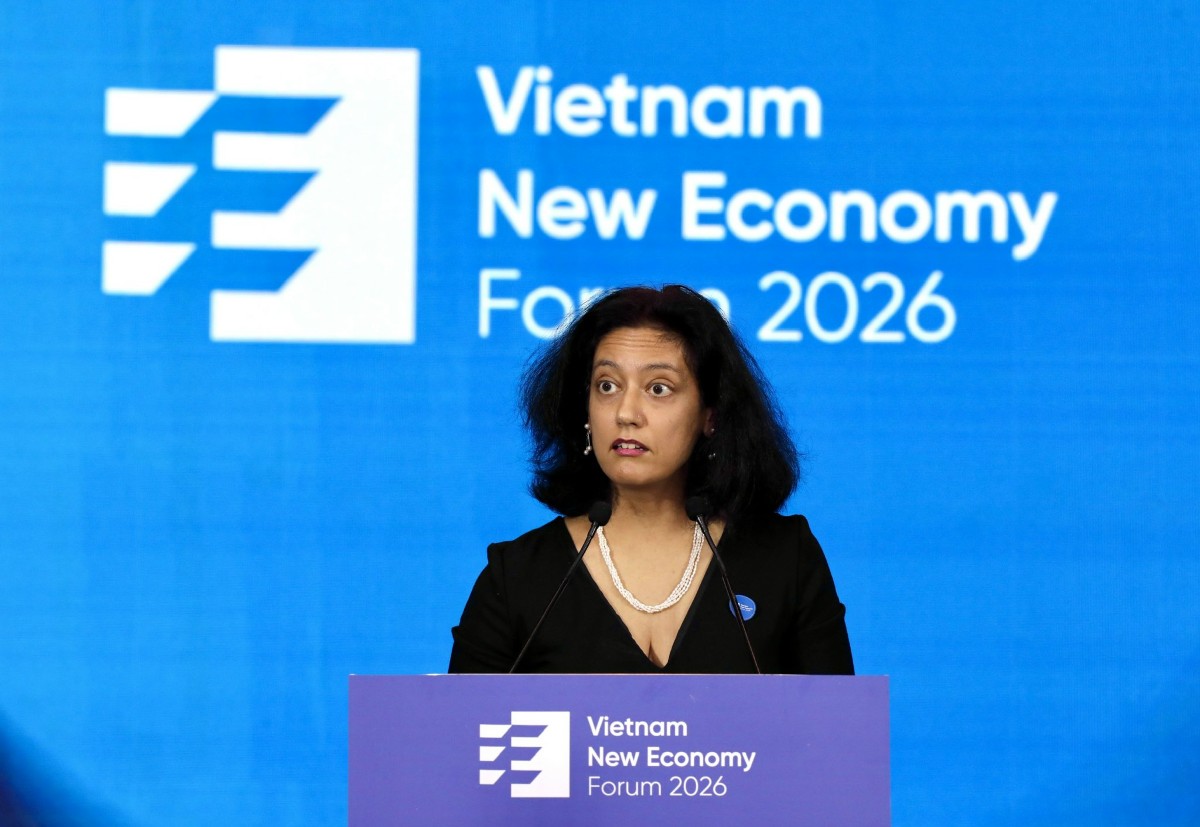
Ms. Khan categorized implementation capacity into three mutually reinforcing pillars: competent human capital; organizations endowed with clear mandates and commensurate resources; and reliable systems for technology, data, and feedback loops.
Regarding subnational governance, she noted that when administrative responsibilities are devolved, local governments must simultaneously possess the requisite capacity, resources, and transparent accountability frameworks to execute them. For enterprises, regulatory predictability and a level playing field are essential to incentivizing technology investment and productivity upgrades. Conversely, when businesses are forced to divert excessive resources into relationship management and administrative negotiations, capital allocated to innovation inevitably shrinks.
Against this backdrop, Ms. Khan underscored the necessity of establishing active policy feedback loops, enabling regulatory agencies to systematically capture market signals, pilot mechanisms, evaluate empirical data, and recalibrate policies based on verified real-world results.
At the local level, execution is reflected in how authorities mobilize resources, untangle procedural bottlenecks, and operationalize concrete growth targets.
From the perspective of a local government, Vice Chairperson of the Dong Nai City People's Committee, Ms. Nguyen Thi Hoang, stated that Dong Nai has tied administrative tasks directly to output deliverables, delivery timelines, and the personal accountability of agency heads. Concurrently, the locality established a Steering Committee on Economic Growth and Budget Collection headed by the Chairman of the municipal People's Committee, formulating detailed growth scenarios broken down by quarter, sector, and industry. The locality also systematically categorizes stalled projects by root cause, governing jurisdiction, and proposed resolution path to decisively unblock viable projects that meet execution criteria.
Meanwhile, Mr. Nguyen Van De, Vice Chairman of the Nghe An Provincial People's Committee, noted that the locality is focusing on reorganizing its developmental space around designated growth poles, economic zones, and development corridors outlined in its master plan.
He underscored the imperative of translating master planning into prioritized projects backed by concrete resource allocations. The province estimates a funding requirement of approximately VND1.15 quadrillion ($44.3 billion) in the coming period and is shifting its investment attraction strategy from quantity to quality, targeting high-capacity investors aligned with its strategic development trajectory.

Capital efficiency and business environment quality
From a resource utilization standpoint, Mr. Le Duy Binh, Managing Director of Economica Vietnam, noted that Vietnam’s Incremental Capital-Output Ratio (ICOR) remained high across several periods, peaking at 14–15 during the COVID-19 pandemic. This elevated level signaled very low capital productivity, requiring VND14 to 15 of investment capital to generate a single VND of GDP growth.
Citing subnational investment distribution, Mr. Binh pointed out that in 2025, Hanoi, Ho Chi Minh City, Hai Phong, Dong Nai, and Ninh Binh collectively accounted for about 45% of total social investment. However, capital efficiency varied substantially across localities, underscoring the need to scrutinize local governance quality and the business climate alongside pure capital inflow volume.
Meanwhile, VCCI’s Deputy Secretary General Dau Anh Tuan emphasized the accelerating pace of legislative overhaul and the urgent requirement to enhance local-level implementation quality.
Mr. Tuan stated that 89 laws were enacted in 2025 alone, accompanied by a markedly shortened legislative cycle. This rapid legal transformation, he argued, places unprecedented demands on institutional delivery and organizational capacity across all government tiers.
While indicators tracking administrative procedures and compliance costs have shown notable progress—with online public services significantly improving the corporate experience—administrative bottlenecks persist in several localities, marked by protracted delays in policy implementation.
Another critical challenge highlighted by Mr. Tuan was the chronic lag in issuing implementing guidelines after primary legislation takes effect. According to forum data he cited, the proportion of subordinate decrees issued only after their governing laws had already entered into force previously reached as high as 82%.
Approaching the issue from a statutory enforcement perspective, National Assembly deputy Phan Duc Hieu stressed that local governments must transition from passive procedural processing to proactive public governance. For issues where public agencies already possess operational data, local authorities should proactively screen files and reach out to enterprises to resolve underlying difficulties before they escalate into formal operational roadblocks.








 Google translate