


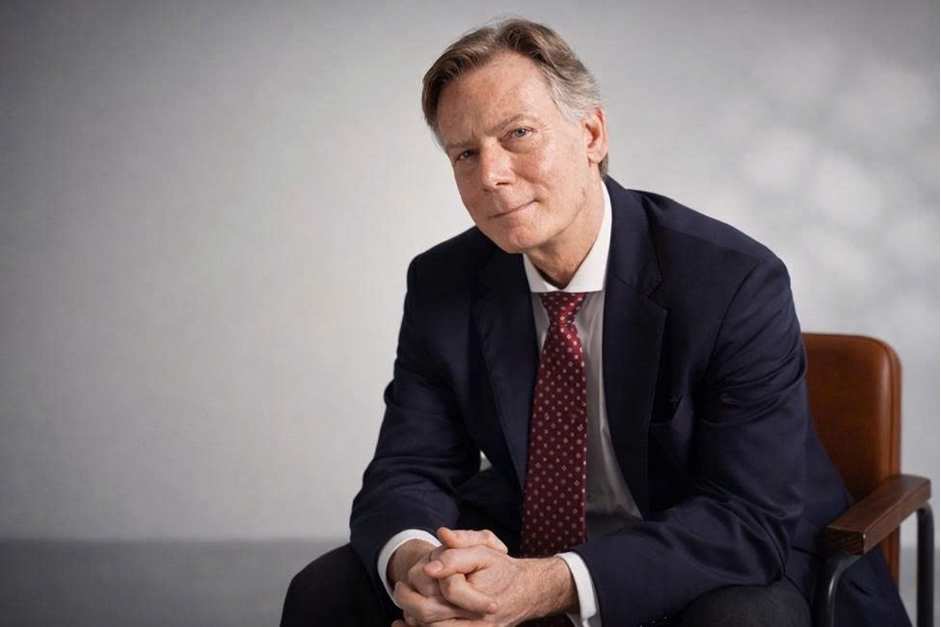
Coastal Quang Ngai broke ground on April 12, marking HAUS’s next major development after HAUS Da Lat. For you personally, this is your second real estate project in Vietnam. What does this milestone mean to you?
Having spent over 25 years working across financial centers like New York and London, I’ve witnessed a very clear trend: global capital is increasingly flowing toward markets with a genuine commitment to sustainable development.
In recent years, Vietnam has emerged as one of Asia’s most promising economies. Beyond its young population and rapidly growing middle class, the country has exceptional conditions for ESG-aligned growth, from natural resources to renewable energy potential. That is a rare foundation for building truly substantive, long-term sustainable models. Vietnam absolutely has the potential to become a regional benchmark.
But what impressed me most was the people. This was my third visit to Quang Ngai, and each time has left a very particular feeling. I remember one afternoon by the sea, talking with a group of young locals about their lives, their dreams, and what they were hoping for in the future. Moments like that convinced me: a sustainable project doesn’t begin with master plans or structures, it begins with people. My hope is that in 10 to 15 years, those very young people will have become part of the Coastal Quang Ngai community we are building together.
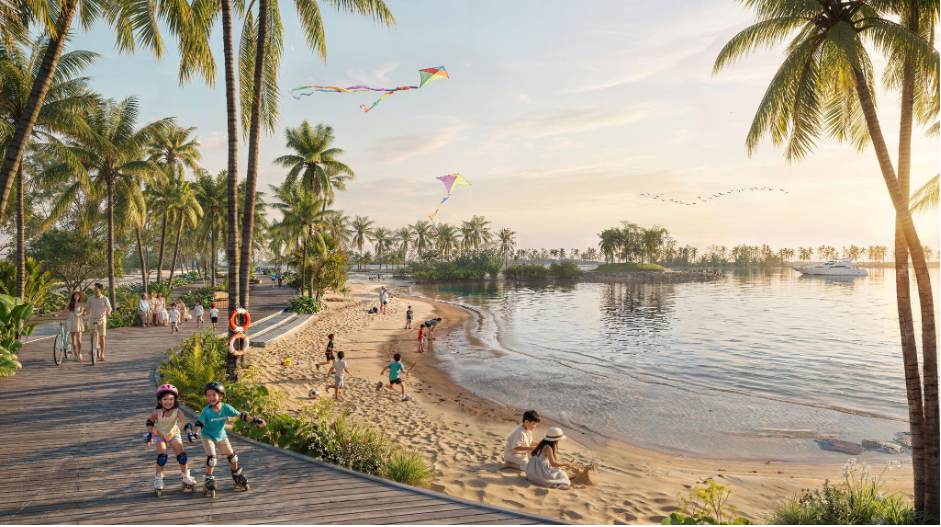
You speak a great deal about “community.” What does that actually look like at Coastal Quang Ngai?
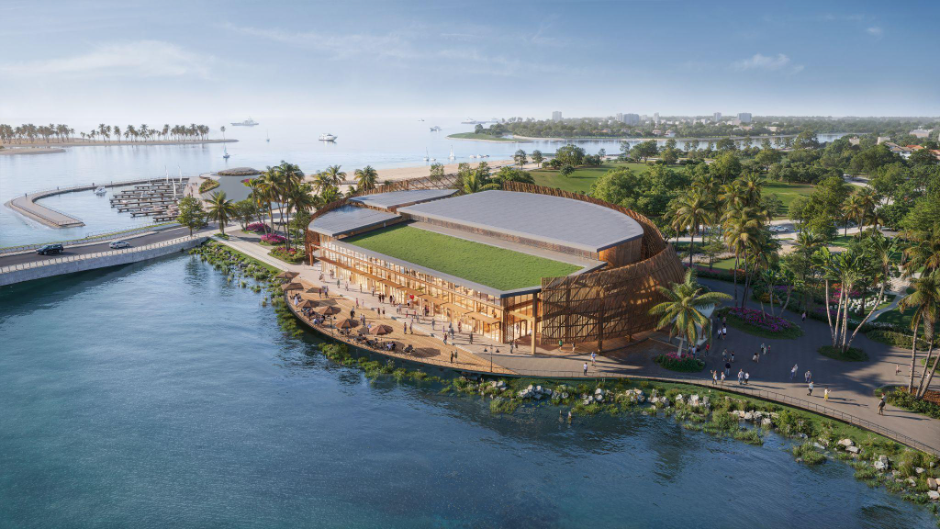
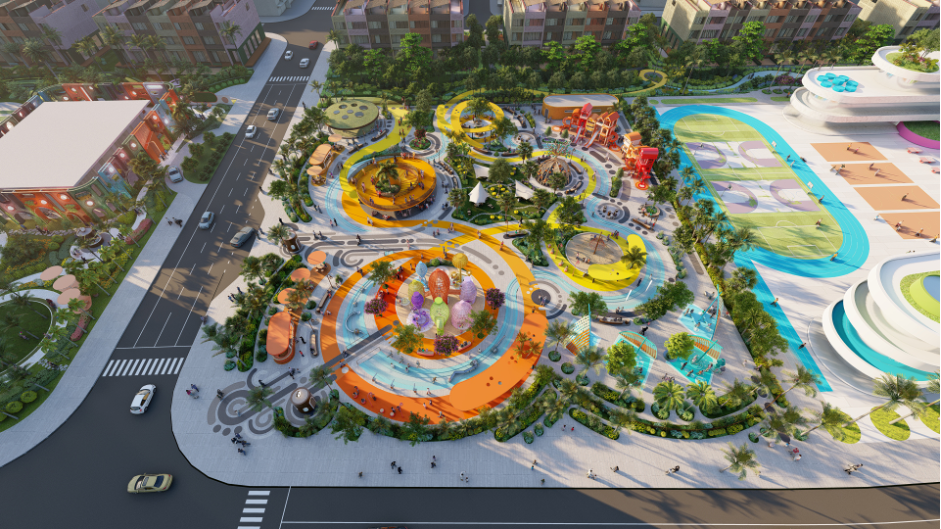
We’re not just building houses. We’re creating a place where people genuinely want to live and come back to. The project is designed for around 4,000 residents, with a complete ecosystem spanning education, healthcare, and green space. At its heart is a Design Exhibition space that connects the community across generations.
Children can explore experiential areas that evoke childhood memories, traditional games, and stories rooted in the history of Quang Ngai. Adults can find cultural and arts exhibition spaces that reinterpret local identity in a contemporary way. New technologies, interactive projections, virtual reality, and AI, are also woven in to create immersive experiences where visitors don’t just observe, but participate in the story. The space also opens to visitors, offering a kind of “Quang Ngai in miniature,” where history, culture, and local life are told in vivid, accessible ways.
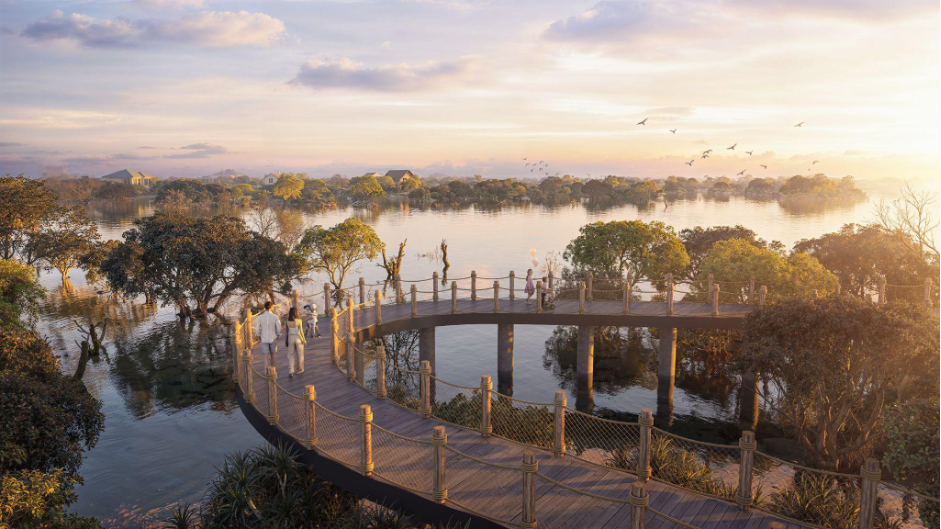
Many projects choose to build at higher density to maximize returns. But in my view, that is not how you build a community. When you step outside your front door and see nothing but concrete, that is not a place worth living in. We have invested enormous effort in creating open, nature-connected spaces where every generation finds a sense of belonging and becomes part of something larger. For us, a sustainable community is one where you don’t just live in the present, but feel the values being preserved and passed on to the future.
What ultimately convinced you to join HAUS as Chairman?
I asked HAUS a great many hard questions. Everyone talks about ESG and sustainability, but very few actually deliver on it. As co-chair of the G20 Sustainable Finance Study Group, I have been part of countless high-level global conversations about the future of sustainable development. What drew me to HAUS was that, for the first time, I saw those ideas being concretely realized in an actual project, on the ground.
After working closely with the team, I came to understand that the difference isn’t in the technology or the materials, it’s in the people and the philosophy. You can build a good project in the short term, but to create a truly sustainable community, one where people want to put down roots across generations and values can be passed on, you need an entirely different approach.
And it isn’t just me. World-leading partners across urban planning, landscape design, architecture, and interiors have all chosen to work alongside HAUS at Coastal Quang Ngai. That isn’t simply a function of project scale, it reflects a shared belief: that we are building not just for the people who live here today, but for generations to come, and doing so to the highest standards in the world.
Is it difficult to develop a project this ambitious in Quang Ngai, where local purchasing power may limit how much residents can spend on a home?
At Coastal Quang Ngai, we need to ensure the product meets all ESG criteria while remaining accessible in price, whether for local residents or people relocating here for work.
That demands careful planning and execution, but I don’t think it’s an insurmountable challenge. The assumption that sustainable real estate is always expensive is a misconception. In reality, we can absolutely build better, safer, more sustainable structures at comparable, and in many cases lower, costs. Vietnam is rapidly scaling up renewable energy, and that will drive down long-term costs for sustainable construction significantly.
Where do you see HAUS in five to 10 years? And can Coastal Quang Ngai become a genuine model?
I believe HAUS is creating positive competitive pressure across the market, compelling other developers to raise their standards. The truth is, even in Europe, very few projects are built to this level: fully integrating ESG principles while genuinely nurturing the community. I think this is a model not just for Vietnam, but for the broader region and the world.
My hope is to welcome other real estate developers to Coastal Quang Ngai, to see what we’re doing, and to join us in raising the bar and building a truly sustainable real estate market in Vietnam. That, more than anything, is the success I am most looking forward to.

With more than 25 years of experience in international finance and sustainable development, Mr. Michael Sheren, Chairman of the Board of HAUS, believes global real estate is entering a new era in which community becomes the key driver of long-term value. He says HAUS aims to go further by building sustainable communities that can serve as a benchmark for markets worldwide. At the groundbreaking ceremony for Coastal Quang Ngai - A Community by HAUS, he noted that the project has the potential to set a new global standard in sustainable urban development.Before entering Vietnam’s real estate market, the British national built an extensive career in green finance, governance, and public policy. He currently serves as Vice President of the Banking Environment Initiative, Senior Research Fellow at the University of Cambridge Institute for Sustainability Leadership, and Senior Advisor to the United Nations Development Programme Sustainable Finance Centre.He has also served on the World Economic Forum expert group on sustainable governance and as Senior Advisor to the Bank of England, where he advised senior leadership on governance, risk, and climate-related financial strategy.


 Google translate