



February 13, 2025 may well be remembered as a landmark for Vietnam’s telecommunications market, when the Starlink Services Vietnam Co., Ltd. - a legal entity under Elon Musk’s SpaceX - was officially licensed to pilot satellite internet services in Vietnam. Notably, with its entire charter capital of VND30 billion ($1.15 million) owned by Starlink Holdings Netherlands B.V., Starlink Services Vietnam is the first and only company (as of early 2026) permitted to provide telecommunications services with 100 per cent foreign ownership under a special pilot mechanism.
Historic turning point
Telecommunications has long been a particularly sensitive field due to its direct link to strategic information infrastructure and national security. For many years, though numerous global giants have entered Vietnam, most have done so only through joint ventures or business cooperation contracts, with foreign ownership capped at 49 per cent or 65 per cent depending on the service category.
A breakthrough came in March 2025, when the 15th National Assembly passed Resolution No. 193/2025/QH15, allowing a controlled pilot mechanism for Low Earth Orbit (LEO) satellite telecommunications services, with no limits on foreign ownership ratios or capital contributions.
Based on this Resolution, just days later Deputy Prime Minister Nguyen Chi Dung signed Decision No. 659/QD-TTg, approving a controlled pilot for LEO satellite telecommunications services from the Space Exploration Technologies Corp. (SpaceX). Once the legal corridor was established, Vietnamese regulators actively guided the procedures for establishing SpaceX’s local entity.
By September 2025, Starlink Services Vietnam had completed business registration procedures, with satellite telecommunications as its core business. In mid-February 2026, the company was granted licenses by the Authority of Radio Frequency Management to use radio frequencies and equipment.
According to business registration records, Mr. Do Ba Thich serves as CEO, while the Chairwoman and legal representative is Ms. Lauren Ashley Dreyer, a US national and Vice President of Global Business Operations at Starlink. The company’s capital contribution is represented by Starlink Holdings Netherlands B.V.
Telecommunications is critically important and directly tied to national security. Why, then, were foreign ownership restrictions relaxed for a pilot LEO satellite case such as Starlink Services Vietnam? The answer likely lies in the technical nature of satellite internet. Unlike traditional ground-based telecom infrastructure, the core infrastructure of this model - satellites - is located in space. Requiring a joint venture with a domestic partner would be technically impractical for operating such a system.
Meanwhile, Vietnam’s needs are clear. The country aims to leverage Starlink’s infrastructure to cover connectivity “blind spots” in island areas and remote regions, while ensuring communications for search and rescue operations where fiber-optic cables cannot reach. SpaceX has committed to investing approximately $1.5 billion in Vietnam, including developing a component supply chain.
Opening up without loosening control
Despite being allowed 100 per cent ownership, Starlink Services Vietnam must comply with strict pilot conditions. First, the company must install gateway stations in Vietnam. Starlink has been licensed to deploy its first four gateways in Da Nang, Phu Tho (one each), and Ho Chi Minh City (two), ensuring that all data traffic passes through domestically-managed infrastructure before connecting to international networks. This mechanism enables regulators to monitor and block illegal content or cybersecurity threats. In addition to technical requirements, the company must meet the same business conditions as domestic telecom operators.
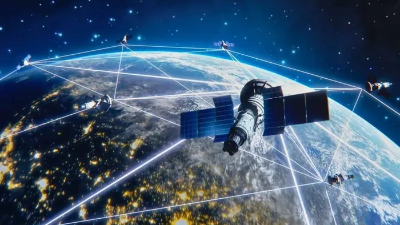
Starlink operates LEO satellites at altitudes from 160 km to under 2,000 km above sea level. This model offers low latency and high data transmission speeds. As of February 2025, Starlink led the world in scale, with more than 6,000 satellites launched and in active service.
Vietnam’s telecom infrastructure still relies primarily on fiber-optic networks and 4G/5G base stations deployed by major operators such as Viettel, VNPT, and MobiFone. While these networks provide wide coverage and strong capacity, they face challenges in areas with complex terrain due to high investment and operational costs. In this context, LEO systems could serve as a complementary solution for telecommunications and internet services with significant advantages.
At the government’s first meeting for 2026 of the Steering Committee on science and technology development, innovation, digital transformation, and Project No. 06, Prime Minister Pham Minh Chinh tasked the Ministry of Science and Technology with implementing coordinated measures to accelerate the rollout and commercial operation of LEO satellite internet services within the year.
Vietnam’s telecom infrastructure landscape is evolving not only due to external factors but also internal dynamics. Major domestic firms such as Viettel and VNPT have begun researching and preparing for LEO satellite services.
In November 2025, news that Vingroup had established the VinSpace JSC to enter the space and satellite telecommunications sector drew significant attention in the tech community. Though newly formed, VinSpace’s business registration already signals broad ambitions, from operating telecommunications satellites to researching and manufacturing small satellites (CubeSats). Starlink’s licensing in Vietnam therefore not only helps complete the country’s telecom infrastructure but also serves as a catalyst for domestic telecom firms to accelerate their efforts.
Under Resolution No. 193/2025/QH15, the controlled pilot mechanism for LEO satellite telecommunications services will last no more than five years and must conclude before January 1, 2031. After that, policy scenarios will depend on pilot results. If the model proves effective in expanding connectivity, ensuring data security, and promoting fair competition, Vietnam may move to formalize a legal framework for satellite telecommunications. Otherwise, regulators will have practical grounds to tighten or adjust the mechanism.







 Google translate