


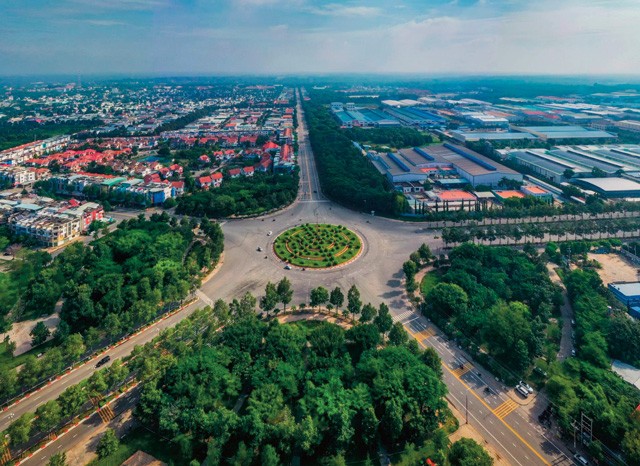
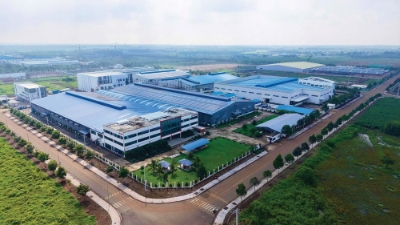
As Vietnam shifts toward higher-quality FDI in advanced technology and sustainable manufacturing, the competitiveness of its industrial parks (IPs) increasingly depends on the infrastructure, services, and living environments they offer businesses, experts, and workers. This evolution is central to Vietnam’s ambition to attract more value-added investment and strengthen its position in global supply chains.
Politburo Resolution No. 10-NQ/TW, dated June 8, 2026, signals this shift by prioritizing advanced technology, innovation, and sustainable development. It calls for a more integrated investment ecosystem linking IPs with logistics infrastructure, capital markets, international financial centers, free trade zones, and economic zones. Meanwhile, amendments to the Law on Investment and Decree No. 96/2026/ND-CP aim to make the investment environment more transparent and competitive.
According to the Foreign Investment Agency at the Ministry of Finance, as Vietnam accelerates its transition to a new growth model, high-tech parks and IPs are expected to become key drivers of innovation, technology adoption, and deeper integration into global value chains.
Strengthening Vietnam’s position
These changes are also creating a historic opportunity for Vietnam to attract a new wave of FDI, particularly from multinational corporations in advanced technology, green technology, smart manufacturing, carbon neutrality, and strategic supply chains. From 2021 to 2025, disbursed FDI exceeded $158 billion. As of September 30, registered FDI in Vietnam had reached $50.36 billion, up 76.4 per cent year-on-year, while disbursed investment totaled $21.07 billion; the highest nine-month figure in five years. The foreign-invested sector also employs more than 5.1 million people.
Steady FDI growth, supported by major global technology companies such as Intel, Samsung, Foxconn, Amkor, and Hana Micron, alongside the more recent presence of Nvidia and Qualcomm, is reshaping Vietnam’s industrial real estate market. Large-scale investments by these companies are helping transform the country from a low-cost manufacturing base into a destination for higher-quality, higher value-added, and more sustainable investment.
According to Mr. Nguyen Phuoc Thuan, Director of Industrial and Office Leasing at Cushman & Wakefield Vietnam, as foreign-invested enterprises in electronics, optical products, computers, and advanced technology continue to expand production and supply chains in Vietnam, demand for industrial land, factories, and warehouses is also increasing. “In the past, Vietnam’s appeal was largely associated with labor costs, land availability, and geographic location,” he said. “Today, its attractiveness increasingly depends on an industrial ecosystem capable of meeting the stringent requirements of multinational corporations. Key advantages include a more open policy environment, improving interregional transport connectivity, and a growing supply of high-quality industrial real estate.”
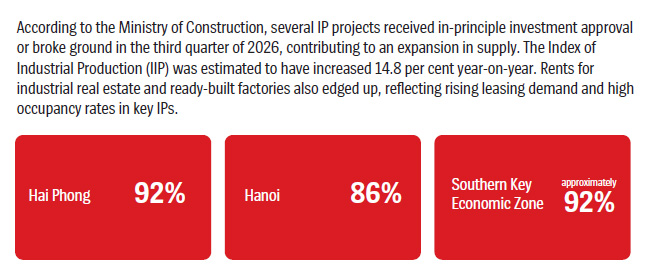
Mr. Thuan also noted that, as land availability tightens in some key markets, modern multistory factories and warehouses are emerging as a natural solution to improve land-use efficiency. While multistory factories are suitable for advanced industries such as electronics, semiconductors, medical devices, and R&D, multistory warehouses can serve logistics, e-commerce, and cold-chain operations near major consumer markets or transport hubs. In the long term, he believes, these developments would not only address land constraints but also improve the quality of Vietnam’s industrial property supply.
Mr. John Campbell, Director, Head of Industrial Service, at Savills Vietnam, said that as manufacturing requirements become more complex, IPs can no longer compete solely on land prices or location. Their competitiveness increasingly depends on how effectively they help businesses establish, operate, and expand production with greater certainty.
As projects grow in scale and complexity, investors are changing how they evaluate potential sites. In addition to land costs and connectivity, they are paying closer attention to infrastructure readiness, access to skilled workers, and the conditions needed to bring factories into operation. “The market is shifting from an IP development model centered on land availability toward one focused on operational capabilities and service ecosystems,” Mr. Campbell said. “This will be a key factor shaping the competitiveness of Vietnam’s industrial real estate market in the years ahead.”
Three groups of factors, he continued, are becoming increasingly important in site assessments. The first is implementation timelines and delivery certainty, including power availability, connection schedules, and approval milestones. The second is the operational ecosystem, encompassing skilled labor, supplier networks, port and airport connectivity, digital infrastructure, worker services, and the IP developer’s ability to provide support. The third is readiness for future needs, including expansion capacity, energy strategies, and infrastructure capable of supporting more technologically-advanced and energy-intensive manufacturing.
Sustainability and talent retention
Experts also argue that next-generation IPs must offer more than factory space. They need integrated infrastructure, including housing and amenities for domestic and international experts and workers, either within the IP or in nearby areas. Unlike previous generations of workers, employees in advanced technology, electronics, semiconductors, green manufacturing, and other knowledge-intensive industries increasingly expect high living standards. These expectations are particularly important for specialists and professionals accompanying the latest wave of FDI.
Dr. Pham Viet Thuan, Director of the Ho Chi Minh City Institute of Natural Resources and Environmental Economics, said social infrastructure, including housing, schools, hospitals and clinics, shopping centers, recreational facilities, and cultural venues, is essential to the transition from traditional IPs to eco-industrial urban areas. It is also a cornerstone of sustainable development and the retention of highly skilled workers.
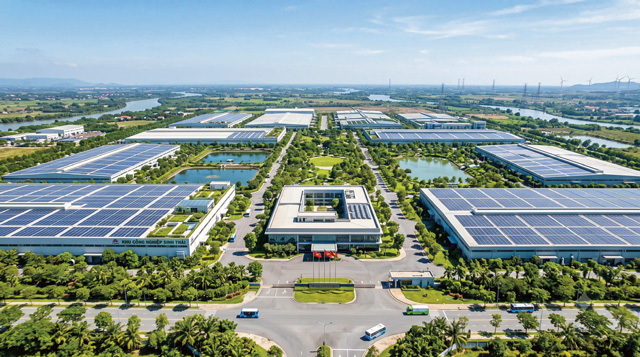
Quality social infrastructure allows employees to establish stable lives, reducing turnover and the risk of workers leaving their jobs. When workers have suitable living conditions and can maintain their physical and mental well-being, they are better able to recover between shifts, supporting productivity and product quality at businesses within IPs. Providing worker housing and public amenities can also help prevent the growth of poorly maintained, unplanned rental settlements around IPs, reducing social problems and helping maintain local security and order.
Dr. Thuan said that developing integrated social infrastructure requires putting people, both workers and experts, at the center of planning and turning IPs into livable ecosystems rather than places solely for employment. He identified five key priorities.
First, industrial, urban, and service areas should be planned together from the outset. Social infrastructure cannot be left to develop spontaneously after an IP is established. Instead of allocating land exclusively for production, new projects should reserve an appropriate share of adjacent land, typically 10-20 per cent or more, for urban development, services, and social housing. Essential facilities, particularly childcare centers, markets, and health clinics, should be within easy reach on foot or by motorcycle or internal shuttle.
Second, government incentives are needed to attract investment in social infrastructure. These could include exemptions or reductions in land-use fees and rents for worker housing, schools, and hospitals in IPs, as well as corporate income tax reductions for developers participating in these segments. Preferential financing, including low-interest loans, should be available both to infrastructure developers and to workers seeking to buy or rent homes.
Third, businesses and IP developers must work together. Developers should proactively invest in foundational infrastructure, housing, and amenities to strengthen their parks’ competitiveness, as demonstrated by major groups such as VSIP, Becamex, and Viglacera. Large manufacturers could also partner with developers to commission housing and childcare facilities for their own employees, helping ensure stable demand and improve the financial viability of social infrastructure projects.
Fourth, professional management and operations are essential. Completing social infrastructure is only half the task; maintaining safe, well-managed and orderly facilities is crucial to retaining workers. This requires robust security systems coordinated with local police, as well as rental rates, service charges and childcare fees that reflect workers’ average incomes. Housing options should accommodate different needs, including short-term rentals for young or single workers and long-term installment-based homeownership for those planning to remain in the area.
Fifth, local governments must provide coordinated support by shortening licensing and planning approval timelines for social infrastructure linked to IPs. They should also simplify procedures for temporary residence registration, birth registration, and school enrollment for the children of migrant workers, helping employees and their families settle into local communities.
A representative from Becamex said the group approaches industrial development with both businesses and people in mind. It has developed an IP network, including VSIP projects, while progressively upgrading its model toward eco-IPs and science and technology-oriented industrial development. Its next-generation IPs integrate ready-built factories and warehouses, data infrastructure, green energy, and business support services, enabling investors to start production and expand operations more quickly.
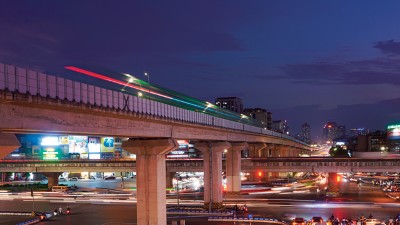
Alongside industrial infrastructure, Becamex invests in transport infrastructure and regional connectivity. Its approach is to develop transport links ahead of demand, improving accessibility and expanding the areas available for industrial, urban, and service development. Building on this industrial and transport foundation, the group also develops urban and service spaces to address housing needs, workplaces, and residents’ quality of life.
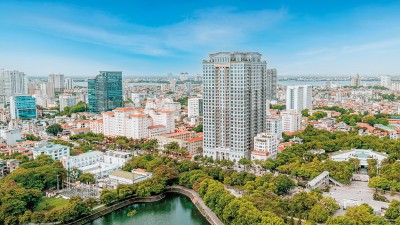
Experts broadly agree that, at this stage of development, Vietnam must do more than improve its investment climate and prepare industrial land. It also needs to proactively develop housing in areas with coordinated infrastructure and amenities that meet the diverse needs of experts and workers, particularly international professionals. Creating attractive places to live alongside competitive industrial facilities will help support industrial growth and strengthen Vietnam’s ability to attract high-quality FDI.




 Google translate