


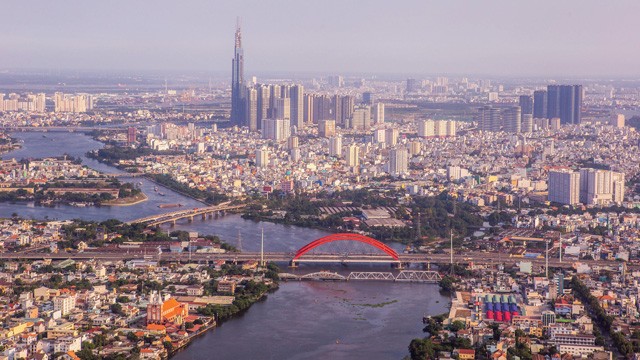
The Vietnamese Government remains committed to high growth while maintaining macro-economic stability. First-half 2026 GDP growth of 8.18 per cent was the highest in the first-half period in any year since 1998. Reaching the government’s 10 per cent annual target will therefore require year-on-year growth of 11.59 per cent in the second half. Developments in the first eight months, however, point to several challenges that require closer attention and appropriate policy responses.
Inflation came in at 4.45 per cent in the first eight months, leaving little room to stay within the official 4.5 per cent target. With prices typically rising faster toward year-end, inflation could exceed 5 per cent, surpassing the target approved by the 15th National Assembly (NA) at its tenth session on November 13, 2025.
Limits of investment
Investment, particularly public investment, is expected to play an important role in driving growth. Total social investment during 2026-2030 is estimated at around VND38,500 trillion ($1.5 trillion), or 2.21-times the level in the previous five-year period. The investment-to-GDP ratio will need to increase to around 40 per cent, equivalent to approximately $280 billion annually, which is a substantial requirement.
But the issue is not simply how much capital can be mobilized. It is also about the maturity, cost, and allocation of that capital, and whether projects can generate sufficient economic returns and useful output while maintaining an appropriate balance of inputs.
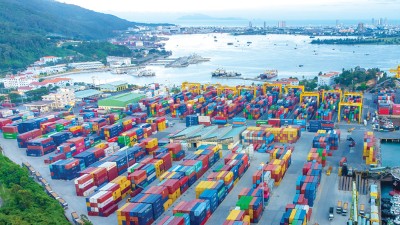
Beyond increasing investment, Vietnam needs to raise productivity and the amount of growth generated by each unit of capital. This means reducing the Incremental Capital-Output Ratio (ICOR) from its current level of around 6 to approximately 4. That will be challenging as localities compete to develop airports, seaports, industrial parks, and major urban areas.
The investment race is also playing out across ministries and sectors, raising concerns about excess capacity and low utilization. Some projects involve enormous capital outlays but are used only for a handful of events each year, such as stadiums and theaters, while existing facilities remain underutilized. Public investment is concentrated largely in transport infrastructure, while private capital continues to flow mainly into real estate and urban development. Direct investment in core technologies such as AI, semiconductors, robotics, and R&D remains limited.
Even privately-funded projects warrant scrutiny. Land is a finite resource, while private projects typically combine equity, accounting for around 20-30 per cent of capital, with funds raised from the public. Their efficiency therefore, needs to be assessed not only from the investor’s perspective but also in terms of their broader economic impact.
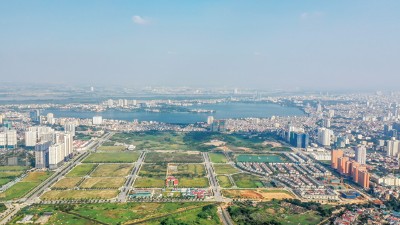
Railway development illustrates the importance of project and infrastructure planning. Current debates include whether Hanoi should build a new central station in Ngoc Hoi or retain the existing Hanoi Station in the city center.
Another often-overlooked issue is the need for long-term capital. Large infrastructure projects cannot generate revenue to service debt during construction, while projects such as expressways can have a payback period of 15-20 years. Yet they often rely on commercial bank loans for 70-80 per cent of their funding, with banks using predominantly short-term deposits to finance long-term lending.
Vietnam’s capital market is not yet capable of meeting this demand, leaving commercial banks to bear much of the burden of long-term financing. Medium and long-term funds account for only around 20 per cent of total deposits, while the banking system’s overall capital adequacy ratio (CAR) is around 12 per cent.
Unless the bond and equity markets are developed further to mobilize more long-term capital, the maturity mismatch between funding and lending that has accumulated over the years could increase systemic risks in the banking sector and add to inflationary pressure.
Credit under pressure
To support growth while maintaining macro-economic stability, the State Bank of Vietnam (SBV) has set a system-wide credit growth target of around 15 per cent for 2026. As of August 28, outstanding credit stood at approximately VND20,500 trillion ($788.5 billion), up 10.24 per cent from the end of 2025. The 15 per cent target may therefore require technical measures to exclude certain credit exposures.
The SBV has also repeatedly relaxed credit limits. Circular No. 08/2026/TT-NHNN, issued on May 15, 2026, changed the loan-to-deposit ratio (LDR) calculation by allowing 20 per cent of State Treasury term deposits to be included in the funding base. The ratio increased to 50 per cent from August 1, applicable through July 31, 2028, affecting both monetary and fiscal policy.
As of end-March 2026, State Treasury deposits at banks totaled VND626.7 trillion ($24.1 billion), with more than 99 per cent held at four State-owned commercial banks (SOCBs). While this does not change the amount of money in the economy, it eases liquidity pressure and increases the lending capacity of these banks. It may also widen deposit rate differentials between State-owned and private banks, complicating monetary policy management and raising questions about whether different funding conditions warrant different regulatory treatment.
On May 30, the SBV permitted 25 banks to exclude additional lending for social housing, industrial parks, and export processing zones from their 2026 real estate credit growth limits, though such loans remain subject to overall credit limits.
Circular No. 25/2026/TT-NHNN, issued on June 22, raised the share of short-term funds that can be used for medium and long-term lending from 30 per cent to 40 per cent for LDR calculations. While this provides banks with additional funding capacity, it also increases maturity mismatch risks. In the first half of 2026, the system-wide LDR was already around 115 per cent; well above the SBV’s 85 per cent regulatory threshold under Circular No. 22/2019/TT-NHNN.
The SBV’s Official Letter No. 5386/NHNN-TD, also issued on June 22, further attracted attention by excluding loans to 18 projects of three major private economic groups from credit growth limits. The SBV described them as “key national projects with broad regional spillover effects and an impact on the economy.”
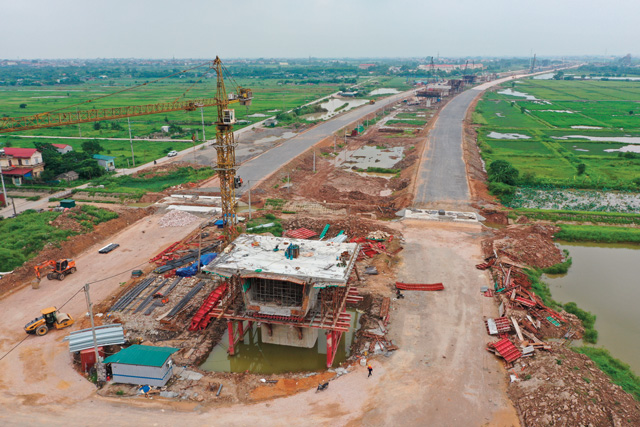
Supporters argue that the measure enables large domestic companies to participate in strategic infrastructure projects, strengthen domestic corporate capacity, and reduce reliance on FDI, following a path previously taken by Japan and South Korea. However, eight of the 18 projects are real estate developments, including the Bai Dat Do mixed-use urban area, the Nui Ong Quan mixed-use ecotourism urban area, and the Rach Chiec National Sports Complex. None are energy or technology projects covered by priority policies.
Transparent criteria for selecting eligible projects are therefore important. Concentrating credit on key projects without clear selection criteria could undermine efforts to build a healthy business environment and weaken credit discipline.
The SBV is also seeking comments on a draft circular implementing Resolution No. 258/2025/QH15 on special mechanisms for major projects in the capital. The draft would raise lending limits to a single borrower and to a borrower and its related parties to 38 per cent and 52 per cent of a bank’s equity capital, respectively, or nearly 2.92 and 2.48-times the current limits.
Under the Law on Credit Institutions, the limits until January 1, 2027 are 13 per cent for a single borrower and 21 per cent for a borrower and related parties. Though the NA’s resolution permits certain projects to apply special mechanisms through a prescribed approval process, a circular alone cannot authorize lending beyond statutory limits.
The proposed relaxation also raises systemic risk concerns. Excessive exposure to a single project or borrower could threaten individual banks and, if confidence deteriorates, potentially trigger broader deposit withdrawals. Greater transparency over bank lending above statutory limits, the projects involved, and the extent of any excess would therefore be important.
Interest rate and exchange rate challenge
The government’s call for genuine lending rate reductions based on lower funding costs is justified, as businesses cannot generate sufficient profits to service excessively high borrowing costs of more than 10 per cent per annum. However, interest rate reductions have yet to prove sustainable in practice because monetary policy has focused primarily on treating the symptoms rather than addressing the root causes. Strong demand for investment capital, combined with slow growth in deposits - and even a decline in corporate deposits - is putting upward pressure on interest rates.
To secure funding for public investment projects as well as public-private partnership (PPP) projects, the government has had to increase bond issuance, pushing up government bond yields. The yield on ten-year government bonds currently ranges from 4.3-4.5 per cent per year, up 0.5-0.9 percentage points from the same period of 2025, contributing to higher interest rates across the economy.
As with public investment capital, the root structural issue is the maturity mismatch in credit funding, and regulations have recently been loosened further. Medium and long-term funds account for only 20 per cent of total deposits, yet banks are now allowed to use as much as 40 per cent of short-term funds to provide medium and long-term loans. The more unstable economic policies become in ways that disadvantage production and business activity, the more difficult it will be to mobilize long-term capital for development and the harder it will be to bring lending rates down. Addressing this cycle at its root lies beyond the scope of monetary policy alone.
Another issue that has attracted attention is the relatively limited movement in the exchange rate, despite Vietnam recording a trade deficit for the first time after ten consecutive years of trade surpluses from 2016 to 2025. In the first eight months of 2026, the country’s goods trade deficit reached $20.46 billion, compared with a surplus of $14.02 billion in the same period a year prior. The deficit has also exceeded the previous record of $18 billion set in 2008.
Typically, a trade deficit puts upward pressure on the exchange rate as businesses need to purchase more foreign currency to pay for imports. However, the exchange rate has risen only modestly. There are two possible explanations.
First, foreign currency demand for imports from China has been offset by USD generated from exports to the US, limiting upward pressure on the exchange rate. This provides a reasonable explanation for the modest exchange rate increase, but does not fully align with the trade deficit of more than $20 billion. In the first eight months of 2026, Vietnam recorded a trade surplus of $106.63 billion with the US but a trade deficit of $107.74 billion with China. The gap between these two largest markets resulted in an overall trade deficit of $1.11 billion. This raises the question of where the remaining $19.35 billion deficit was offset.
Second, the exchange rate has been supported by USD inflows from foreign investment. Disbursed FDI stood at $17.25 billion in the first eight months of 2026, up 12 per cent from the same period of 2025, as well as by remittances, tourism receipts, and foreign currency sales by the SBV to stabilize the exchange rate.
Building the capital market
Vietnam’s capital market is no longer particularly small. As of the end of August, stock market capitalization stood at approximately $424 billion, equivalent to 82.4 per cent of 2025 GDP and 51.7 per cent of total credit, which stood at around 159.3 per cent of GDP. The corporate bond market is more modest, with outstanding bonds totaling VND1,491 trillion ($57.3 billion), or around 11.6 per cent of GDP. This remains insufficient to provide long-term funding because it lacks a strong foundation.
Long-term investors, including insurance companies, pension funds, and long-term investment funds, account for only around 18-19 per cent of GDP; significantly lower than in other countries in the region. Attracting more long-term investors would help supplement long-term funding while reducing unwanted volatility in the stock market.
Developing the capital market is not intended to diminish the role of banks, but rather to ensure that the short-term money market and long-term capital market perform their respective functions through a more appropriate division of responsibilities. The Law on Securities is scheduled to be amended at the NA’s October session. At the same time, new financial products are being studied to attract international capital to the Vietnam International Financial Center (VIFC).
To address practical obstacles and create significant development momentum for the stock market, authorities need to conduct thorough reviews, assessments, and research to identify regulatory gaps as well as provisions that hinder companies from issuing bonds.
For broader socio-economic development and in the financial market in particular, legal reform alone is not sufficient. The VIFC will have a special regulatory framework allowing parties to choose international law and foreign judges in dispute resolution - factors intended to provide greater assurance of fair adjudication. In Vietnam, a court ruling is only one part of the process; enforcement of judgments can take considerable time.
The judicial system needs to ensure that the law is effectively enforced without either excessively criminalizing economic relationships or completely exempting parties from criminal liability. To maintain social order, legal responsibility must be appropriately determined for each type of conduct: contractual disputes should be resolved through civil mechanisms, while violations of regulatory requirements should be handled through administrative measures.
Managing the fiscal cycle
The Law on State Budget does not stipulate that interest earned on State Treasury deposits at commercial banks constitutes a source of budget revenue. As a result, budget estimates do not fully reflect available revenue sources, particularly as the proportion of State budget funds placed in term deposits at commercial banks has increased significantly. This has implications for budget discipline.
The State Treasury’s cash balance stood at more than VND1,400 trillion ($53.8 billion) as of early August, equivalent to 55 per cent of the total State budget revenue estimate for the year as a whole of nearly VND2,530 trillion ($97.3 billion). This cash balance cannot simply be invested directly or lent to businesses. Its substantial size highlights the importance of managing seasonal government cash flows and coordinating fiscal and monetary policy.
In recent years, the State budget has consistently recorded monthly surpluses during much of the year and deficits toward year-end. The pattern of the budget “collecting more and spending less” during the year works in the same direction as a tightening monetary policy, which requires liquidity to be withdrawn from the economy and returned to the SBV. However, it works in the opposite direction to an accommodative monetary policy, which requires more money to be injected into circulation.
State budget revenue has risen significantly, not only compared with budget estimates but also year-on-year, while public investment expenditure has remained below budget projections. Slow public investment disbursement - with VND523.8 trillion ($20.1 billion) disbursed as of September 10, 2026, equivalent to 51.2 per cent of the 2026 plan assigned by the Prime Minister - has left a large amount of money parked at the State Treasury, where it is deposited with SOCBs, limiting the amount of liquidity flowing into the market. When banks, particularly large State-owned lenders, purchase government bonds, the amount of capital available for corporate lending declines.
Total State budget revenue was estimated at VND2,023.8 trillion ($77.8 billion) in the first eight months, equivalent to 80 per cent of the annual estimate, despite the 2026 revenue target being 28.6 per cent higher than in 2025. Revenue was also up 16 per cent year-on-year. Total State budget expenditure was estimated at VND1,608.3 trillion ($61.9 billion), equivalent to 50.9 per cent of the annual estimate and up 13.3 per cent year-on-year. The gap between revenue and expenditure therefore remained substantially in surplus, at VND415.5 trillion ($16 billion).
Economic developments during the first eight months of 2026 show that, to achieve double-digit growth in 2026 and subsequent years, policymakers have introduced a range of monetary and fiscal measures aimed at supporting growth while containing inflation, which is showing signs of exceeding its target.
However, some measures relaxing credit safety regulations could pose serious risks to macro-economic stability and the safety of the banking system, particularly provisions allowing lending above statutory limits. A series of massive projects designed to capitalize on land-related gains could create a burden that the economy ultimately pays for through reduced macro-economic stability, particularly when financial conditions are not yet sufficient to ensure both the required volume of capital and appropriate funding maturities.
One positive development is that the exchange rate has not experienced significant volatility. Nevertheless, it is important to emphasize that without a stable macro-economic foundation, sustainable double-digit growth will remain difficult to achieve.
(*) Ms. Phan Thanh Ha is an Economist)







 Google translate