


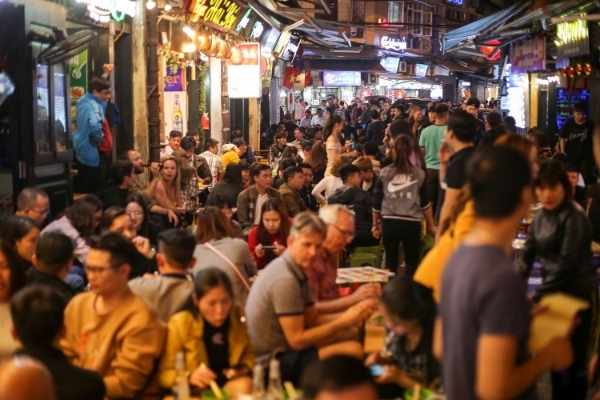
Hanoi has officially approved an ambitious plan to develop its night-time economy, aiming to transform the sector into a major driver of growth and position the capital as a leading cultural and entertainment destination in the region.
Under the Night-Time Economic Development Plan for 2026–2030, with a vision to 2045, the city targets the sector to contribute around 5% of its gross regional domestic product (GRDP) by 2030.
Authorities also expect night-time spending by tourists to account for 25–30% of their total trip expenditure, while increasing the average length of stay to between 2.5 and 3.5 days—an important indicator of Hanoi’s appeal as a destination of tourism.
By 2035, the night economy is projected to contribute 7–8% of GRDP, supported by annual growth of 12–14% in services, tourism, and cultural industries. The Red River corridor is set to become a key creative economic hub, hosting high-value cultural, artistic, and commercial activities and strengthening Hanoi’s integration into the regional night economy network.
The city also plans to establish three to five flagship night-time economic zones, each with a distinct identity. These include heritage- and culture-focused areas in Hoan Kiem and Cua Nam wards, a modern entertainment hub in Tay Ho, and a creative-industrial area in Gia Lam.
Looking ahead to 2045, Hanoi aims for the night economy to contribute more than 12% of GRDP, attract 8–10 million international visitors annually to night-time activities, and build a global reputation as a “City of Night-time Cultural Experiences.”



 Google translate