


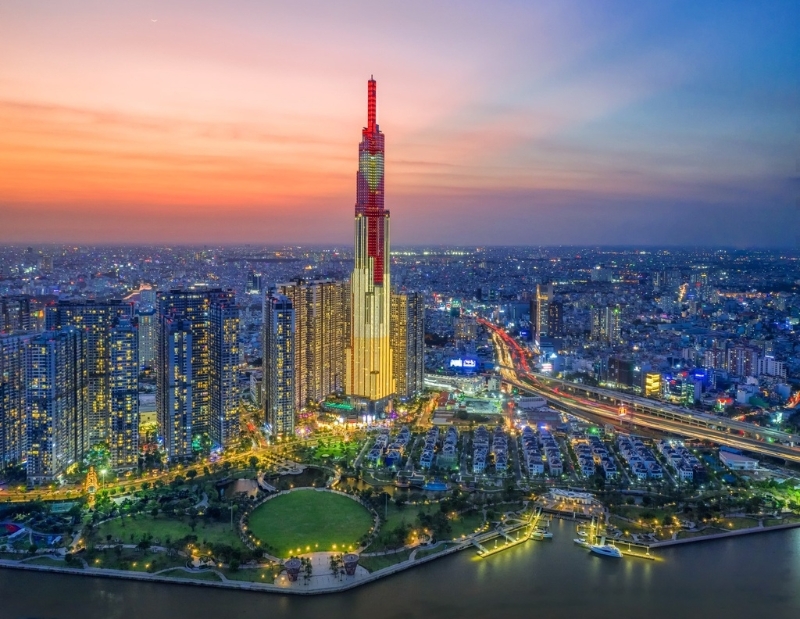
The Ho Chi Minh City Institute for Development Studies (HIDS) has developed three economic growth scenarios for the southern city for the second quarter of 2026, aiming for an annual growth target of approximately 10%, despite ongoing geopolitical tensions and global energy price fluctuations.
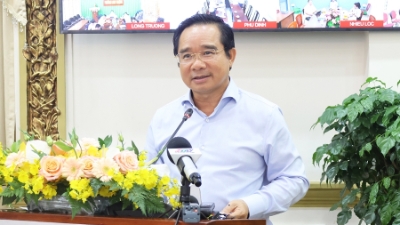
Speaking at a workshop on March 13 titled "Solutions to drive double-digit growth from traditional and new drivers amidst energy stability in Ho Chi Minh City," Deputy Director of HIDS, Mr. Pham Binh An, stated that the city is well-positioned to maintain its growth momentum. This outlook is supported by positive economic performance in the first two months of 2026 and the city government's decisive leadership.
Notably, during the first and second quarters of 2026, the city can capitalize on lower tariffs from the United States to bolster manufacturing and export activities, further driving economic expansion.
However, Mr. An emphasized that alongside these favorable factors, the city must proactively prepare for adverse impacts stemming from oil price volatility and global geopolitical developments. To this end, HIDS has proposed three specific scenarios based on the geopolitical climate:
The baseline scenario (assumes prolonged and escalating conflict): Forecasts Q1 2026 GRDP growth between 7.08% and 7.98% (point forecast of 7.53%). To meet annual targets, Q2 growth would need to reach between 12.62% and 13.52% (point forecast of 13.07%).
The transition scenario (assumes short-term conflict): Forecasts Q1 2026 GRDP growth between 8.08% and 9.04% (point forecast of 8.56%). Q2 growth would need to reach between 11.59% and 12.49% (point forecast of 12.04%).
The target scenario (assumes a rapid cooling of tensions): Forecasts Q1 2026 GRDP growth between 9.19% and 10.28% (point forecast of 9.74%). Q2 growth would need to reach between 10.41% and 11.31% (point forecast of 10.86%).
To support the city’s economic growth targets, Mr. An proposed six key groups of solutions:
First, accelerate public investment disbursement starting in the first quarter. Efforts should focus on transport infrastructure, logistics, and key national and local projects. Simultaneously, the city needs to resolve bottlenecks in procedures, land acquisition, and site clearance.
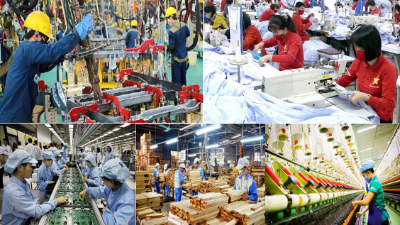
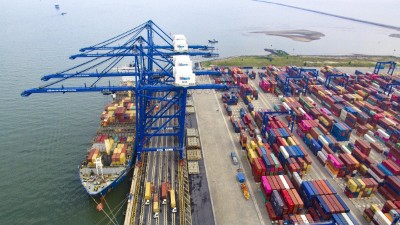
Second, boost industrial production and exports. The city should support businesses in ramping up production during Q1 to capitalize on the temporary 15% U.S. tariff rate (before potential changes occur after 150 days). Additionally, HCMC must diversify its export markets—targeting the EU, Japan, and South Korea through agreements such as the CPTPP, EVFTA, and RCEP—while maintaining its stronghold in the US market.
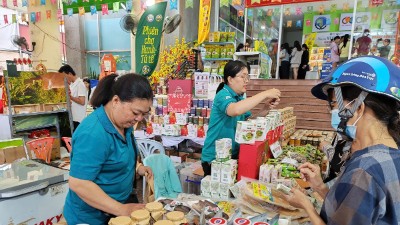
Third, stimulate domestic demand and service sector development. This can be achieved through stimulus programs, large-scale shopping events, and festivals.
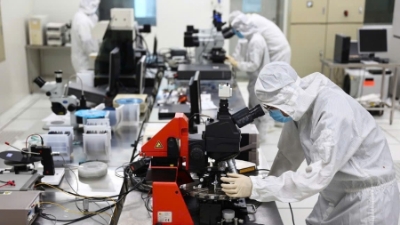
Fourth, attract high-quality Foreign Direct Investment (FDI) and private investment. Focus should be placed on attracting projects in high-tech, artificial intelligence (AI), and the digital economy from the US, South Korea, and Japan.
Fifth, promote the digital economy and innovation. This involves accelerating the application of Big Data, AI, and digital transformation across production, services, and state management.
Sixth, maintain economic stability and manage risks. This includes implementing measures to control the price index, stabilizing fuel supplies, and increasing strategic reserves.
 Google translate