


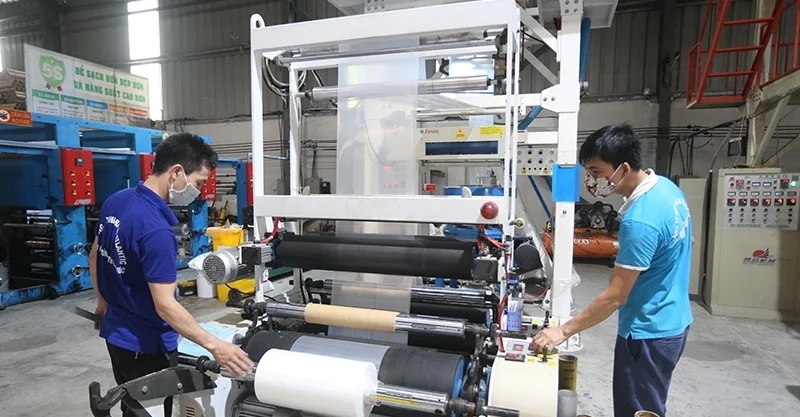
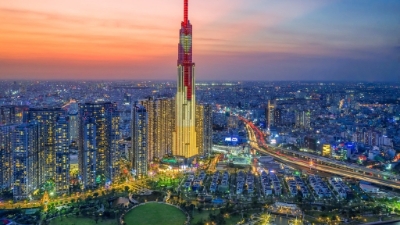
The Ho Chi Minh City People's Committee has officially issued a plan to develop business linkages through industry clusters, value chains, and supply chains within the city through 2030.
The initiative aims to foster collaboration between large corporations and small and medium-sized enterprises (SMEs), enhancing their supply chain capabilities and strengthening their integration into global value chains.
Under the plan, the city will establish business linkage chains where major enterprises serve as "lead firms" to guide and connect with SMEs. Simultaneously, the city will support potential local suppliers in enhancing their competitiveness and deepening their involvement in the supply chain.
These linkages will focus on four key priority industries: mechanical engineering; electronics and information technology; pharmaceuticals, rubber, and plastics; and food and beverage processing.
By 2030, the city aims to establish at least four industry clusters and value chains in these sectors. The goal is to attract at least four major "anchor" corporations to serve as linkage hubs, while ensuring that at least 7 to 12 large enterprises participate in global value chains.
The city also targets building capacity for 100% of recognized enterprises within these clusters to meet basic quality management or industry standards. Furthermore, a digital supply chain platform will be developed to facilitate sourcing, trade matching, and supplier competency assessments.
A core component of the plan involves connecting large lead firms with domestic enterprises. According to the strategy, Ho Chi Minh City will sign cooperation agreements with major corporations to encourage the development of domestic suppliers. These agreements will focus on the transfer of technical standards, conducting trial purchases, and testing samples from local suppliers.
Parallel to these efforts, the city will build a digital supply chain platform integrating market data, customer insights, B2B networking, and supplier databases to streamline sourcing activities and business evaluations.
Alongside these measures, HCM City will implement a potential supplier development program across the selected industry groups, including mechanical engineering and automation; electrical, electronics, and IT; pharmaceuticals, rubber, and plastics; and food processing.





 Google translate