


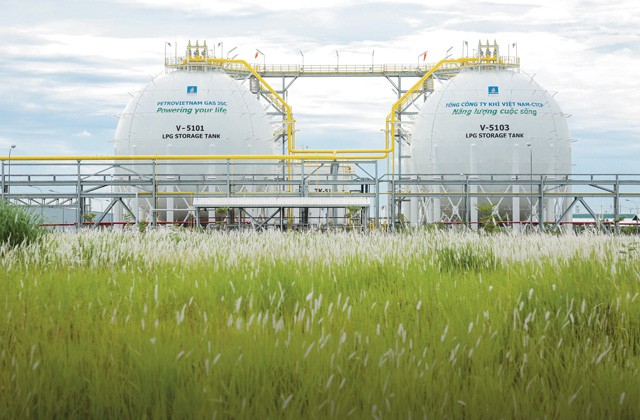
From major oil and gas fields to straits, seaports, fleets, storage facilities, refineries, financial markets, and LNG contracts, global energy power is shifting from resource ownership toward the ability to control the entire supply chain. The geopolitical upheavals of 2026 have once again shown that a country may have energy resources yet remain vulnerable if it cannot ensure that energy can actually reach its shores.
Under this new order, oil and gas are not disappearing despite the rapid advance of electrification and the green transition. Rather, the world is developing a multilayered energy system in which oil, natural gas/LNG, electricity, renewable energy, nuclear power, power grids, and critical minerals together form a new power structure. For Vietnam, the question is no longer simply whether it has enough energy, but whether it has sufficient alternatives when a source of supply or a transportation route is disrupted.
Moving beyond the “wellhead”
For decades, the global oil and gas power map was often viewed through a relatively simple question: Which countries possess the most resources? However, the structure of today’s energy markets shows that this approach is no longer sufficient to explain where real power lies.
Resources remain the foundation. But the journey from a resource in the ground to energy reaching consumers is a long chain involving extraction, transportation, processing, storage, pricing, finance, insurance, technology, and market access. A country with oil reserves has a certain degree of bargaining power, but a country capable of connecting multiple layers of the chain can generate systemic power.
Today, energy power does not lie solely in resources but is built upon seven closely interconnected layers: flows, processing, markets and pricing, infrastructure and logistics, finance, insurance and contracts, technology, and security. This transformation is particularly evident when oil and gas are viewed in the context of the energy transition. Oil remains the foundation of road, aviation, and maritime transport while continuing to play an important role in heavy machinery, petrochemicals, and defense. Natural gas and LNG remain flexible fuels for power systems and key inputs for fertilizers, chemicals, hydrogen, and industrial heat.
At the same time, electrification is accelerating, renewable energy capacity continues to expand, and nuclear power is returning to strategies for baseload electricity and energy security, while power grids are increasingly becoming core infrastructure for the digital economy. The world is therefore not simply moving from “old energy” to “new energy,” but is forming a “multi-system energy order” in which multiple energy layers coexist and complement one another. This also explains why a country that is not a major oil and gas exporter can still possess significant energy power.
China is a prime example. It is a major oil importer but has built considerable power by combining purchasing power with refining capacity, strategic reserves, shipping fleets, shipbuilding capabilities, finance, and the ability to switch suppliers. In other words, China does not need to own all the resources to exercise power; it builds power from the demand side and from the links between producers and consumers.
The US has a different power structure. It combines large-scale production, relatively responsive shale oil output, an extensive network of pipelines, storage facilities, and deep-water ports, the WTI market, the US dollar, oilfield services technology, and financial strength. Saudi Arabia and the UAE have particular advantages in terms of low production costs, large reserves, spare capacity, and large-scale export assets. Russia derives power from its resources, pipelines, and export networks but faces sanctions as well as restrictions on technology, insurance, and infrastructure. This multilayered distribution of power is reshaping the global oil and gas map.
One of the clearest manifestations of this shift is the growing importance of “deliverability.” Having supply on paper does not mean that energy will actually reach the buyer. Delivering a cargo of oil or LNG to its destination requires available supply, ships, ports, storage, insurance, credit, contracts, port access, alternative routes, and processing capacity at the receiving facility.
The question facing energy markets is therefore shifting from “Who has the reserves?” to “Who can deliver where, when, and through which route?” This transformation places maritime routes and strategic chokepoints at the center of the power map.
Some 76 per cent of the world’s supply of oil and petroleum liquids was transported by sea in the first half of 2025. The Strait of Malacca carried around 23.2 million barrels a day, while the Strait of Hormuz plays a particularly important role for oil and LNG from the Persian Gulf, with limited alternative routes. The Suez Canal - Bab el-Mandeb corridor connects commodity flows between Asia and Europe, while the East Sea is a critical corridor for energy flows to Northeast Asia.
This makes energy security increasingly inseparable from maritime security. If an oil field suffers a disruption, the market may still be able to find alternative supplies. But when a major strait or transportation route is disrupted, the impact spreads across multiple layers simultaneously: transit times increase, ships must take longer routes, freight rates rise, insurance costs increase, contracts are adjusted, and ultimately energy costs for consumers rise.
The 2026 Hormuz crisis therefore has implications far beyond a geopolitical shock in the Middle East. It has become a test of the entire logic of the global energy system: supply exists, but deliverability is constrained.
New layers of power
The development of LNG is one of the most important changes in the structure of the global energy system. Traditional pipeline gas geographically links buyers and sellers. LNG allows gas to move between markets through liquefaction facilities, specialized vessels, and regasification terminals. But this does not eliminate dependency; it simply shifts dependency into a more complex structure.
A complete LNG chain requires liquefaction plants, vessels, regasification terminals, storage, contracts, and credit. As a result, gas power is shifting from “pipelines” to “portfolios.”
The US has advantages in terms of abundant supply, flexible contracts, and the Henry Hub benchmark. Qatar has the North Field, low production costs, long-term contracts, and a large fleet. Australia benefits from its proximity to Asia and its substantial LNG assets. The EU exercises power through storage, the TTF (Title Transfer Facility), regulation, and collective purchasing power. Japan and South Korea derive strength from their positions as major buyers, as well as their long-term contract portfolios and commercialization capabilities. China combines LNG with pipeline supplies from Russia and Central Asia, together with domestic production, to create a multi-axis structure.
The 2026 crisis once again demonstrates the value of geographic diversification. According to pre-conflict figures, LNG passing through the Strait of Hormuz accounted for nearly 20 per cent of global LNG trade. Under the baseline scenario cited, LNG output from Qatar and the UAE in 2026 is expected to decline by around 45 per cent from 2025 levels, but the shortfall is expected to be almost offset by new supplies from North America, Africa, and Australia. The lesson is not that an entire region or supplier should be avoided. The key is to ensure that no single source of supply becomes a “single point of failure” for the entire system.
The same applies to oil. The US, Saudi Arabia, the UAE, Russia, China, and India are developing different forms of power. China is particularly noteworthy for import-dependent countries such as Vietnam because of its model of “demand-side power”: pooling purchasing power, infrastructure, refining capacity, reserves, shipping fleets, and finance to strengthen its bargaining power.
Another increasingly important layer of power is finance. Oil and gas are physical commodities, but the real value of a barrel of oil or a cargo of LNG also depends on benchmark prices, the settlement currency, credit, insurance, certification, access to ports, and contract law. Brent, WTI, Dubai/Oman, and Murban are important benchmarks for the oil market, and Henry Hub, TTF, and JKM play similar roles for gas and LNG. Centers such as London, New York/Houston, Singapore, Dubai/Fujairah, and Europe concentrate capabilities in pricing, hedging, trade finance, insurance, and arbitration.
Developments since 2022 have shown that financial sanctions can fundamentally alter the real value of an oil or gas flow. A country may still be able to sell oil but may have to accept discounts, longer transportation routes, higher-risk shipping fleets, and higher financing costs. Power therefore lies not only where oil is produced, but also where decisions are made about how commodities can be transported, insured, paid for and traded.
This is why Vietnam needs to view energy security more broadly than simply signing contracts to purchase oil and LNG. A good contract is not merely one with a low price. It should include diversion clauses, resale rights, an appropriate pricing formula, clear force majeure provisions, the ability to change delivery points, and mechanisms for allocating risk in a crisis. In other words, Vietnam needs to buy options, not merely energy.
Building Vietnam’s energy options
Global oil and gas market developments pose a strategic question for Vietnam: Where does it stand on the new power map?
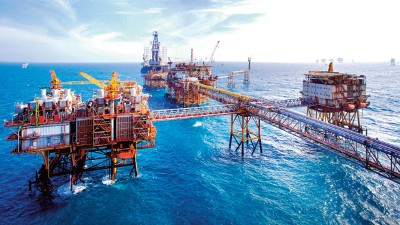
The country boasts significant advantages. It has a strategic position along the East Sea, lies on maritime routes connecting Middle Eastern energy centers with Northeast Asia, has a seaport system, refining and petrochemical capabilities, PetroVietnam and an oil and gas ecosystem, as well as a rapidly-growing energy market. Yet its growing dependence on imports is also exposing vulnerabilities.
Vietnam has developed “industry capabilities” but has not yet fully established an “energy power architecture.” Vulnerabilities do not lie in any single source of supply, but extend from Hormuz and the Malacca-East Sea route to refineries, the LNG-for-power chain, and financial and foreign exchange risks. Importantly, these risks can reinforce one another during a crisis.
Vietnam therefore needs to change the way it stress-tests energy security. It is not enough to ask what happens if one source of supply is lost. The country needs to test scenarios involving multiple simultaneous shocks: a sharp decline in Gulf supplies, a 7-10-day slowdown in the Strait of Malacca, a refinery operating at reduced capacity, LNG prices doubling, and a stronger US dollar. Such correlated scenarios reveal where the system’s true breaking points lie. From this perspective, Vietnam needs to shift from a mindset of “self-sufficiency” to “strategic autonomy.”
Strategic autonomy does not mean Vietnam must produce all of its own oil and gas, LNG, or energy. In an open economy, that is neither feasible nor necessary. Strategic autonomy means ensuring that no single supplier, transportation route, contract type, technology, or pricing formula can paralyze the economy. To achieve this, Vietnam first needs to build diversified supply corridors.
One corridor could connect with the US, Canada, and, over the longer term, sources across the Americas; another could continue to leverage the cost advantages of the Middle East while maintaining contingency options; an ASEAN-Australia corridor could capitalize on geographic proximity; and a Northeast Asian corridor could connect with the trading capabilities, storage facilities, and LNG portfolios of Japan and South Korea. The key point is that diversification must be measured by transportation routes, not merely by the number of suppliers.
Alongside this should be a multilayered storage system comprising operational inventories held by companies and plants, commercial reserves, national reserves, shared storage with producers, and virtual reserve capacity through purchase options, vessel capacity, FSRUs (Floating Storage and Regasification Units), and diversion clauses. This approach would allow Vietnam to strengthen system resilience without necessarily purchasing and physically storing the entire volume of commodities with public funds.
Another important direction is to strengthen PetroVietnam’s role in the national energy structure. Rather than optimizing individual oil and gas projects in isolation, the company should be viewed as a link in the entire energy power chain, from upstream production, gas, and power to refining and petrochemicals, LNG, transportation, and technical services. PetroVietnam should expand its portfolio of overseas upstream assets, LNG assets, oil, LPG and LNG vessels, refining and petrochemical operations, and energy trading activities.
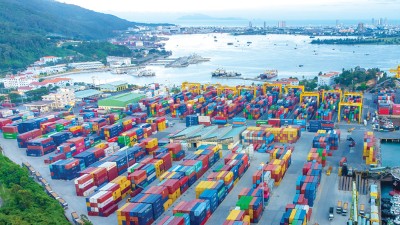
But power does not come from companies alone. Vietnam needs to turn its geographic position into infrastructure and markets. One proposed direction is to establish multipurpose energy clusters along the coastline in Van Phong, Cai Mep-Thi Vai, Dung Quat, and Ca Mau, with each cluster performing different functions, ranging from oil and LNG storage, marine fuels, and refining and petrochemicals to gas, power, fertilizers, and new fuels.
If connected through bonded warehouses, third-party access, trading markets, financial services, insurance, arbitration, and energy data, these clusters could serve not only the domestic market but also potentially become regional transshipment and energy hubs.
This is an important shift: from building “energy assets” to building “energy power.” In a volatile world, reserves should not be measured solely in millions of tons of oil or LNG. The more important question is how many days the economy can continue operating if a transportation route is closed, a supplier stops delivering, or energy prices surge.
Similarly, LNG capacity should not be assessed solely by storage or regasification capacity. Vietnam needs to consider how many suppliers it has, how many transportation routes are available, how many contracts contain diversion rights, how many alternative sources can be accessed, and how much price-hedging capacity is available.
One strategic direction toward 2045 is to gradually position Vietnam as an energy balancing and energy industry hub in the Indo-Pacific, capable of receiving energy from multiple directions, storing, processing, converting, re-exporting, and hedging energy, while providing energy-related services.
This is an ambitious goal, but its logic is clear. Vietnam does not necessarily need to become the country with the largest oil and gas resources. Nor does it need to control the entire energy chain. What Vietnam needs is to control or secure access to sufficiently critical links so that it is not dependent on a single option.
On the new power map, diversification itself is a form of power. A country capable of buying from multiple sources, transporting energy through multiple routes, storing it at multiple locations, using multiple types of fuel, signing different types of contracts, and switching quickly as markets change will have a much stronger position than a country that simply seeks the cheapest energy source under normal conditions. For Vietnam, therefore, the challenge ahead is not merely to have “enough energy,” but to have enough energy options.
From ownership of resources to control of flows; from supply to deliverability; from long-term contracts to diversion rights; from physical reserves to virtual reserves; and from oil and gas companies to a national energy architecture, all of these are becoming layers of economic security. And if the global oil and gas power map is being redrawn, Vietnam should not merely seek to adapt to that map. It needs to gradually create its own position.



 Google translate