


The strong performance reinforces positive assessments from international financial institutions regarding Vietnam’s economic outlook, with forecasts indicating that growth momentum will persist through the final months of the year.
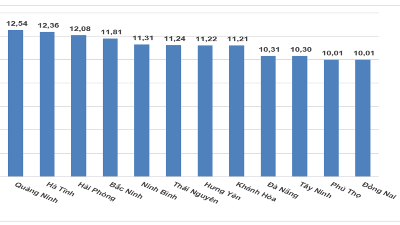
According to the National Statistics Office under the Ministry of Finance, Q3 GDP growth of 9.95 percent outpaced the 8.15 percent recorded in Q1 and 8.81 percent in Q2. For the first nine months of 2026, the industry and construction sector served as the primary growth driver, expanding by 11.21 percent and contributing nearly half of total value added. The services sector grew by 8.69 percent, while agriculture, forestry, and fisheries expanded by 4.02 percent.
While global economic growth projections from the OECD, UN, and IMF remain subdued compared to 2025 levels, Southeast Asia’s growth outlook remains favorable. Within the ASEAN region, ADB projects average growth at 4.7 percent and AMRO at 4.8 percent.
Vietnam leads all regional peers with projected 2026 growth between 7.5 percent and 8.2 percent, significantly higher than Indonesia, Malaysia, Singapore, the Philippines, and Thailand.
Major international financial institutions have repeatedly upgraded their full-year forecasts for Vietnam.
AMRO projects 2026 growth at 7.5 percent, while the ADB raised its forecast to 7.8 percent for 2026 and 7.6 percent for 2027. The IMF increased its projection to 8.2 percent, UOB upgraded its outlook to 8.5 percent citing strong AI-driven technology momentum, and Standard Chartered issued the highest forecast at 9.5 percent.
Mr. Tim Leelahaphan, Senior Economist for Thailand and Vietnam at Standard Chartered Bank, noted that the Vietnamese economy continues to demonstrate strong resilience, underpinned by robust domestic demand, active trade, and solid industrial manufacturing performance that should sustain momentum through year-end.
Growth momentum continues to benefit from expanding manufacturing, steady foreign direct investment inflows, and strong global demand for technology products linked to supply chain relocations and artificial intelligence.
However, international analysts emphasize that due to its high level of trade openness, Vietnam must remain vigilant against external risks including geopolitical tensions, global trade volatility, and demand shifts across major export markets.







 Google translate