



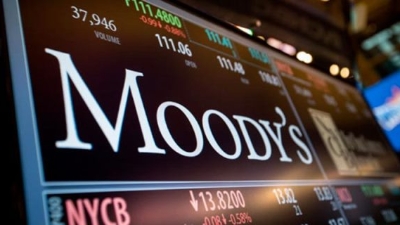
The credit rating agency Moody’s Investors Service has revised Vietnam’s sovereign credit outlook from "Stable" to "Positive," while affirming the country’s long-term issuer and senior unsecured ratings at Ba2, the Ministry of Finance announced on May 4.
According to Moody’s, the outlook upgrade reflects growing confidence in Vietnam’s ability to improve its credit profile over the medium term. The agency highlighted significant strides in institutional and governance quality, driven by a comprehensive wave of administrative, legal, and public sector reforms initiated in late 2024.
Moody’s noted that these improvements not only bolster Vietnam’s institutional score within its credit profile but also promote macroeconomic stability and mitigate potential risks.
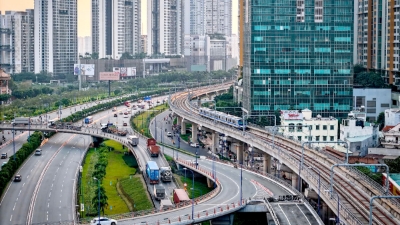
Beyond institutional gains, the Vietnamese economy has seen enhanced competitiveness through technological integration, infrastructure investment, improved labor quality, and the continued development of capital markets.
The affirmation of the Ba2 rating indicates that Vietnam’s fundamental economic strengths remain intact. Moody’s emphasized that the country’s growth potential continues to be a primary anchor for its credit profile. This is supported by a diversified export base, recovering domestic demand, and robust Foreign Direct Investment (FDI) inflows, all of which provide a solid foundation for macroeconomic stability.
Vietnam’s fiscal position also remains a key strength. Government debt is maintained at low and stable levels, supported by strong debt-servicing capacity. Reduced reliance on foreign currency-denominated debt has further lowered exchange rate risks and enhanced the country’s resilience against external shocks.
Furthermore, Moody’s evaluated that Vietnam has demonstrated a high degree of adaptability to global volatility, such as fluctuating energy prices, rising shipping costs, and inflationary pressures stemming from geopolitical tensions. This resilience is underpinned by a stable economic foundation, a positive external balance, and a highly diversified trade structure.
However, the rating agency cautioned that certain challenges remain. Risks within the banking system, vulnerabilities in the real estate market, and lingering institutional bottlenecks continue to serve as hurdles for a potential rating upgrade in the future.




 Google translate