


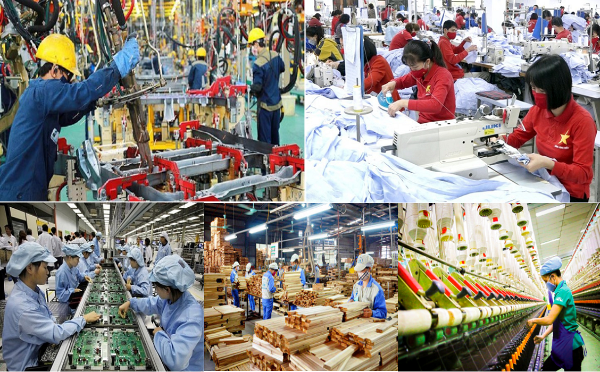
As Vietnam enters a new phase of rapid growth and structural reform, the question facing business leaders is no longer whether to expand but how. Building from scratch, acquiring an existing player, or partnering with a local company - each path offers speed, control, and risk in different measure. At the Scaling Business Summit 2026, executives argued that in Vietnam’s rapidly-moving environment, choosing the wrong path could matter as much as choosing the right market.
Expansion moment
Vietnam’s current phase of business expansion is being shaped as much by policy direction as by market momentum. Vietnam is a fast-moving market - demographically, structurally, and institutionally. The opportunities are significant, but so is the complexity. For companies considering expansion, the question is not simply whether Vietnam is attractive but how best to position themselves within its rapidly-evolving landscape.
Mr. Shehryar Ali Shah, Senior Country Officer and Head of Office, Ho Chi Minh City, at the International Finance Corporation (IFC), emphasized that what the Vietnamese Government is now looking for is FDI. He pointed to a series of initiatives designed to enhance foreign investment, including the establishment of the Vietnam International Financial Center (VIFC) in Ho Chi Minh City and Da Nang, and aligning capital flows with long-term national objectives. If investors want to move in step with policy direction, he said, “then FDI is the way to go.”
For the IFC, he continued, the approach is developmental and long-term, with investments across financial institutions, manufacturing, agribusiness, infrastructure, and power. The objective in Vietnam is clear: “help create more jobs and mobilize private capital, meaning we crowd in private capital, not crowd it out.”
The urgency behind this push is growth. Mr. Will Ross, Chief Marketing and Distribution Officer at Dragon Capital, described Vietnam’s recent GDP performance of above 8 per cent as something that, “in the West, is science fiction.” But he stressed that the deeper story lies in reform and demographics. “The reforms of 2025 were the most significant since the country opened to a market economy in the 1980s,” driven by the need for growth, as that golden demographic dividend has a sell-by date.
He pointed to shifts “from wet market to supermarket to shopping online” and from State schooling to private and overseas education. Businesses must ask whether they are strengthening an existing model or “helping complete a value chain.”
At the same time, Vietnam’s development does not follow a traditional linear path. Mr. Thann Auttanukune, Vice President (President Office) at C.P. Vietnam, described a pattern of leapfrogging. “Vietnam has this ability to be positive and quick practitioner, so they’re willing to adopt change and move quickly,” he said. He recalled showing an old pager to Gen Z colleagues who had “no clue” what it was - a simple illustration of how entire stages of technology can be skipped.
That speed demands discipline. Mr. Auttanukune described companies presenting sophisticated concepts filled with sensors and AI, only for deeper examination to reveal limited fundamental value. Leaders must examine substance, not “just big numbers.”
Crucially, Vietnam cannot be treated as a single consumer profile. Mr. Ross stressed that generational divides are profound, as “those are two entirely distinct consumer groups in one market.” Approaching the country homogeneously, he said, “would be a mistake - a sure failure.”
Build, buy, or partner
If Vietnam is moving fast, the next question is how to move with it. For Mr. Auttanukune, the starting point is not ideology - build versus buy - but speed and disruption. “The first thing is the velocity of change,” he said. The second question is disruption. If new technology is fundamentally altering a sector, “maybe you need to buy or partner with them, because you don’t have enough time to build it from scratch.”
But before choosing any path, he emphasized one critical step, to “understand your business and the extent of your capabilities.” Without that clarity, leaders risk falling into “wishful thinking that either build, buy, or partner will solve your problems.”
Expansion itself is not optional. “Business needs to expand. To think that you can budget zero growth - that doesn’t happen,” he said. The real decision is which part of the value chain to expand and at what pace.
In C.P.’s case, different segments move differently. “Food is the fastest,” Mr. Auttanukune noted, as new products and packaging can be launched quickly. Farming moves more slowly because of sustainability and biosecurity requirements, and feed operates on yet another timeline. “Since not all are operating the same way, there is no standard answer to build, buy, or partner,” he believes.
Market context also matters. Sometimes being foreign is an advantage. Mr. Ross pointed to Tmall’s rise following China’s milk powder scandal, when parents wanted to buy directly from trusted overseas brands and were willing to pay higher prices for safety and transparency.
In other situations, localization is decisive. He recounted his experience with Lazada after Alibaba took visible control of the platform in Vietnam. In his view, the better approach might have been to provide scale and pricing support behind the scenes while allowing Lazada to remain perceived as local. The difference lay in how consumers interpreted identity and trust.
Looking into partnerships
Mr. Shah framed partnerships in the context of Vietnam’s broader investment agenda. With policies increasingly geared towards attracting FDI, he argued that the most compelling partnerships are those that bring long-term value to the country. Investments that transfer technology or capabilities, rather than simply outsourcing functions, carry “a lot more gravitas and a lot more traction with the government.”
But formal alignment on paper is only the beginning. Mr. Auttanukune stressed that the true test comes later. “When the rubber hits the road, when the tension rises, then you see whether your partnership holds,” he said, as actual dynamics emerge under pressure.
His advice was simple: do not rush. Partners should take time to understand whether they share core values and similar approaches to solving problems. Perfect alignment is not necessary, but compatibility is. “Only when conflict arises can you prove whether the partnership will hold,” he said.
He also recommended a staged approach, gradually increasing the level of collaboration rather than committing fully at the outset. Agreements written on paper cannot anticipate every real-world situation, and neither party should feel forced into a corner simply to comply with terms. Partnerships are intended to last, not to survive on contractual technicalities.
Mr. Shah added that regulatory developments may influence partnership decisions as much as business factors. Historically, some foreign investors have been uncomfortable with local arbitration mechanisms. New reforms under discussion include provisions for overseas arbitration at the VIFC, which could reduce perceived risk. “If arbitration becomes acceptable to investors, then partnerships are not a problem; if the arbitration is in a neutral location, then people feel comfortable putting money in,” he said, adding that exit mechanisms are equally important. How easily investors can exit at any point affects their willingness to enter in the first place.
Mr. Ross approached partnerships from a longer-term strategic perspective. In international ventures, he noted, local partners often gain leverage over time; that is simply the natural cycle. The key question is whether that shift occurs organically and mutually, or disruptively.
Some partnerships work because they are based on stable, widely-adopted technologies - like Bluetooth, managed by the Bluetooth Special Interest Group, which was formed by founding partners Ericsson, Intel, Nokia, IBM, and Toshiba, which operates globally at scale without conflict. Others, particularly in consumer markets where monetization and customer ownership are at stake, can create inherent tensions that eventually lead to discussions about exit strategies or arbitration - not only when things go badly but when they go very well and interests begin to diverge.








 Google translate