


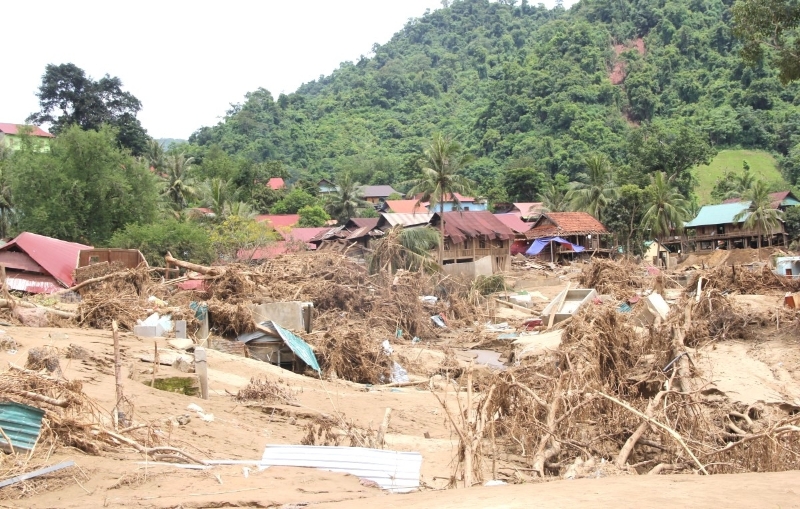
In response to the urgent housing needs of residents following storms as well as devastating flash floods in 2025, the Nghe An Provincial People’s Committee has issued an emergency construction order.
The province will invest over VND141.5 billion (nearly $5 million) to build five resettlement areas in the communes of My Ly, Nhon Mai, and Muong Tip.
According to the provincial decision, these projects aim to provide stable housing for families who completely lost their homes or are currently living in high-risk zones.
In My Ly Commune, the local government will develop a 15-hectare resettlement area in Xieng Tam village. This site will accommodate 98 households.
Also in My Ly, a 10-hectare zone in Xang Tren village will be built to house 82 families severely affected by the storms and floods.
In Nhon Mai Commune, a centralized resettlement area will be established in Na Hy village. Spanning approximately 8 ha, the project will ensure safety for 16 households from Pha Mut village, an area currently identified as being at high risk for landslides.
In Muong Tip Commune, the province is investing in two separate projects. The first, catering to the Xop Tip and Xop Phong village clusters, covers 1.7 ha and will house 23 families. The second project in Ta Do village will be built on 3 ha of land for 21 households.
Funding will be mobilized from the provincial budget—including contingency funds, land use fees, and budget savings—alongside support from the central government and other legal financial sources.








 Google translate