


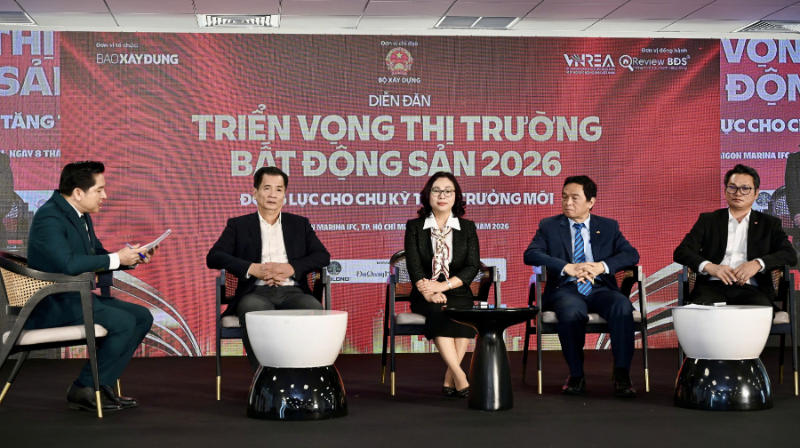
Entering 2026, the real estate market stands before numerous opportunities as the country targets double-digit economic growth.
This momentum is supported by a flexible monetary policy and a development priority for new urban models, such as compact cities and Transit-Oriented Development (TOD), according to Mr. Nguyen Van Dinh, Chairman of the Vietnam Association of Realtors (VARS).
“However, there will be no more room for 'quick-flip' or short-term speculative investments. The coming phase requires market players to be more professional and transparent, adhering strictly to market discipline within an ecosystem governed by data and digital technology,” Mr. Dinh remarked at the "2026 Real Estate Market Outlook: Momentum for a New Growth Cycle" forum held on January 8.
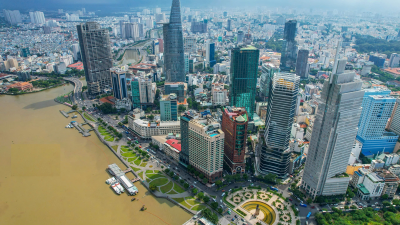
According to Mr. Dinh, the merger of provinces and central-run cities has created larger real estate markets in hubs such as Ho Chi Minh City, Hai Phong, Da Nang, and Lam Dong. This administrative shift has disrupted short-term speculative "waves" and halted skyrocketing price hikes, ushering in a trend of more stable and long-term development.
Speaking at the forum, Deputy Minister of Construction Nguyen Van Sinh stated that in 2025, newly enacted policies have gradually ensured consistency and synchronization across various laws, resolving previous overlaps and conflicts.
"These policies have also promoted decentralization, administrative reform, and shortened investment preparation times, thereby reducing costs for businesses. Thanks to these synchronized solutions, real estate supply has been gradually unblocked, with the social housing segment notably reaching 62% of its target," said the deputy minister.
In the coming period, said Mr. Sinh, the Ministry of Construction (MOC) will focus on perfecting legal institutions and policies to promote affordable commercial housing and social housing.
Additionally, the MOC will continue to review and resolve bottlenecks in real estate projects, enhance information transparency, and strictly control business activities to ensure a safe and healthy market. These efforts aim to unlock investment resources, and contribute to economic growth.
Based on these factors, the deputy minister evaluates 2025 as a "foundation-building" year, while 2026 will mark a point when the real estate market officially enters a new growth cycle. However, this will be a selective cycle, built on a foundation of legal transparency, genuine market demand, and a long-term sustainable development orientation.






 Google translate